When and How to Apply Organic Peptide Fertilizers on Crops
Organic peptide fertilizers have transformed crop nutrition by providing a sustainable and efficient solution for growers worldwide. Proper timing and application strategies play a crucial role in determining their effectiveness, directly influencing crop yield and quality. Generally, organic peptide fertilizer is best applied during key growth stages such as seedling establishment, vegetative growth, and fruit development.
For many crop systems, combining soil application at planting with foliar sprays during critical growth periods delivers the most consistent results. Because peptide fertilizers are rich in bioactive peptides and amino acids, they support rapid nutrient absorption and can be used for both preventive and corrective nutrient management.
Understanding the right timing and correct application methods allows farmers to maximize the benefits of these eco-friendly fertilizers, improving crop resilience, nutrient efficiency, and overall productivity while minimizing environmental impact.
Best growth stages for peptide fertilizer application
Applying organic peptide fertilizers at the correct growth stage is essential for achieving optimal results. These bioactive formulations perform best when synchronized with crop nutrient demands.
1. Early Growth Stage
During the seedling and early vegetative stages, crops require readily available nutrients to support essential processes such as cell division, root expansion, and early canopy development. Applying organic peptide fertilizer at this phase helps to strengthen root establishment, promote vigorous shoot growth, and enhance early stress tolerance. This early support contributes to uniform and robust crop development.
2. Pre-Flowering Stage
When plants transition from vegetative growth to reproductive growth, their nutritional requirements change accordingly. Therefore, applying peptide fertilizers before flowering not only helps improve flower bud formation and enhance plant metabolic activity but also supports a smooth transition into the reproductive stage. This, in turn, lays a more solid foundation for enhancing crop yield and quality.
3. Fruit Development Stage
During fruit set and development, crops benefit from additional nutrient supply. Organic peptide fertilizer applied at this stage can:
- Increase fruit size and uniformity
- Improve sugar accumulation and overall quality
- Reduce premature fruit drop
The exact timing may vary depending on crop type and local growing conditions. Following manufacturer recommendations or consulting agricultural specialists helps fine-tune application schedules for best results.
Foliar Spray vs Irrigation System Application
Organic peptide fertilizers can be applied through two primary methods—foliar spraying and irrigation systems—each offering unique advantages depending on crop goals and environmental conditions.
Foliar Application
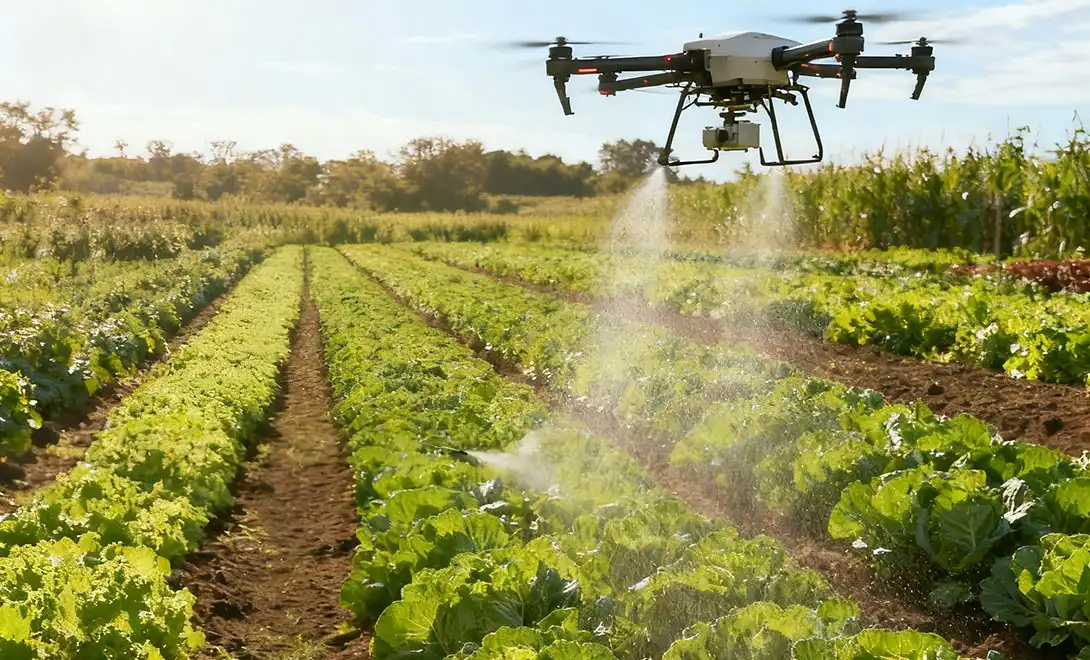
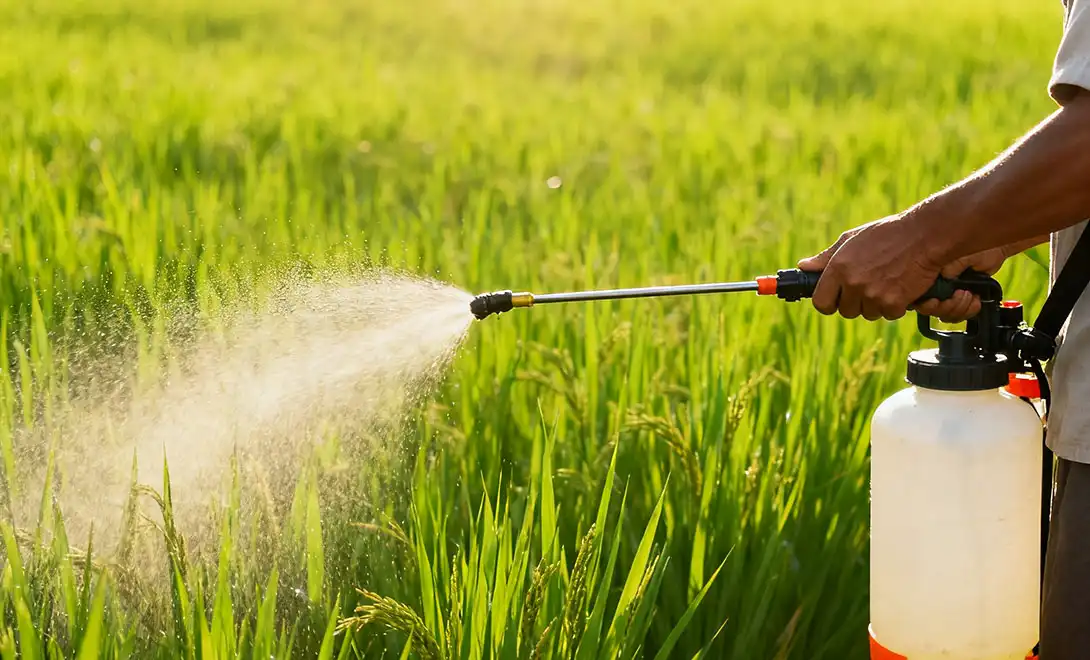
Foliar application enables rapid nutrient uptake by spraying fertilizers directly onto plant leaves. This not only swiftly corrects nutrient deficiencies but also allows targeted supplementation of trace elements. Additionally, it effectively enhances overall plant physiological performance during environmental stress or critical growth stages.
The primary advantages of foliar spraying include: nutrients are rapidly absorbed through stomata, and due to minimal interaction with soil, it offers high utilization efficiency. Meanwhile, it exhibits excellent compatibility with various plant protection products.
However, this application method typically requires multiple treatments and must be carefully timed to avoid leaf burn.
Irrigation System Application (Fertigation)
Applying organic peptide fertilizer through irrigation systems—particularly drip irrigation—offers several long-term benefits:
- Uniform nutrient distribution throughout the root zone
- Lower labor cost and improved operational efficiency
- Ability to adjust nutrient supply based on climate and crop stage
- Reduced soil compaction and minimal crop disturbance
This method is especially effective in protected cultivation environments such as greenhouses.
Combining Methods for Optimal Results
Many successful growers use a combined approach:
- Soil application for foundational nutrient supply and root development
- Foliar sprays for rapid correction and targeted support during critical stages
Balancing both methods ensures comprehensive coverage for both immediate plant needs and long-term soil health.
Recommended Dosage for Major Crop Categories
Applying the right dosage of organic peptide fertilizer is essential for maximizing crop performance while keeping costs under control. Although exact recommendations vary depending on soil type, climate, and product concentration, the following guidelines provide general direction.
1. Grain Crops (Wheat, Rice, Corn)
- Foliar spray:dilute 500-1000 times, applied 2–3 times during major growth stages
- Root Drenching/Drip Irrigation:6L per acre, 15L per hectare, adjusted according to soil fertility
2. Fruit Trees
- Foliar spray: dilute 500-750 times,applied 3–4 times from pre-bloom to fruit development
- Root Drenching/Drip Irrigation:6L per acre, 15L per hectare per season, divided into 2–3 applications
3. Vegetable Crops (Tomatoes, Peppers, Leafy Greens)
- Foliar spray: dilute 500-1000 times,every 10–14 days during active growth
- Root Drenching/Drip Irrigation:6L per acre, 15L per hectare,plus 1–2 supplemental applications
4. Legumes (Soybeans, Peas)
Due to nitrogen-fixing ability:
- Foliar spray: dilute 500-1000 times, applied 2–3 times
- Soil application: Root Drenching/Drip Irrigation:6L per acre, 15L per hectare
These values serve as general reference points. Soil analysis and crop monitoring should always guide final dosage decisions.
Adjusting Dosage for Environmental Conditions
Environmental factors significantly influence the appropriate dosage of organic peptide fertilizer:
1. High-Rainfall or Intensive Irrigation Areas
- Slightly higher dosages may be required due to nutrient leaching
- Split applications help maintain consistent nutrient availability
2. Dry or Arid Conditions
- Lower dosages applied more frequently help avoid salt buildup
- Soil moisture monitoring becomes crucial for nutrient uptake
3. Crop Stress Conditions
Under stress caused by pests, disease, or temperature extremes:
- Additional foliar treatments may support plant recovery
- Slight dosage increases may be helpful during severe stress periods
Monitoring and Adjusting
Regular crop and soil monitoring ensures accurate, efficient use of organic peptide fertilizers:
- Leaf tissue analysis reveals real-time nutrient status
- Soil testing helps refine long-term nutrient management
- Visual crop monitoring supports timely adjustments
This data-driven approach improves fertilizer efficiency, supports sustainability, and enhances overall crop performance.
Conclusion
Understanding when and how to apply organic peptide fertilizers is key to enhancing crop yield, quality, and sustainability. By aligning applications with major growth stages, combining foliar and irrigation methods, and adjusting dosage based on environmental and crop-specific needs, farmers can fully leverage the benefits of these advanced fertilizers.
For agrochemical companies, specialty fertilizer manufacturers, and large-scale growers seeking to optimize fertilizer programs, LYS Biotech provides cutting-edge organic peptide fertilizer solutions. With more than 70 years of expertise in yeast-based bio-nutrient technology, LYS ECO delivers high-quality, bioactive peptide formulations that improve crop resilience and productivity.
Our patented nucleotide-enhanced peptide technology offers superior performance in growth promotion, stress tolerance, and yield improvement—making LYS products a valuable option for distributors and agricultural supply chains targeting high-value, differentiated biostimulants.
FAQs
Q1: How do organic peptide fertilizers differ from traditional synthetic fertilizers?
A: Organic peptide fertilizers are derived from characteristic sources and contain amino acids and small peptides that are effortlessly retained by plants. Not at all like engineered fertilizers, they give a more balanced nutrition profile, improve soil health, and have a lower hazard of over-application or natural damage.
Q2: Can organic peptide fertilizers be used in organic farming?
A: Yes, many organic peptide fertilizers are suitable for organic farming. However, it's important to check the specific product certification to ensure it meets organic standards in your region.
Q3: How quickly do crops respond to organic peptide fertilizer applications?
A: Plants typically show a response to organic peptide fertilizers within 1-2 weeks of application, especially with foliar sprays. However, the full benefits may be observed over a longer period as soil health improves and plants develop enhanced stress resistance.
Premium Organic Peptide Fertilizer Solutions for Sustainable Agriculture | LYS
Looking to enhance your crop yields with innovative, eco-friendly fertilizers? LYS Biotech offers state-of-the-art organic peptide fertilizer solutions tailored to your specific agricultural needs. Our products, backed by over 70 years of expertise in yeast enzyme technology, are designed to boost crop resilience, improve soil health, and maximize your return on investment. Whether you're a large-scale farmer, a specialty fertilizer manufacturer, or an agricultural distributor, our team is ready to support your sustainability goals. Contact us today at alice@aminoacidfertilizer.com to discover how our premium organic peptide fertilizers can revolutionize your agricultural practices and drive your business forward.
Further Reading
1. The choice of application method (foliar or soil) depends on the product and the target. For a discussion on AAPS, please refer to "Foliar Spray or Soil Application: Which Suits AAPS Best?".
2. These organic peptide fertilizers have been proven to improve fruit quality and yield in tomato cultivation. For specific data, see "How AAPS Increases Tomato Yield and Fruit Quality".
References
1. Johnson, A. R., & Smith, B. T. (2022). Optimizing Organic Peptide Fertilizer Applications in Modern Agriculture. Journal of Sustainable Crop Nutrition, 15(3), 287-301.
2. Garcia, M. L., & Rodriguez, D. P. (2021). Comparative Analysis of Foliar and Soil-Applied Organic Peptide Fertilizers on Major Crop Yields. Agricultural Sciences, 9(2), 145-159.
3. Thompson, R. K., et al. (2023). Innovative Approaches to Fertigation with Organic Biostimulants. Irrigation Science Quarterly, 38(4), 412-428.
4. Lee, S. H., & Park, J. W. (2022). Growth Stage-Specific Nutrient Management Using Organic Peptide Fertilizers in Cereal Crops. Plant and Soil, 475, 231-248.
5. Martinez, C., & Fernandez, E. (2021). Environmental Impact Assessment of Organic Peptide Fertilizers in Sustainable Agriculture. Journal of Cleaner Production, 305, 127153.
6. Wilson, D. T., & Brown, K. L. (2023). Economic Analysis of Organic Peptide Fertilizer Adoption in Large-Scale Farming Operations. Agricultural Economics Review, 44(2), 178-194.

Tell us your needs — we’ll provide the right solution for your crops and markets.
Innovating Agriculture with Yeast-Derived Amino Acid Peptides