How AAPS Increases Tomato Yield and Fruit Quality?
Tomato producers around the world face increasing pressure to achieve higher yields, improve fruit quality, and maintain consistent production under unpredictable environmental conditions. Climate variability—including heat waves, drought, salinity, and nutrient imbalance—often reduces fruit setting, weakens plant vigor, and lowers the market value of harvested tomatoes.
AAPS, a yeast-derived amino acid peptide biostimulant, provides a scientifically proven and practical solution to these challenges. Produced through a controlled enzymatic hydrolysis technology, AAPS delivers high concentrations of small-molecule peptides, free L-amino acids, nucleotides, and micronutrients that work together to enhance plant health, stress tolerance, and productivity. Modern tomato producers increasingly rely on this type of amino acid fertilizer to achieve better performance under both standard and stress conditions.
The following sections explain how AAPS improves tomato physiology, strengthens crop resilience, and significantly boosts yield and fruit quality.
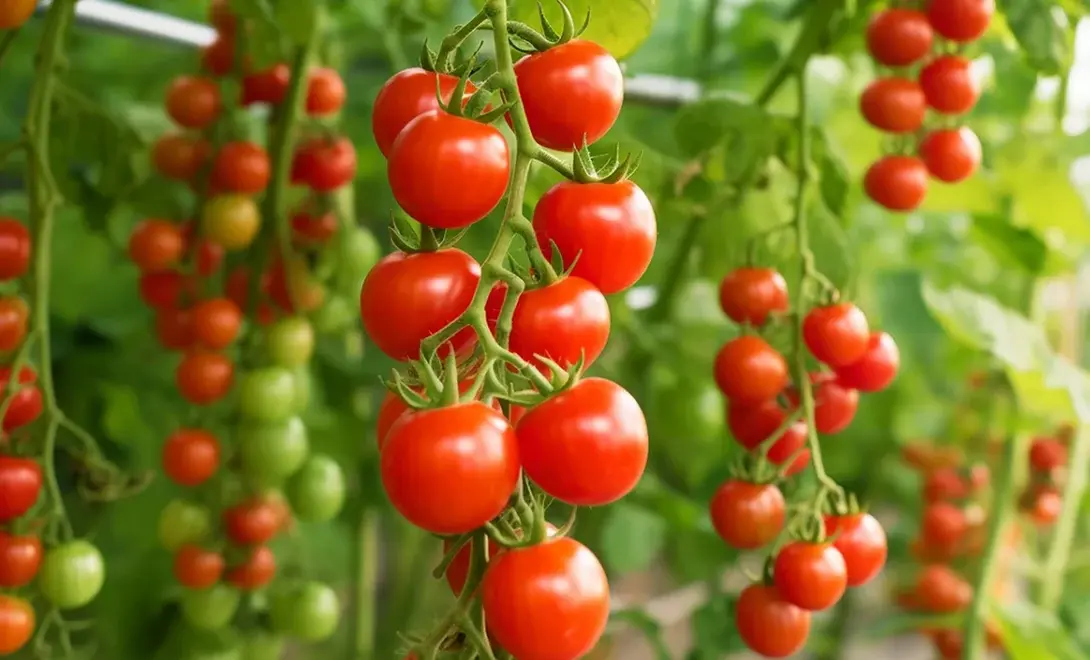

Understanding the Mechanism of AAPS in Tomato Yield
AAPS works not as a simple nutrient supplement but as a biologically active plant enhancer. Its small-molecule peptides (<1000 Da), L-type amino acids, nucleotides and functional cofactors serve as signals that activate multiple metabolic pathways essential for tomato growth.
Bioactive Peptides: The Core of Tomato Growth Enhancement
The peptides in AAPS are rapidly absorbed through leaf cuticles and root systems due to their small molecular size and strong membrane affinity. Once inside plant tissues, they act as:
- Precursors for protein synthesis, supporting cell division and leaf expansion
- Signaling molecules, activating stress response pathways
- Transport carriers, improving nutrient movement between roots and leaves
- Metabolic accelerators, enhancing photosynthesis and carbohydrate conversion
Tomatoes respond quickly to these bioactive components, resulting in improved vigor, stronger flowering, and more uniform fruit formation.
L-Amino Acids and Nucleotides: The Engines Behind Stress Resistance
Free amino acids directly participate in multiple key physiological processes, including enzyme activation, hormone regulation, and antioxidant defense.
Meanwhile, nucleotides support energy metabolism (ATP), DNA repair, and rapid cell recovery after stress. These elements help tomatoes maintain growth even under suboptimal conditions, especially heat, drought, and nutrient imbalance.
Increased chlorophyll production
AAPS supplies key amino acids involved in chlorophyll metabolism.Higher chlorophyll levels enhance photosynthetic efficiency, allowing plants to capture more light energy and convert it into biomass. This promotes vigorous growth, faster development, improved flowering, and stronger fruit set.
Optimized nutrient balance
With EDTA/EDDHA-chelated Zn, B, and Fe, AAPS ensures high bioavailability and prevents common nutrient disorders in tomato productionsuch as calcium deficiency or overaccumulation of nitrogen. By maintaining optimal nutrient ratios, tomato plants develop stronger tissues and produce fruits with superior flavor, texture, and shelf life.
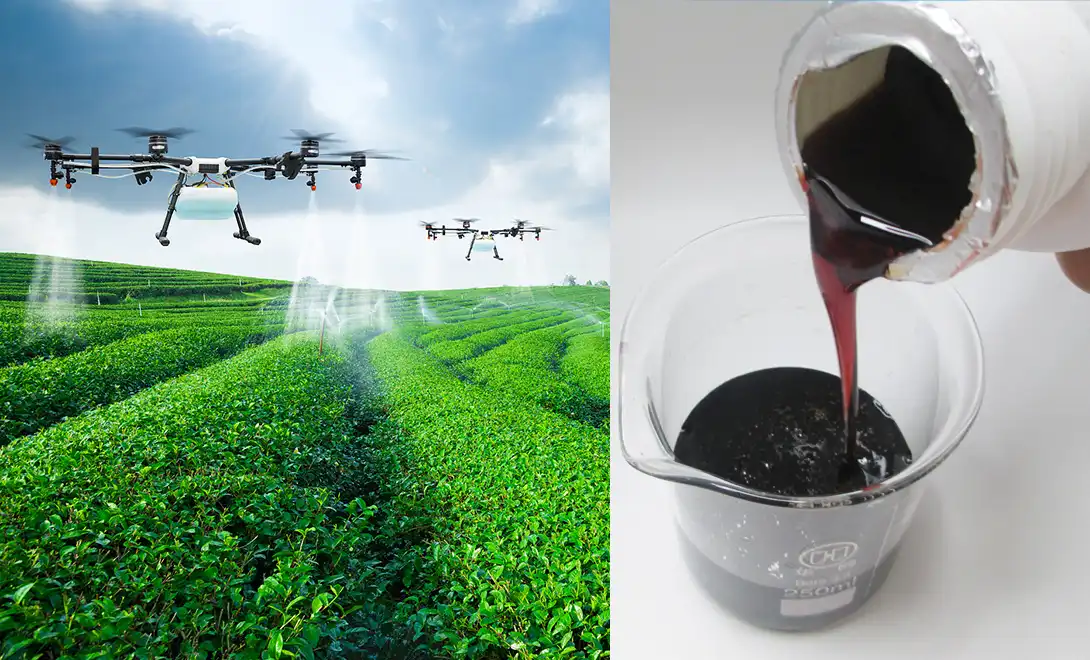
How AAPS Improves Yield and Overall Tomato Plant Performance
Enhancing Flowering, Pollination, and Fruit Setting
Tomato yield is closely linked to early reproductive success. AAPS optimizes the flowering stage in several ways:
- Stabilizes internal hormone balance (IAA, cytokinin, GA)
- Enhances pollen viability and increases pollen tube growth
- Improves nutrient allocation toward flower clusters
- Reduces flower drop under heat or drought stress
Farm trials consistently show higher and more stable fruit set percentages, particularly in periods of high temperature or insufficient sunlight. This directly increases early yield accumulation and improves overall harvest volume.
Uniform Fruit Development Through Improved Nutrient Transport
The peptides in AAPS act as natural nutrient carriers, facilitating the transport of calcium, boron, potassium, and trace minerals essential for fruit growth. As a result:
- Fruits develop more evenly
- The incidence of blossom-end rot is reduced
- Sink strength is increased, enabling larger fruit size
- Carbohydrate allocation becomes more efficient
Tomato fruits treated with AAPS typically show improved firmness, thicker cell walls, and better shelf stability.
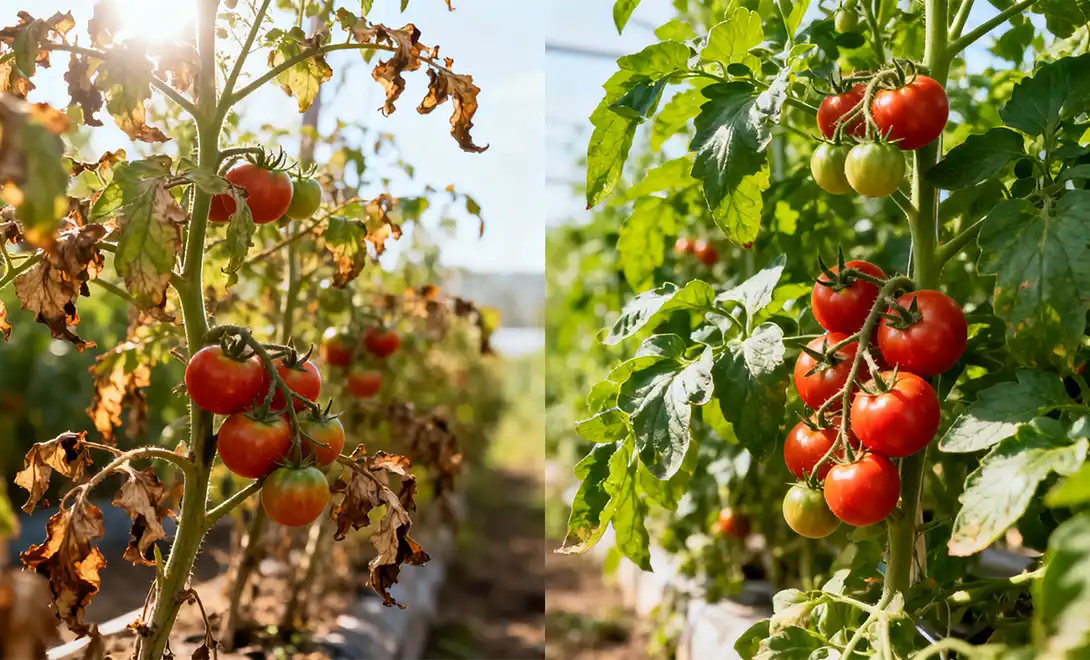
Strengthening Tomato Stress Resistance and Reducing Yield Losses
Increasing Tolerance to Heat, Drought, and Salinity
Under stress, tomatoes experience oxidative damage, reduced photosynthesis, and impaired fruit formation. AAPS mitigates these effects by:
- Activating antioxidant enzyme pathways (SOD, POD, CAT)
- Improving osmotic regulation through amino acid–based osmolytes
- Supporting root vitality for stable water uptake
- Protecting chloroplast structures and preventing chlorophyll degradation
Tomatoes treated with AAPS maintain greener leaves, stronger branches, and lower rates of stress-induced fruit cracking.
Enhancing Root Development for Stable Water and Nutrient Acquisition
Healthy roots are essential for sustainable tomato production. AAPS promotes:
- Longer primary roots
- Increased lateral root density
- Stronger root tips with better absorption capacity
These improvements lead to higher nutrient uptake efficiency and support high productivity in sandy soils, heavy soils, and greenhouse environments.
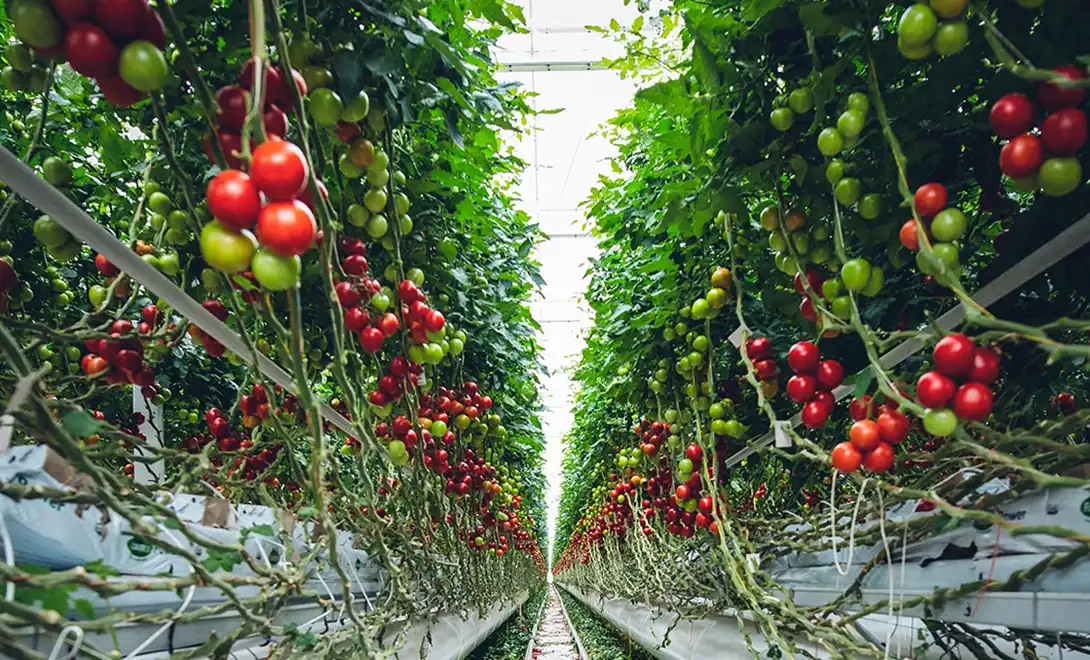
Improving Tomato Fruit Quality for Market Competitiveness
Enhancing Fruit Color, Flavor, and Nutritional Content
AAPS provides the building blocks for various quality parameters:
- Lycopene and carotenoid formation → deeper red color
- Sugar–acid balance optimization → better taste and sweetness
- Protein and amino acid accumulation → higher nutritional profile
- Vitamin synthesis stimulation → stronger antioxidant capacity
Consistent applications during fruit expansion and coloring significantly increase the marketability of the final product.
Increasing Fruit Size and Weight Through Efficient Metabolism
During fruit development, carbohydrates produced by photosynthesis must be efficiently converted and deposited. By enhancing the photosynthetic rate, promoting nitrogen assimilation, improving carbohydrate transport, and stimulating cell expansion and division within the fruit, AAPS drives this process. Thereby, it contributes to the formation of larger and heavier fruits, typically leading to a 15–30% increase in marketable yield.
Conclusion
AAPS, powered by LYS ECO’s advanced yeast-derived peptide technology, offers a complete solution for improving tomato yield and enhancing fruit quality. Through its high concentration of bioactive peptides, free amino acids, nucleotides, gluco-oligosaccharides, and chelated micronutrients, AAPS strengthens root growth, boosts nutrient uptake efficiency, improves flowering and fruit set, and enhances the physical and nutritional characteristics of tomatoes.
With more than 70 years of yeast biotechnology experience, LYS ECO provides industry-leading peptide fertilizer solutions backed by patented enzymatic hydrolysis, premium raw materials, and rigorous quality control. AAPS is trusted by agrochemical formulators, distributors, and professional growers worldwide seeking high-performance, sustainable tomato production strategies.

FAQs
Q1: How does LYS AAPS differ from traditional fertilization methods?
A: AAPS uses small peptides and L-amino acids to deliver nutrients directly and efficiently, improving absorption and reducing nutrient losses. Its bioactive components activate plant metabolism and stress-defense pathways—providing advantages beyond conventional fertilizers.
Q2: Is LYS AAPS suitable for organic tomato production?
A: Suitability depends on regional certification standards. AAPS is derived from natural yeast enzymatic hydrolysis and may meet certain organic requirements. Growers should verify compatibility with relevant certification bodies.
Q3: Can LYS AAPS enhance tomato resistance to diseases and pests?
A: Yes. LYS AAPS improves overall plant vigor and strengthens natural defense mechanisms by supplying readily absorbed peptides and amino acids. This enhances resilience to abiotic stresses and supports healthier plants less susceptible to various disease pressures.
Unlock Premium Tomato Yields with Advanced Peptide Fertilizer Technology | LYS
Ready to elevate your tomato production?LYS AAPS provide unmatched performance in yield improvement, fruit quality enhancement, and stress resilience.
Backed by decades of R&D in yeast biotechnology, our formulations help growers, distributors, and agrochemical manufacturers achieve measurable results and higher profitability.Contact us now at alice@aminoacidfertilizer.com to discover how our peptide fertilizer technology can transform your tomato cultivation and drive your agricultural success.
Further Reading
1. Increased yield and improved quality are also evident in leafy vegetables. Amino acid fertilizers are specifically discussed in this regard; please read "Better Quality, Higher Yield: Amino Acid Fertilizers for Leafy Vegetables".
2. In addition to tomatoes, organic peptide fertilizers have also performed excellently on crops such as oil palm trees. See application cases in "Organic Peptide Fertilizer for Palm Oil Tree Growth and Yield".
References
1. du Jardin, P. (2015). Plant biostimulants: Definition, concept, main categories and regulation. Scientia Horticulturae, 196, 3–14.
2. Colla, G., et al. (2015). Protein hydrolysates as plant biostimulants: Effects on tomato growth and yield. Agronomy, 5(3), 377–393.
3. Sestili, F., et al. (2018). Protein hydrolysates enhance root growth and nutrient uptake in tomato plants. Frontiers in Plant Science, 9, 1233.
4. Rouphael, Y., & Colla, G. (2020). Biostimulants in agriculture. Agronomy, 10(2), 146.
5. Halpern, M., et al. (2015). The use of biostimulants for enhancing nutrient use efficiency and plant stress tolerance. Plant Science, 233, 56–67.
6. Calvo, P., Nelson, L., & Kloepper, J. (2014). Agricultural uses of plant biostimulants. Plant and Soil, 383, 3–41.
7. Ertani, A., et al. (2009). Effects of protein hydrolysates on growth and nitrogen metabolism in tomato. Journal of Plant Nutrition and Soil Science, 172(2), 237–244.

Tell us your needs — we’ll provide the right solution for your crops and markets.
Innovating Agriculture with Yeast-Derived Amino Acid Peptides