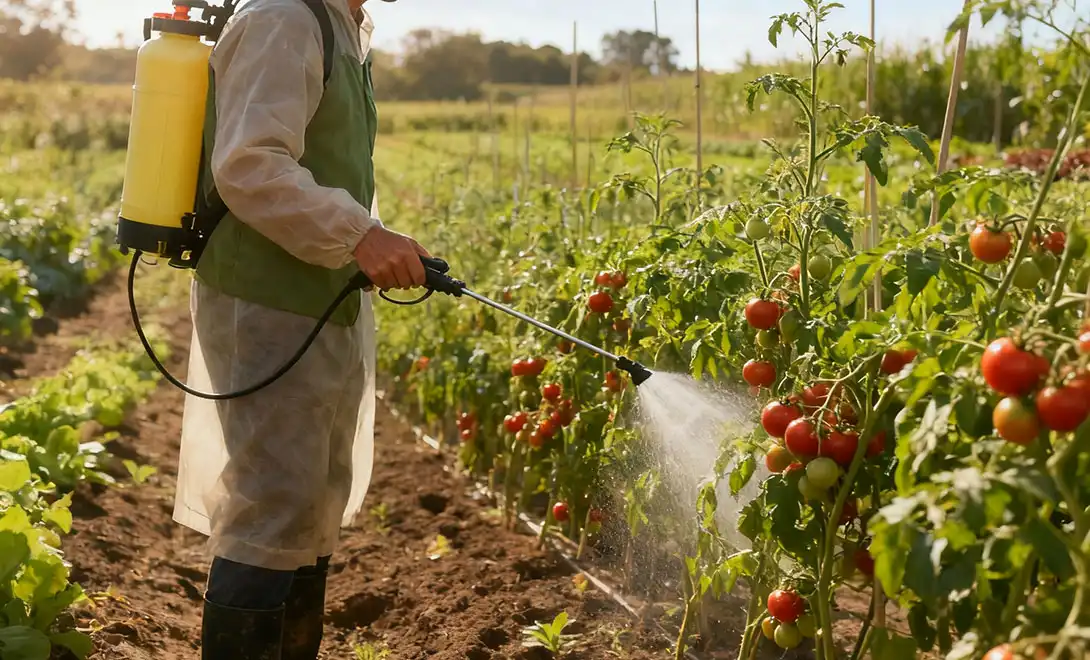
When should AAPS be used as a foliar spray?
Foliar application of AAPS, including peptide fertilizer, is particularly effective in situations where rapid nutrient delivery is crucial or when soil limitations restrict root uptake. Key scenarios where foliar sprays demonstrate strong advantages include:
1. Correcting Nutrient Deficiencies
Foliar spraying quickly addresses nutrient deficiencies—amino acids and peptides penetrate leaves fast, delivering essential nutrients directly to tissues for faster micronutrient correction, immediate support in high-metabolic stages, and effective boron, zinc, and manganese supply. It’s more responsive than soil application for quick action. Additionally, yeast peptide powder boosts crop yields: rice (8–12%), wheat (10–15%), and tomatoes (15–20%, outperforming amino acids).
2. Enhancing Flowering and Fruit Set
Critical stages like flowering and fruit set require optimal nutrients, and foliar AAPS application helps by improving pollen viability, enhancing flower retention, and increasing fruit set rates—this targeted support significantly boosts yield and fruit quality in fruit-bearing crops. Additionally, yeast peptide powder consistently enhances yields across crops: rice sees 8–12% higher yields, wheat 10–15%, and tomatoes 15–20% (outperforming amino acid treatments).
3. Supporting Plants Under Stress
Plants experiencing environmental stress—such as drought, high temperatures, or pest pressure—benefit greatly from foliar-applied peptide fertilizers. Peptides and amino acids help strengthen plant defense mechanisms,Improve osmotic balance for better water retentionand reduce oxidative damage.This enhances resilience and allows crops to recover more quickly from stress conditions.
4. Supplementing Soil Nutrients
In soils with limitations such as high pH, compaction, or low availability of certain micronutrients, foliar applications serve as an effective complementary strategy. They ensure plants still receive essential nutrients even when root absorption is restricted.
With carefully timed foliar sprays and appropriate concentrations, growers can address immediate plant needs while avoiding risks such as leaf scorch.
Soil Application Benefits for Root-Zone Activation
While foliar sprays deliver fast results, soil application of AAPS—including peptide fertilizer—provides foundational and long-term advantages by optimizing the root-zone environment.
1. Enhanced Root Development
Soil-applied AAPS promote vigorous root growth by stimulating root hair formation and increasing root mass. Benefits include greater nutrient and water uptake,improved anchorage and plant stability,increased tolerance to soil-related stress.This strong root foundation supports long-term plant growth and productivity.
2. Improved Nutrient Availability
It’s more responsive than soil application for quick action. AAPS enhances soil nutrient availability by acting as natural chelators to improve micronutrient access, stimulating beneficial soil microorganisms, and boosting organic matter decomposition.This boosts nutrient cycling and creates a more fertile soil environment for sustainable plant nutrition.
3. Increased Stress Tolerance
Amino acids absorbed through the roots contribute to the production of stress-response proteins and osmolytes. This leads to improved tolerance to drought,salinity and extreme temperatures.Plants grown with soil-applied peptide fertilizers often maintain higher productivity under challenging conditions.
4. Improved Soil Structure
Repeated soil applications contribute to better soil structure by enhancing soil aggregation,improving porosity and aeration and increasing water retention capacity.These improvements encourage both root development and microbial activity, promoting long-term soil health.
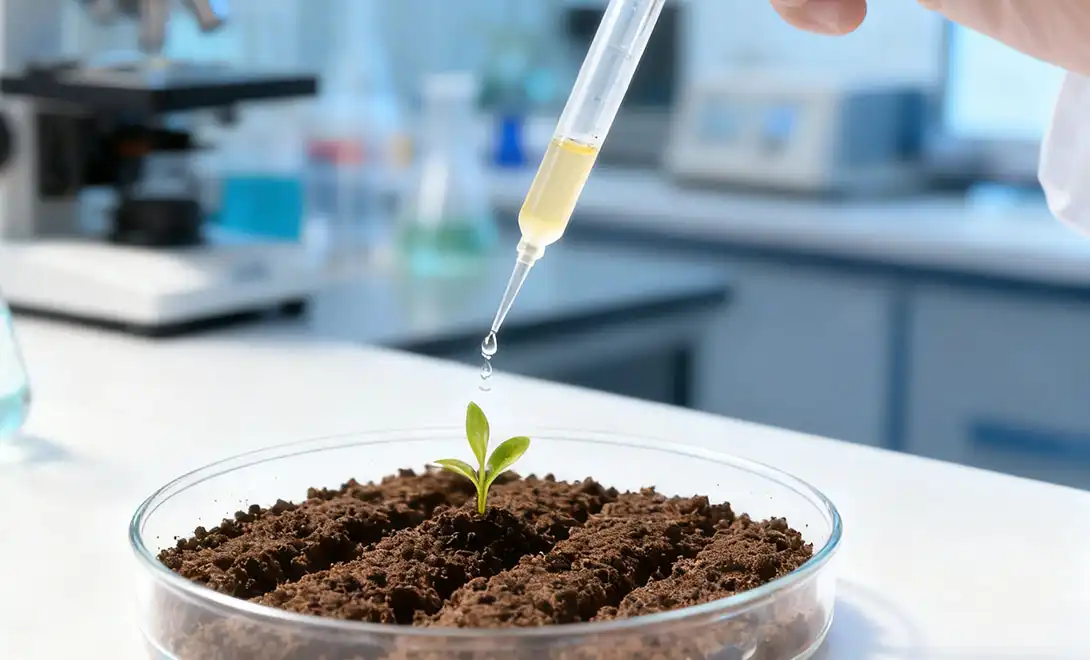
How does crop type influence the application method?
Different crops respond differently to foliar or soil AAPS applications. Understanding crop-specific needs helps maximize the benefits of peptide fertilizer.
1. Leafy Vegetables and Herbs
Crops such as spinach, lettuce, and basil respond well to foliar application because they have large leaf areas for efficient absorption quick nutrient correction is essential for fast-growing crops.However, growers should ensure that foliar residues do not affect market appearance.
2. Fruit Trees and Vines
Perennial crops—including citrus, apples, and grapes—benefit from a combined approach:Soil applications support long-term root and tree health,in the other hand,Foliar sprays enhance flowering, fruit set, and quality .This dual strategy ensures both fundamental and targeted nutrient delivery.
3. Row Crops
Corn, wheat, and soybeans mainly use soil application due to extensive roots, but foliar sprays remain useful during rapid growth, for acute deficiency correction, and to boost yields in high-performance cultivars.
4. Root and Tuber Crops
Potatoes, carrots, and other tuber crops respond strongly to soil application, which enhances soil fertility and root production. Foliar sprays may support foliage health but are secondary to root-zone nutrition.
5. Greenhouse Crops
In controlled environments, AAPS application is also precisely manageable: it integrates into hydroponic nutrient solutions, while soil-grown greenhouse crops benefit from both soil and foliar treatments, enabling customized nutrient programs for maximum growth efficiency. Additionally, yeast peptide powder boosts crop yields by 8–12% for rice, 10–15% for wheat, and 15–20% for tomatoes (outperforming amino acids).
Conclusion
Choosing between foliar spray and soil application of AAPS—particularly peptide fertilizer—requires careful consideration of crop requirements, growth stage, soil conditions, and environmental factors. Foliar sprays provide rapid effect and targeted interventions, while soil applications deliver long-term benefits for root development, soil health, and sustained plant growth.
In many cases, the most effective strategy combines both approaches:
soil application as the foundation + foliar sprays during critical growth stages or stress events.
As agriculture continues to face sustainability challenges and demands for improved productivity, the flexibility of AAPS application offers a valuable tool for modern crop management.
For growers, distributors, and agrochemical partners seeking to optimize nutrition programs with advanced AAPS solutions, LYS ECO provides high-quality peptide fertilizers backed by over 70 years of yeast bio-technology expertise. Our formulations, enriched with unique patented components and high concentrations of small-molecule peptides, support superior plant resilience, enhanced nutrient efficiency, and improved crop performance.
FAQs
Q1: How quickly can I see results from foliar application of AAPS?
A: Results from foliar application of AAPS can often be observed within a few days to a week, depending on the crop and environmental conditions. Visible improvements in plant vigor, color, and stress tolerance are typically the first signs of effectiveness.
Q2: Can AAPS be mixed with other fertilizers or pesticides?
A: Yes, AAPS are generally compatible with many fertilizers and pesticides. However, it's always recommended to perform a jar test before mixing to ensure compatibility. Additionally, consult the product label or manufacturer guidelines for specific mixing instructions.
Q3: How often should I apply AAPS to the soil for the best results?
A: The frequency of soil application depends on the crop type, growth stage, and soil conditions. Generally, applications every 2-4 weeks during the growing season are effective. However, for perennial crops or in intensive production systems, more frequent applications at lower doses might be beneficial. Always follow product-specific recommendations for optimal results.
Advanced Peptide Fertilizer Solutions for Optimal Crop Nutrition | LYS
Discover LYS ECO's advanced peptide fertilizer solutions, engineered for superior crop nutrition through both foliar and soil applications. Our innovative formulations, backed by over 70 years of expertise in yeast enzyme technology, offer unparalleled benefits for crop health, yield, and quality. Whether you're a manufacturer looking to enhance your product line, a distributor seeking high-value biostimulants, or a large-scale grower aiming to optimize crop performance, LYS ECO has the perfect solution for you. Experience the power of our patented nucleotide technology and small molecule peptides that ensure rapid absorption and exceptional efficacy. Ready to transform your agricultural inputs or crop management strategy? Contact us now at alice@aminoacidfertilizer.com to explore how our peptide fertilizer can revolutionize your approach to crop nutrition and drive sustainable agricultural success.
References
1. Smith, J.A. (2023). "Comparative Analysis of Foliar and Soil Application Methods for Amino Acid Plant Stimulants." Journal of Agricultural Science, 45(3), 287-301.
2. Chen, L., et al. (2022). "Impact of Peptide Fertilizers on Root Development and Nutrient Uptake Efficiency." Plant and Soil, 468, 145-159.
3. Rodriguez-Navarro, A. (2021). "Foliar Application of Biostimulants: Timing and Efficacy in Various Crop Systems." Frontiers in Plant Science, 12, 652842.
4. Thompson, R.B., et al. (2023). "Soil Health Improvements Following Long-term Application of Amino Acid-based Fertilizers." Soil Biology and Biochemistry, 176, 108856.
5. Yamada, K., and Xu, H.L. (2022). "Crop-Specific Responses to Amino Acid and Peptide-Based Biostimulants: A Meta-Analysis." Scientia Horticulturae, 293, 110688.
6. García-Martínez, A.M., et al. (2021). "Sustainable Agriculture: The Role of Amino Acids and Peptides in Enhancing Crop Resilience." Sustainability, 13(11), 6321.