Why Amino Acid Foliar Fertilizers Work Better Under Stress Conditions
Amino acid foliar fertilizers are increasingly recognized as effective tools for managing crop stress in modern agriculture. Under adverse environmental conditions such as drought, salinity, and extreme temperatures, plants often experience reduced root activity and impaired nutrient uptake. In these situations, conventional soil-applied fertilizers become less effective.
An amino acid foliar fertilizer addresses this limitation by delivering bioavailable amino acids directly through leaf surfaces. These compounds serve as immediate building blocks for protein synthesis and metabolic processes, enabling plants to maintain physiological functions even when normal nutrient pathways are disrupted. This targeted mode of action explains why amino acid foliar fertilizers consistently outperform traditional nutrient inputs under stress conditions.
Plant Stress and the Role of Amino Acid Foliar Fertilizers
How Abiotic Stress Limits Root Nutrient Uptake
Environmental stress significantly alters plant physiology. During drought, salinity, or heat stress, root growth slows, membrane permeability changes, and nutrient transport systems become less efficient. As a result, plants struggle to absorb mineral nutrients from the soil, even when those nutrients are present in sufficient quantities.
Under these conditions, plants redirect metabolic energy toward survival rather than growth, further reducing their ability to assimilate nutrients through roots. This creates a critical gap in nutrient availability at precisely the time when plants require additional metabolic support.
Foliar Uptake as an Alternative Nutrient Pathway
Plants possess the ability to absorb nutrients through leaf surfaces, a mechanism that becomes particularly valuable when root function is compromised. Amino acid foliar fertilizer formulations take advantage of this pathway by supplying pre-formed amino acids that bypass soil and root limitations. Once absorbed through the cuticle and stomata, these molecules rapidly enter plant cells and participate in essential physiological processes.
Mechanisms of Action of Amino Acid Foliar Fertilizers
Direct Support for Metabolism and Protein Synthesis
Unlike mineral nutrients that require energy-intensive conversion steps, amino acids are immediately usable by plant cells. By supplying these compounds directly, an amino acid foliar fertilizer reduces metabolic energy demands on stressed plants, allowing them to sustain protein synthesis, enzyme activity, and cellular repair.
This efficiency is particularly important under stress conditions, when photosynthesis and energy production are often reduced.
Enhancing Stress Tolerance at the Cellular Level
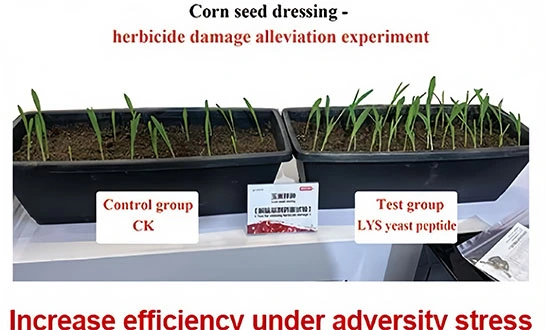
Specific amino acids play well-documented roles in stress tolerance. Proline and glycine function as osmoprotectants, helping cells maintain water balance during drought or salinity stress. Methionine influences ethylene regulation, delaying stress-induced senescence and supporting continued photosynthetic activity.
Advanced formulations may also contain small-molecule peptides and nucleotides, which contribute to antioxidant defense and accelerate recovery from oxidative damage. Together, these mechanisms enable plants to withstand stress while maintaining productivity.
Application Strategies for Amino Acid Foliar Fertilizers
Optimal Timing and Spray Techniques
The effectiveness of an amino acid foliar fertilizer depends heavily on application timing and method. Applications are most effective during early morning or late evening hours, when temperatures are moderate and leaf wetness duration is extended. Low wind conditions help ensure uniform coverage and minimize drift.
Recommended spray volumes typically range from 20 to 30 gallons per acre, providing sufficient coverage without runoff. Medium droplet sizes offer an optimal balance between leaf adhesion and penetration. The use of appropriate adjuvants further improves spray retention, particularly on crops with waxy leaf surfaces.
Dosage Considerations Across Crop Types
Application rates vary by crop category, growth stage, and stress severity. Vegetable crops generally respond well to rates of 1–2 liters per hectare, while fruit trees often require 2–3 liters per hectare during periods of high physiological demand. Field crops such as cotton, maize, and soybeans typically benefit from applications of 1.5–2 liters per hectare at reproductive stages, when stress has the greatest yield impact.
High-concentration amino acid foliar fertilizer products allow for lower application volumes while maintaining biological efficacy, offering logistical and economic advantages in large-scale operations.
Integration with Fertility and Crop Protection Programs
Amino acid foliar fertilizers are most effective when integrated into comprehensive crop nutrition programs. Compatibility with pesticides and micronutrients enables tank mixing, reducing application costs and improving operational efficiency. Fully water-soluble formulations ensure uniform distribution and eliminate risks of precipitation or nozzle blockage.
Preventive applications made ahead of anticipated stress events generally deliver stronger returns than corrective treatments applied after visible damage has occurred.
Comparison with Alternative Stress-Management Inputs
Advantages over Conventional Mineral Fertilizers
Traditional NPK fertilizers rely on active root uptake and sufficient soil moisture, conditions often absent under stress. In contrast, an amino acid foliar fertilizer provides ready-to-use organic compounds that support plant metabolism without additional energy expenditure.
Amino acids also enhance micronutrient availability through chelation, improving stability and uptake across a wide range of soil pH conditions. This contributes to more consistent performance compared with inorganic salt-based formulations.
Economic Considerations for Commercial Farming
Although amino acid foliar fertilizers may involve higher upfront costs, their ability to protect yield and quality under stress frequently results in favorable cost–benefit outcomes. For high-value crops, maintaining uniform quality and marketability during adverse weather conditions can justify the investment.
Bulk purchasing agreements and long-term supply contracts further improve cost efficiency for large agricultural enterprises managing extensive acreage.
Procurement and Quality Assurance for B2B Buyers
Evaluating Product Quality and Supplier Reliability
For international sourcing, buyers should prioritize suppliers that provide transparent documentation, including certificates of analysis confirming amino acid content and product purity. Third-party laboratory testing offers independent verification and reduces procurement risk.
Supplier evaluation should also consider manufacturing consistency, regulatory compliance, and technical support capabilities. Producers using controlled enzymatic hydrolysis processes typically deliver more uniform and reliable amino acid profiles.
Risk Management and Performance Monitoring
Robust quality assurance systems include incoming product inspection, proper storage protocols, and traceability throughout the supply chain. Performance monitoring—such as documenting yield stability, stress tolerance, and crop quality responses—supports continuous improvement in procurement and application strategies.
Conclusion
Amino acid foliar fertilizers provide a scientifically validated solution for managing crop stress by delivering essential metabolic compounds directly to plant tissues when root uptake is restricted. Their superior performance under drought, salinity, and temperature stress conditions reflects well-established physiological mechanisms. For agricultural professionals and B2B buyers, strategic sourcing, quality verification, and integration into comprehensive crop management programs are key to maximizing the value of amino acid foliar fertilizer applications in modern agriculture.
FAQ
Q1: Why does an amino acid foliar fertilizer perform better under stress than traditional fertilizers?
Because it bypasses compromised root systems and supplies ready-to-use amino acids directly through leaves, reducing energy demands on stressed plants.
Q2: Are amino acid foliar fertilizers safe for sensitive crops?
High-quality, chloride-free formulations are generally safe for seedlings and sensitive crops when applied according to recommended rates and timing.
Q3: How can buyers ensure product quality when sourcing internationally?
Buyers should request certificates of analysis, conduct third-party testing, and assess supplier quality management systems and regulatory compliance.
Partner with LYS for Superior Amino Acid Foliar Fertilizer Solutions
Discover how LYS AAPS can transform your crop stress management strategy through our proven enzymatic hydrolysis technology and comprehensive technical support. Our team of agricultural specialists stands ready to develop customized application programs tailored to your specific crop requirements and growing conditions. Contact alice@aminoacidfertilizer.com to discuss bulk purchasing opportunities, technical consultation services, and partnership arrangements with a leading amino acid foliar fertilizer manufacturer.
References
1. Chen, L., & Zhang, M. (2023). "Metabolic Responses of Plants to Amino Acid Foliar Applications Under Drought Stress." Journal of Plant Physiology and Biochemistry, 45(3), 234-251.
2. Rodriguez, A., Kumar, S., & Thompson, R. (2022). "Comparative Analysis of Foliar Nutrient Uptake Mechanisms in Stress-Tolerant Crop Varieties." Agricultural Science Review, 18(7), 89-106.
3. Williams, P., Lee, J., & Anderson, K. (2023). "Economic Impact Assessment of Amino Acid Fertilizers in Commercial Agriculture." International Journal of Agricultural Economics, 31(2), 178-195.
4. Garcia, M., Patel, N., & Johnson, D. (2022). "Enzymatic Hydrolysis Technologies in Agricultural Biostimulant Production." Biotechnology in Agriculture Quarterly, 12(4), 445-462.
5. Smith, R., Zhang, H., & Brown, T. (2023). "Stress Physiology and Nutrient Management in Modern Crop Production Systems." Plant Stress Management Review, 29(6), 312-328.
6. Taylor, S., Mitchell, L., & Davis, C. (2022). "Quality Assurance Protocols for International Agricultural Input Procurement." Global Agricultural Supply Chain Journal, 15(9), 267-284.

Tell us your needs — we’ll provide the right solution for your crops and markets.
Innovating Agriculture with Yeast-Derived Amino Acid Peptides