Sustainable Biostimulants: Solving Soil Degradation in Organic Farming
Sustainable agriculture faces increasing pressure as soil health continues to decline in many regions of the world. Long-term intensive cultivation, climate variability, and simplified crop rotations have gradually reduced soil fertility and biological activity. These changes make it more difficult for farmers to maintain productivity while complying with environmental and organic certification standards.
In this context, organic biostimulants are gaining attention as an innovative approach to restoring soil vitality. These biologically derived products stimulate plant metabolism and enhance microbial activity in the soil without relying on synthetic chemicals. Unlike conventional fertilizers that mainly provide nutrients, organic biostimulants activate natural physiological processes that improve nutrient efficiency, root development, and plant resilience.
As global demand for sustainable agriculture grows, organic biostimulant technologies are increasingly being integrated into soil management strategies that aim to restore long-term productivity while protecting the ecological balance of agricultural systems.

Understanding Soil Degradation in Organic Farming Systems
Root Causes of Soil Deterioration
Soil degradation is a complex process influenced by multiple agricultural and environmental factors. One of the primary causes is the gradual loss of soil organic matter resulting from intensive cultivation. Organic matter plays a crucial role in maintaining soil structure, water retention, and microbial diversity. When it declines, the soil’s capacity to support plant growth is significantly reduced.
Another contributing factor is soil compaction caused by repeated use of heavy machinery. Compacted soil reduces pore space, limiting oxygen availability and restricting microbial activity. As beneficial microorganisms decline, nutrient cycling processes slow down, making it more difficult for plants to access essential nutrients.
Monocropping practices can further accelerate soil degradation. Growing the same crop repeatedly depletes specific nutrients while reducing biological diversity in the soil ecosystem. Without diverse plant inputs, natural biological processes that help maintain soil balance gradually weaken.
Climate change also intensifies these challenges. Increased frequency of droughts, irregular rainfall patterns, and extreme temperatures disrupt soil microbial communities and alter natural water cycles. These conditions accelerate erosion and reduce the soil’s capacity to retain moisture and nutrients.
Impact on Organic Crop Production
For organic farming systems, soil degradation presents a particularly serious challenge. Organic producers rely heavily on biological processes rather than synthetic inputs to sustain crop productivity. When soil biological activity declines, the natural mineralization processes that convert organic materials into plant-available nutrients become less efficient.
Poor soil structure can also restrict root development. Limited root growth reduces plants’ ability to access water and nutrients during critical growth stages, increasing vulnerability to environmental stress.
Because organic standards restrict the use of many synthetic soil amendments, farmers have fewer immediate intervention options compared with conventional systems. As a result, restoring soil biological activity becomes essential for maintaining long-term productivity within organic agriculture.
The Role of Organic Biostimulants in Soil Restoration
Biological Mechanisms of Soil Improvement
Organic biostimulants contribute to soil restoration primarily by stimulating biological processes within both plants and soil ecosystems. Many formulations contain compounds that activate microbial communities and enhance the availability of nutrients already present in the soil.
Humic and fulvic acids, for example, improve soil aggregation and structure. These compounds help bind soil particles into stable aggregates, increasing water retention and aeration while promoting healthy root development.
Seaweed extracts provide complex polysaccharides and other bioactive molecules that support beneficial microbial growth. These substances act as carbon sources for soil microorganisms, encouraging microbial diversity and biological activity.
Protein hydrolysates represent another important category of organic biostimulants. These products contain peptides and amino acids that function as signaling molecules in plant metabolism. Small peptides—often with molecular weights below 1000 Daltons—can be rapidly absorbed by plant tissues and stimulate physiological responses associated with stress tolerance and root growth.
Scientific Evidence and Field Performance
A growing body of research supports the effectiveness of organic biostimulants in improving soil health and crop performance. Field studies have shown that regular application of organic biostimulants can increase soil organic matter levels by 15–25% over two growing seasons.
Research trials conducted by universities and agricultural institutes also report improvements in soil microbial diversity. In many cases, populations of beneficial microorganisms increased by 40–60% compared with untreated soil.
These biological improvements often translate into measurable agronomic benefits. Crops grown in soils treated with organic biostimulants frequently demonstrate stronger root systems, improved nutrient uptake, and greater resilience to environmental stress.
Across a variety of cropping systems, yield improvements ranging from 8–18% have been observed when organic biostimulants are incorporated into integrated soil management programs. These results suggest that biological soil enhancement strategies can play an important role in sustainable agricultural intensification.
Comparing Organic Biostimulants with Other Soil Improvement Approaches
Performance Compared with Conventional Fertilizers
Conventional chemical fertilizers primarily focus on delivering readily available nutrients such as nitrogen, phosphorus, and potassium. While these inputs can rapidly stimulate plant growth, they do not directly address underlying soil health issues.
In some cases, excessive use of synthetic fertilizers may even contribute to soil degradation by increasing soil acidity or reducing microbial diversity. Over time, this can lead to greater dependency on external inputs to maintain yields.
In contrast, organic biostimulants aim to improve the soil ecosystem itself. By enhancing microbial activity and natural nutrient cycling, these products support long-term soil fertility rather than short-term nutrient supplementation alone.
Natural Versus Synthetic Biostimulants
Both natural and synthetic biostimulants are available in the agricultural market. Synthetic formulations may contain isolated active compounds designed to target specific plant responses. However, natural organic biostimulants often contain a broader spectrum of bioactive molecules that interact synergistically within plant and soil systems.
This complexity can provide more balanced biological stimulation, more closely resembling natural soil processes. As a result, many organic farmers prefer naturally derived biostimulants that align with ecological production principles.
Selection Criteria for Effective Products
Selecting appropriate organic biostimulants requires careful evaluation of product composition and manufacturing quality. High-quality products are typically produced through controlled fermentation or enzymatic hydrolysis processes that preserve bioactive compounds.
Product stability and compatibility with existing agricultural practices are also important considerations. Effective formulations should remain stable across a wide pH range and integrate smoothly with existing irrigation or nutrient management systems.
Different crops and growth stages may require different types of biostimulant formulations. Root crops may benefit from products that stimulate microbial interactions around the root zone, while fruiting crops may require formulations that enhance stress tolerance during flowering and fruit development.
Application Methods and Best Practices
Foliar Application Strategies
Foliar application is a widely used method for delivering organic biostimulants directly to plant tissues. When applied during key growth stages, foliar treatments can rapidly stimulate physiological responses associated with nutrient assimilation and stress resistance.
Application timing plays an important role in maximizing effectiveness. Early morning or late afternoon spraying helps reduce ultraviolet degradation and improves absorption through leaf surfaces.
Maintaining spray solution pH within an optimal range—generally between 5.5 and 6.5—can further improve stability and absorption of active ingredients.
Many modern biostimulant formulations are designed to be compatible with standard tank-mix systems, allowing farmers to combine them with routine nutrient or crop protection applications. This compatibility can improve operational efficiency while maintaining biological effectiveness.
Soil Application Techniques
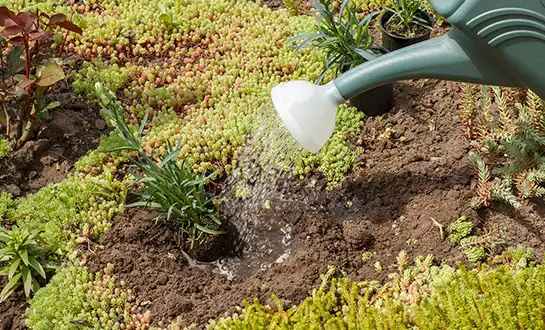
Soil application focuses on improving conditions in the rhizosphere, where root activity and microbial interactions are most intense. Fertigation systems are particularly effective because they deliver biostimulants directly to root zones with irrigation water.
Continuous low-dose programs can help maintain stable microbial populations throughout the growing season. Typical application rates range from 1–3 liters per hectare, depending on soil conditions and crop requirements.
Seed treatments represent another effective strategy. Applying organic biostimulants to seeds before planting can enhance early root development and improve plant establishment in challenging soil environments.
Field Case Observations
Field experiences from various agricultural regions provide additional insights into the practical benefits of organic biostimulants. Organic vegetable growers in Europe have reported yield increases of approximately 20% when combining soil and foliar biostimulant programs.
In fruit orchards in the United States, growers using organic biostimulants during drought periods have observed improved water-use efficiency and stable fruit yields compared with untreated blocks.
Long-term monitoring of these systems also suggests gradual improvements in soil structure, water infiltration, and biological activity, indicating that soil restoration effects accumulate over time.
Procurement and Supply Considerations
Quality Assurance and Certification
For large-scale agricultural operations, sourcing reliable organic biostimulant products requires careful supplier evaluation. Reputable manufacturers typically maintain strict quality control systems to ensure consistent concentrations of active ingredients.
Certifications such as OMRI (Organic Materials Review Institute) verification confirm that products meet organic farming standards. Additional quality certifications, including ISO manufacturing standards, demonstrate adherence to internationally recognized production practices.
Suppliers should also provide detailed technical documentation covering product composition, heavy metal levels, microbial safety, and recommended application guidelines.
Supply Chain Stability
Reliable logistics and product stability are critical considerations for international agricultural supply chains. Professional-grade biostimulant formulations should remain stable across a broad temperature range to prevent degradation during transportation.
Modern packaging technologies designed to protect moisture-sensitive ingredients can further enhance product stability and shelf life.
Many agricultural distributors also value suppliers that provide agronomic guidance, training programs, and technical support services to ensure proper application and maximize product effectiveness in the field.
Conclusion
Soil degradation represents a major challenge for organic farming systems seeking to maintain productivity while protecting environmental sustainability. Declining soil organic matter, reduced microbial diversity, and increasing climate stress all contribute to the complexity of modern soil management.
Organic biostimulants provide a promising solution by stimulating biological processes that restore soil vitality and enhance plant resilience. By improving microbial activity, supporting nutrient cycling, and strengthening plant stress responses, these products help rebuild the natural foundation of productive agricultural soils.
As research and field experience continue to expand, organic biostimulants are becoming an increasingly important component of sustainable soil management strategies. When integrated with responsible crop rotation, organic amendments, and precision farming techniques, they offer a pathway toward long-term agricultural productivity and ecological balance.
FAQ
1. What distinguishes organic biostimulants from traditional fertilizers?
It's not like NPK fertilizers, which give plants nutrients directly. Instead, organic biostimulants make the earth and plants more biologically active. There are no man-made drugs in these things; instead, they help the body's natural processes work better, which makes it better at taking in nutrients and handling stress.
2. How quickly can producers expect visible results from biostimulant applications?
When applied to the leaves, plants generally start to grow again in 7–14 days. It takes 4–8 weeks for changes in the soil to become noticeable as new germs settle in. More and more good things happen during the growing season. After two full crop cycles, the soil's health has changed a lot.
3. Are organic biostimulants compatible with existing farm management programs?
Formulas made for professionals work perfectly with both normal spray plans and fertigation systems. Tank mixing that works with pH levels between 4.0 and 9.0 lets you do what you need to do while still being biologically efficient.
Partner with LYS for Premium Organic Biostimulant Solutions
Science-proven methods used by LYS are used to make organic biostimulant technology that improves the health of the soil and the growth of crops. Our one-of-a-kind FSDT peptide technology works better and more reliably in a lot of different farming situations. Because we are a trustworthy business that makes organic biostimulants, we can help farms by giving them a lot of technical help, special recipes, and reliable global supply lines. Our approved organic biostimulants can help you take better care of your land and get more done in the long run. Email our team at alice@aminoacidfertilizer.com to learn more. There is a lot of information on Lyspeptide.com about their goods and how to use them.
References
1. Smith, J.A., and Brown, K.L. "Microbial Response to Organic Biostimulants in Degraded Agricultural Soils." Journal of Sustainable Agriculture, vol. 45, 2023, pp. 234-251.
2. Martinez, C.D., et al. "Peptide-Based Biostimulants: Mechanisms and Applications in Organic Farming Systems." Soil Biology and Biochemistry, vol. 178, 2023, pp. 108-124.
3. Thompson, R.M., and Wilson, A.P. "Comparative Analysis of Soil Health Improvements Using Natural vs. Synthetic Biostimulants." Agricultural Systems, vol. 201, 2022, pp. 456-472.
4. Chen, L.W., and Davis, M.E. "Economic Impact Assessment of Organic Biostimulant Adoption in Commercial Agriculture." Agricultural Economics Review, vol. 38, 2023, pp. 189-206.
5. Rodriguez, P.S., et al. "Molecular Weight Optimization in Protein Hydrolysate Biostimulants for Enhanced Plant Uptake." Plant Physiology and Biochemistry, vol. 192, 2023, pp. 77-89.
6. Anderson, K.J., and Miller, T.R. "Long-term Soil Restoration Using Organic Biostimulant Technology: A Five-Year Field Study." European Journal of Soil Science, vol. 74, 2023, pp. 312-328.

Tell us your needs — we’ll provide the right solution for your crops and markets.
Innovating Agriculture with Yeast-Derived Amino Acid Peptides