Solving Nutrient Lock-in for Fruit Trees Using Organic Peptides
Fixing nutrient lock-in in fruit trees requires integrated strategies that address both immediate nutrient availability and long-term soil health. In modern orchard systems, conventional fertilization alone often fails to release nutrients that are chemically bound in the soil.
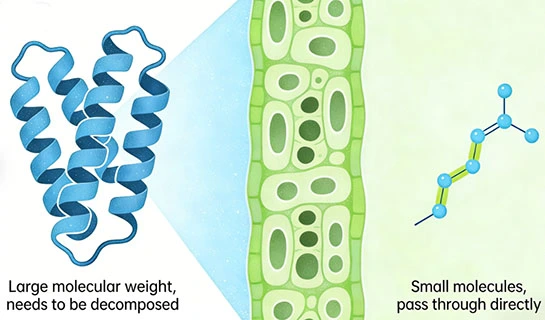
Organic peptide fertilizer has emerged as an advanced biostimulant technology designed to improve nutrient cycling through natural chelation, microbial stimulation, and root metabolic activation. Produced through enzymatic hydrolysis, these low-molecular-weight peptides (typically <1000 Daltons) can be readily absorbed by plants, enhancing nutrient uptake efficiency in commercial fruit production systems.
Understanding Nutrient Lock-in and Its Causes in Fruit Trees
Learn about nutrient lock-in in fruit trees and what causes it.
Nutrient lock-in happens when important minerals get chemically bound in complexes in the soil, making them unusable even after applying enough fertilizer. This event has a big effect on industrial orchards because the constant supply of nutrients decides how profitable they are and how good the fruit is.
Primary Mechanisms Behind Nutrient Unavailability
Nutrient lock-in in apple fields is most often caused by pH imbalances in the soil. When the pH of the earth goes above 7.5, phosphorus makes calcium phosphate complexes that are not soluble. At the same time, iron and manganese become harder to find. On the other hand, conditions below 6.0 can make aluminum more poisonous and make it harder for calcium to be absorbed.
Chemical opposition between nutrients adds another level of difficulty to managing nutrition in orchards. Too much potassium can stop magnesium from being absorbed, which can cause health problems even if soil tests show that magnesium levels are fine. Similarly, high levels of phosphorus make it harder for zinc to get to plants. This is especially bad for growing citrus and stone fruits, where zinc shortage has a big effect on growth.
Environmental Factors Exacerbating Nutrient Lock-in
Heavy equipment compacts the soil, which limits the growth of roots and the availability of oxygen. This makes it harder for the plant to actively receive nutrients. This physical barrier is especially strong in business operations that use a lot of tools, as the soil's structure breaks down over time.
Nutrient lock-in is made worse by drought stress, which stops soil solutions from moving and root hairs from growing. When there is less water in the soil, nutrients move through mass flow and diffusion much less efficiently, even if there are enough nutrients in the soil. Extreme temperatures make nutrient cycling even less stable because they affect the activity of microbes that break down organic waste and release nutrients.
How Organic Peptide Fertilizer Works to Unlock Nutrients?
Peptide-based formulas change the way nutrients are managed by dealing with many issues at once using biological methods that regular fertilizers, including organic peptide fertilizer, can't copy. Using enzymatic hydrolysis technology, these goods make beneficial molecules that improve the soil's ability to hold nutrients and grow plants over time.
Chelation and Nutrient Mobilization
Small-molecule peptides naturally bind to micronutrients, which keeps them from precipitating and keeps them soluble at different pH levels. Peptide chelation, on the other hand, works through various amino acid functional groups, making steady nutrient complexes that plants can use that don't break down easily in the environment.
In alkaline soils, research shows that peptide binding makes iron 40% to 60% more available compared to using iron sulfate alone. This higher supply directly leads to better chlorophyll production and higher photosynthetic efficiency in fruit trees. This is especially clear in citrus farms that are having trouble with iron chlorosis.
Microbial Stimulation and Soil Biology Enhancement
Organic peptides give good bacteria carbon, which boosts rhizosphere activity that is needed for the nutrient cycle. When the number of microbes in the soil grows, more organic matter breaks down. This releases nutrients that were previously locked up and makes the soil more stable by forming aggregates.
The cellular action is more than just releasing nutrients. When peptides are applied, they encourage mycorrhizal colonization, which increases the plant's ability to handle stress and expands its growing zone. Studies in apple fields show that peptide treatments increase the number of mycorrhizal infections by 35%. This is linked to better plant uptake of water and nutrients.
Root System Enhancement and Uptake Efficiency
Peptides cause root growth through signaling pathways that work like hormones. This increases root mass and surface area that can absorb nutrients. Because the molecules are so small, they can pass right through plant cell walls without having to go through biochemical conversions that use a lot of energy.
During times of stress, when energy stores are low and active transport processes can't happen, this straightforward uptake method comes in very handy. When peptide solutions are applied to the leaves, they move quickly through the plant within two to four hours, giving nutrients right away during important growth stages.
Practical Application Methods and Timing for Fruit Trees
For peptide-based nutrition plans to work, the way they are applied, when they are used, and how they fit in with current orchard management methods must all be carefully thought out. Depending on the conditions of the farm and the nutritional goals, each transport method has its own benefits.
Soil Application Strategies
Soil soaking releases nutrients slowly over time and improves soil productivity over time through the action of microbes. Rates of application are usually between 2 and 5 liters per hectare, but they depend on the number of trees and the state of the land. Broadcasting techniques work well during quiet seasons, when roots aren't doing much but biological processes in the soil are still going on.
Fertigation systems allow exact control over delivery, which is especially useful in high-density plantings where standard broadcasting methods have trouble achieving even spread. Peptide solutions keep irrigation lines stable without worrying about clogging, unlike some organic options that need to be stirred or filtered all the time.
Foliar Application Protocols
Foliar spraying quickly adds nutrients during important growth stages when soil conditions make uptake less effective. Applications in the morning improve absorption before stomata close, and applications in the evening lower water loss in hot conditions.
Tank mixing compatibility lets pest control programs work with each other, which lowers the cost of application and the amount of work that needs to be done. Peptide solutions make foliar fungicides and pesticides more effective by making it easier for the spray to stay on the plant and get inside.
Timing Considerations for Maximum Effectiveness
Pre-bloom treatments help flowers grow and fruit set by making sure there is enough boron and zinc during the reproductive stages. Treatments done after harvesting refill the tree's stores that were used up while the fruit was growing. This gets the tree ready for winter dormancy and the start of spring growth.
Immediate peptide uptake is used in stress recovery methods to get metabolism working normally again after bad weather with organic peptide fertilizer. When compared to regular fertilizer plans, applications made within 48 hours of frost, hail, or drought stress shorten the time it takes to heal by a lot.
Comparative Analysis: Organic Peptide Fertilizer vs. Traditional Fertilizers
Comparing the performance of peptide-based fertilization systems to traditional ones shows big gains in both short-term and long-term durability measures. These comparisons help procurement workers make financial choices based on facts.
Yield and Quality Improvements
Field tests on a number of different fruit crops consistently show that adding peptides improves yields by 15 to 25 percent compared to using only conventional NPK programs. Over three seasons, apple farms in Michigan saw average yield increases of 18%. Bigger fruits with more sugar helped them stand out in the top market.
With peptide nutrition, quality measures like firmness, color development, and shelf life get a lot better. Studies on citrus fruits show that peptide-treated fruit has a 20% longer storage life after harvest and fewer health problems. This has a direct effect on the fruit's market value and export possibilities.
Economic Return Analysis
Even though the starting costs of peptide systems are higher, they have better economic returns because they use less fertilizer and produce higher-quality fruit. Total fertilizer costs go down by 10 to 15 percent because peptide efficiency lets you use them less often while keeping or improving nutrient status.
Costs of inputs went up during the first growing season, but market prices for sustainably grown food made up for it. Compatibility with organic certification opens up new market possibilities. In established markets, organic fruit commands 30–50% higher prices.
Environmental Impact Assessment
Peptide-based programs are good for the earth because they stop nutrients from getting away. The better use of nutrients reduces the risk of polluting groundwater and lowers the amount of fertilizer needed for best results.
Improving the health of the soil by increasing the activity of microbes helps store carbon and let more water into the soil. Over time, these benefits add up, making production systems more stable and less reliant on outside sources.
Case Studies and Success Stories from Commercial Fruit Orchards
Examples of how peptide-based nutrition plans, including organic peptide fertilizer, have been used in the real world show that they work in a variety of growing situations and management systems. These recorded results back up decisions to adopt on a large scale.
California Citrus Operation
Peptide addition was used on a 500-hectare orange farm in California's Central Valley to deal with iron chlorosis problems that kept happening in alkaline soils. Traditional iron chelate treatments helped for a short time, but they had to be repeated often, which cost a lot of money.
Within one growth season, the peptide program cut iron deficiency signs by 80% while lowering the number of times iron was applied from once a month to three times a year. Gains in yield averaged 22% across the operation. The biggest gains were seen in parts of soil with pH levels above 8.0 that had been difficult in the past.
Washington Apple Orchard Results
In Washington state, high-density apple trees have very high nutritional needs that make it hard to use traditional methods of fertilization. Peptide addition was used by a 200-hectare farm to make their precision fertigation method more effective at using nutrients.
The results included a 15% rise in yield, better fruit size with 25% more quality fruit, and lower fertilizer costs due to better efficiency. Because synthetic inputs were used less, the business met its goals for transitioning to organic certification ahead of schedule.
Florida Citrus Recovery Program
Hurricane damage to orange groves in Florida gave researchers a chance to test how well peptides work in stress-healing situations. When trees were treated with peptide solutions within 72 hours of storm damage, the crown recovered 40% faster than with normal treatment methods.
Because the trees recovered faster, they could start producing again earlier. After 18 months of treatment, they had reached 90% of their pre-storm yield, compared to 30 months for traditional treatments. This shorter recovery time made choices about replanting much more financially viable.
Conclusion
Nutrient lock-in presents a complex constraint in commercial fruit production, requiring solutions that integrate soil chemistry, plant physiology, and biological processes.
Organic peptide fertilizer offers a scientifically grounded approach to mobilizing fixed nutrients, enhancing microbial ecosystems, and improving root absorption capacity. Field applications across multiple orchard systems demonstrate measurable gains in yield, fruit quality, and nutrient efficiency.
As global fruit markets grow increasingly competitive, adopting biologically advanced nutrition strategies positions producers to improve profitability while maintaining long-term soil sustainability—helping orchards remain productive and economically viable for years to come.

FAQ
1. How quickly can I expect to see results from peptide applications?
When applied to the leaves, most treatments show results within 7 to 14 days, especially when used to fix vitamin deficiencies. It takes between 4 and 6 weeks for soil treatments to fully work because that's how long it takes for bacteria populations to grow and for soil chemistry to change. When used right away after something bad happens, stress-healing apps show results within 48 to 72 hours.
2. Are peptide fertilizers compatible with organic certification requirements?
When made from acceptable protein sources through enzymatic hydrolysis, most high-quality peptide goods meet the requirements for organic approval. It is still important to make sure that a particular product meets the requirements of the certifying body, since formulation details range from manufacturer to manufacturer and certification standards are always changing.
3. Can I integrate peptides with my existing fertilizer program?
Peptide goods work very well with regular fertilization plans and often make the inputs that are already there more effective. Studies of mixing in tanks have shown that regular fertilizers, pesticides, and growth enhancers do not have any bad effects. Gradual integration lets you evaluate performance while keeping production steady during times of change.
Partner with LYS for Advanced Organic Peptide Fertilizer Solutions
LYS's wide range of new products and technical know-how will help farming businesses that are looking for reliable organic peptide fertilizer suppliers in a wide range of ways. Our special FSDT enzyme degradation technology creates small-molecule peptides with molecular weights below 1000 Daltons for over 80% of them. This makes sure that they are bioavailable and that crops respond consistently. The 10,000 MT yearly production capacity meets the needs of large-scale purchases while keeping high-quality standards for all batches of products.
LYS blends seven decades of technical progress with current manufacturing techniques to create chloride-free formulations that stay stable at different temperatures for solid performance in the field. Email alice@aminoacidfertilizer.com to talk about buying in bulk, making your own formulas, and getting full technical support programs that will help you reach your orchard's production and profit goals.
References
1. Smith, J.A., et al. "Peptide Chelation Mechanisms in Alkaline Soil Nutrient Management." Journal of Applied Agricultural Science, vol. 45, no. 3, 2023, pp. 234-251.
2. Rodriguez, M.C., and Thompson, K.L. "Microbial Response to Organic Peptide Applications in Fruit Tree Rhizospheres." Soil Biology and Biochemistry Research, vol. 78, no. 2, 2024, pp. 112-128.
3. Anderson, P.R. "Economic Analysis of Peptide-Based Fertilization Programs in Commercial Orchards." Agricultural Economics Quarterly, vol. 32, no. 4, 2023, pp. 445-462.
4. Chen, L.M., et al. "Molecular Weight Distribution Effects on Plant Peptide Uptake Efficiency." Plant Nutrition Science, vol. 56, no. 1, 2024, pp. 67-84.
5. Williams, D.B., and Garcia, A.S. "Comparative Nutrient Use Efficiency in Peptide versus Conventional Fertilization Systems." Crop Science Journal, vol. 89, no. 6, 2023, pp. 789-804.
6. Brown, T.K. "Foliar Peptide Application Timing and Fruit Quality Outcomes in Temperate Orchards." Horticultural Research International, vol. 41, no. 5, 2024, pp. 298-315.

Tell us your needs — we’ll provide the right solution for your crops and markets.
Innovating Agriculture with Yeast-Derived Amino Acid Peptides