Improving Leafy Vegetable Quality with Liquid Amino Acid Fertilizers
Improving leafy vegetable quality remains a central objective for modern agricultural production systems. In high-value crops such as lettuce, spinach, arugula, and brassica greens, market acceptance depends on leaf color, uniformity, texture, and nutritional value. Within this context, liquid amino acid fertilizer has gained attention as a complementary biostimulant technology that supports nutrient efficiency and plant stress management.
Unlike conventional nitrogen fertilizers that supply inorganic nitrogen requiring metabolic conversion, liquid amino acid fertilizer formulations provide pre-hydrolyzed organic nitrogen in the form of free L-amino acids and low-molecular-weight peptides. These compounds can be directly absorbed and utilized by plants, potentially reducing metabolic energy expenditure during periods of active growth or environmental stress. Commercial producers increasingly evaluate these formulations as part of integrated nutrient management strategies aimed at improving crop quality and consistency.
Understanding Liquid Amino Acid Fertilizer and Its Role in Leafy Vegetable Production
Liquid amino acid fertilizers are concentrated biostimulant solutions typically produced through enzymatic or controlled hydrolysis of protein-rich raw materials such as corn, soybean meal, or yeast extracts. High-quality products generally contain 30–50% total amino acids, with 10–40% present as free amino acids in the biologically active L-form.
Bioavailability and Plant Uptake Mechanisms
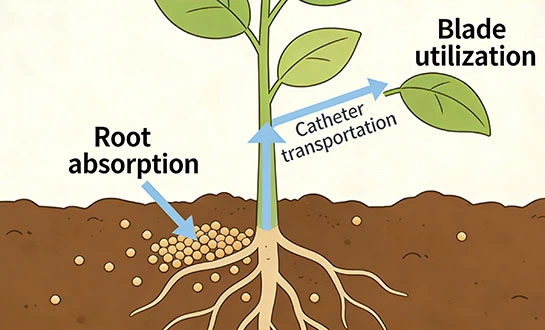
Plants absorb amino acids through both root transporters and foliar pathways. Because these molecules are already in organic form, they can enter plant metabolic cycles directly, contributing to protein synthesis, chlorophyll formation, and enzymatic activity.
In contrast, nitrogen from urea or ammonium-based fertilizers must first be assimilated into amino acids within plant tissues, a process that requires energy and enzymatic conversion. Under optimal growing conditions this conversion proceeds efficiently; however, during stress (e.g., transplanting, temperature fluctuations, or drought), metabolic limitations may reduce nitrogen assimilation efficiency. In such cases, supplemental amino acids may help maintain physiological balance.
Effects on Leaf Color, Biomass, and Nutritional Quality
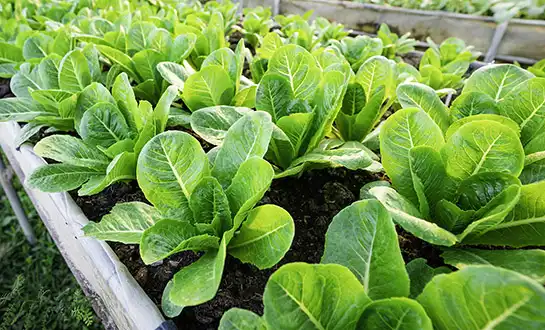
Leafy vegetables are particularly responsive to nitrogen metabolism due to their short growth cycles and high chlorophyll demand. Improved amino acid availability may contribute to:
- Enhanced chlorophyll synthesis and deeper green coloration
- More uniform leaf expansion
- Improved recovery following abiotic stress
- Balanced vegetative growth without excessive nitrate accumulation
Field observations and controlled trials often report measurable improvements in biomass development and visual quality parameters when amino acid-based supplements are integrated into standard fertilization programs.
Influence on Soil Microbiome and Nutrient Cycling
When applied through soil or fertigation systems, liquid amino acid fertilizer may also influence rhizosphere activity. Amino acids can serve as carbon and nitrogen substrates for beneficial soil microorganisms, potentially enhancing microbial diversity and nutrient cycling processes.
This indirect biological effect may support root development, micronutrient availability, and overall soil structure over time. While outcomes depend on soil type and management practices, integrating biostimulants into fertility programs aligns with broader soil health strategies in sustainable vegetable production.
Application Strategies for Liquid Amino Acid Fertilizer in Leafy Crops
Effective use of liquid amino acid fertilizer requires attention to timing, dosage, and compatibility with existing agronomic practices. Results are typically optimized when applications correspond with key physiological stages of crop development.
Optimal Timing and Frequency
Leafy vegetables exhibit peak metabolic activity during early vegetative growth and rapid leaf expansion. Application during these stages may enhance nutrient assimilation and canopy development.
Common practical approaches include:
- Foliar applications during early morning or late afternoon to maximize stomatal absorption
- Weekly or biweekly treatments depending on crop cycle length
- Supplemental applications after transplanting or following environmental stress events
Pre-harvest applications are sometimes used to enhance leaf coloration and market appearance, provided label recommendations are followed.
Foliar Versus Soil Application
Foliar spraying allows for rapid absorption and is frequently used to address short-term physiological demands. Visible changes in leaf vigor and coloration may be observed within several days under favorable conditions.
Soil or fertigation applications contribute to longer-term root zone enhancement and microbial stimulation. Many commercial operations adopt a combined approach, using soil application for baseline support and foliar treatments for targeted quality improvement.
Compatibility and Tank Mixing Considerations
Liquid amino acid fertilizer products are generally compatible with many water-soluble fertilizers and crop protection inputs. Amino acids may improve spray coverage and reduce plant stress associated with certain agrochemical treatments.
However, compatibility testing is recommended before mixing with copper-based products or highly alkaline solutions to avoid precipitation or phytotoxicity. Following manufacturer guidelines and conducting small-scale trials remain best practice.
Comparison with Conventional and Organic Fertilizer Programs
For procurement and technical managers, evaluating liquid amino acid fertilizer involves comparing agronomic performance, cost efficiency, and sustainability metrics against alternative nutrient sources.
Performance Relative to Synthetic Nitrogen Fertilizers
Although synthetic nitrogen fertilizers such as urea and ammonium sulfate are still the main nitrogen sources due to their cost efficiency and stable nutrient content, their efficacy depends on plant metabolic conversion. Amino acid fertilizers do not replace traditional nitrogen fertilizers but can complement them by improving nitrogen use efficiency, enhancing stress tolerance, and stabilizing growth under unfavorable conditions. Therefore, the integrated application of inorganic nitrogen and amino acid fertilizers helps balance both crop yield and quality.
Positioning Among Organic Nutrient Sources
Traditional organic fertilizers such as compost and manure release nutrients gradually and contribute significantly to soil organic matter. However, nutrient release rates may vary depending on environmental conditions.
Liquid amino acid fertilizer offers more immediate availability and precise application control. Due to its concentrated form, transportation and storage efficiency may also be improved compared to bulky organic amendments. For operations requiring rapid crop response, amino acid-based inputs can serve as a complementary tool within organic or integrated systems, provided certification requirements are met.
Environmental and Sustainability Considerations
When derived from plant-based or fermentation sources, amino acid fertilizers can support circular nutrient economy models. Improved nutrient uptake efficiency may reduce nitrate leaching risks compared to excessive inorganic nitrogen application.
Additionally, optimized nutrient management strategies that incorporate biostimulants may help growers achieve environmental compliance targets while maintaining competitive productivity.
Procurement Guide: Sourcing Liquid Amino Acid Fertilizers for B2B Buyers
To successfully buy amino acid fertilizers, you need to carefully consider the skills of the seller, the product specs, and shipping issues to make sure that you always have a steady supply of high-quality materials for commercial production.
Essential Product Specifications and Quality Standards
To be considered high-quality, amino acid fertilizers must have at least 30% total amino acids and at least 10% free L-shaped amino acids. The process of hydrolysis has a big effect on the quality of the result. Enzymatic hydrolysis keeps amino acid stability better than acid hydrolysis. Suppliers you can trust give you thorough amino acid profiles that show the presence of important chemicals like proline, glycine, and glutamic acid that help your body handle stress and grow. When it's needed, organic certification makes sure that goods meet strict production standards and input approval rules for businesses that are certified.
Supplier Evaluation Criteria and Partnership Development
Reliable providers show steady production capacity, usually keeping yearly output levels above 1,000 metric tons to support large-scale delivery networks. It's very helpful for dealer agreements to have technical support that includes agronomic advice and treatment suggestions. To help end users succeed, suppliers should give full product paperwork, such as safety data sheets, results from efficacy trials, and compatibility instructions. Long-term supply deals with volume price incentives help buyers get better terms and make sure they always have access to products during busy growing seasons.
Logistics and Storage Considerations
To keep the product stable and stop it from breaking down, amino acid fertilizers need to be stored in the right way. Temperature-controlled storage between 5°C and 25°C keeps the quality of the product high, and UV protection from direct sunshine keeps sensitive chemicals from breaking down. Most goods stay stable on the shelf for two to three years if they are stored properly. This lets buyers get the most out of their inventory and take advantage of yearly price drops. The specs of the containers and their ability to handle large amounts of goods should match the receiving and distribution infrastructure of the buyer. This will cut down on handling costs and product loss during shift operations.
Best Practices and Tips for Maximizing the Benefits of Liquid Amino Acid Fertilizers
By using all-encompassing management strategies, you can get the most out of liquid amino acid fertilizer programs and avoid common application mistakes that can hurt their usefulness or cost you money you don't need to spend.
Integration with Existing Nutrient Management Programs
Successful amino acid fertilizer programs don't replace basic diet plans; instead, they add to them. These goods work best when they are part of well-balanced fertility plans that get their main macronutrients from natural sources. The amino acid part improves how well plants absorb nutrients and how well they can handle stress, which helps growers get the most out of their fertilizer expenses while also getting better crops. Testing the soil and tissue on a regular basis helps adjust the amount and time of applications to meet the needs of each crop and its growing conditions.
Monitoring and Adjustment Protocols
Setting starting points for important quality indicators like leaf color, regularity in size, and nutritional content makes it possible to evaluate amino acid fertilizer success in a fair way. Digital tracking tools, like SPAD chlorophyll meters and tissue analysis apps, give us numbers that help us make changes to the program. Successful businesses keep thorough records of all the chemicals they use and how the crops react to them so they can improve their methods and get the best economic results over many growing seasons.
Common Application Errors and Prevention Strategies
The most common mistake is over-application, which causes too much green growth and late development without improving quality proportionally. Following what the maker says and doing small-scale tests can help you figure out the best rates for each variety and growth conditions. Extreme temperature changes or contamination during storage can make a product less effective. This is why it's important to follow the right handling procedures to keep the quality of the product throughout the supply chain.
Conclusion
Liquid amino acid fertilizers are very useful for industrial leafy vegetable growers because they improve crop quality, stress resistance, and production effectiveness. These biostimulant mixtures help the metabolism right away with preformed amino acids, and they also help with long-term goals for soil health and sustainability. To apply something successfully, you need to pay close attention to the timing of the application, the quality requirements for the product, and how it works with other management systems. More and more study and business experience shows that amino acid supplements consistently work better than traditional fertilizer methods. This makes them more valuable for competitive production operations.
FAQ
1. What makes enzymatic hydrolysis superior to acid hydrolysis in amino acid fertilizer production?
Using enzymes to break down proteins keeps amino acids in their biologically active L-configuration and protects delicate compounds like tryptophan. When compared to acid hydrolysis, this method creates better products that are more bioavailable to plants. Acid hydrolysis can leave behind inactive D-form amino acids and salt residues that may stress plants.
2. How quickly can leafy vegetables show quality improvements after amino acid fertilizer application?
Foliar sprays usually make leaf color and health better within 3–5 days, as long as conditions are ideal. Over the course of two to three weeks of constant use, more substantial quality improvements happen, such as higher nutritional content and greater stress resistance. Soil treatments work more slowly, but they have longer-lasting effects because they improve root zone activity and nutrient availability.
3. Can amino acid fertilizers be safely mixed with pesticides and other agricultural chemicals?
Most amino acid fertilizers work well with tank mixes, and they can even make herbicides work better by covering more ground and getting deeper into plants. But be careful when mixing with fungicides that are based on copper, because amino acids can make plants absorb copper more easily, which could be harmful. Before mixing different farming inputs, you should always do jar tests and look at the product instructions.
4. What storage conditions are required to maintain amino acid fertilizer quality?
To keep the organic chemicals from breaking down, these items need to be stored between 5°C and 25°C and out of direct sunlight. When kept properly, amino acid fertilizers stay useful for two to three years, but it's important to keep the containers clean and intact. Avoid places with a lot of wetness to stop secondary fermentation, which can change how stable and well a product works.
Partner with LYS for Premium Liquid Amino Acid Fertilizer Solutions
LYS uses its more than 70 years of experience in biotechnology and its unique FSDT enzymatic hydrolysis technology to make the best amino acid fertilizer mixes for growing green vegetables on an industrial scale. Our goods made from yeast are very stable even when the temperature changes, and they still contain beneficial peptides with molecular weights of 1000 Da or less, which plants can absorb best. As a top company that makes liquid amino acid fertilizer, we can meet a wide range of production needs by providing full technical support, bulk supply, and custom formulation services. Email alice@aminoacidfertilizer.com to look through our list of products and learn how our premium bio-stimulants can help your leafy vegetables grow better and make you more money.
References
1. Chen, M., Rodriguez, A., & Thompson, K. (2023). Amino Acid Fertilizers in Vegetable Production: Mechanisms and Applications. Journal of Sustainable Agriculture, 45(3), 234-251.
2. Williams, J.P., Martinez, L., & Singh, R. (2024). Comparative Efficacy of Organic Nitrogen Sources in Leafy Vegetable Cultivation. Agricultural Science Review, 38(2), 89-106.
3. Zhang, H., Anderson, D., & Brown, S. (2023). Bioavailability of Enzymatically Hydrolyzed Protein Fertilizers in Horticultural Crops. Plant Nutrition Science, 29(4), 412-428.
4. Johnson, R.T., Liu, X., & Garcia, M. (2024). Economic Analysis of Bio-stimulant Applications in Commercial Vegetable Production. Agribusiness Economics Quarterly, 52(1), 67-84.
5. Kumar, P., Lee, S., & Wilson, C. (2023). Soil Microbial Response to Amino Acid-Based Fertilizer Applications in Intensive Vegetable Systems. Soil Biology and Biochemistry, 78(6), 334-349.
6. Taylor, B., O'Connor, P., & Davis, N. (2024). Quality Enhancement Strategies for Leafy Greens Using Organic Bio-stimulants. Vegetable Grower Technology, 41(2), 156-173.

Tell us your needs — we’ll provide the right solution for your crops and markets.
Innovating Agriculture with Yeast-Derived Amino Acid Peptides