Solving Calcium-Magnesium Deficiencies via Peptide Root Delivery
Calcium and magnesium deficiencies remain widespread challenges in global agriculture, significantly affecting both crop yield and quality across a wide range of species. In response to these persistent issues, peptide root fertilizer technology has emerged as an innovative solution designed to enhance nutrient delivery directly at the root level. By utilizing bioactive oligopeptides as molecular carriers and signaling compounds, this approach addresses key limitations of traditional fertilization methods and improves nutrient availability and uptake efficiency under diverse growing conditions.
Understanding Calcium and Magnesium Deficiencies in Plants
Physiological Roles and Deficiency Symptoms
Calcium and magnesium are essential macronutrients that play critical roles in plant structure and metabolism. Calcium is vital for cell wall stability and membrane integrity, while magnesium functions as a central component of chlorophyll and is involved in enzyme activation. Deficiencies in these nutrients can significantly impair plant growth and physiological performance.
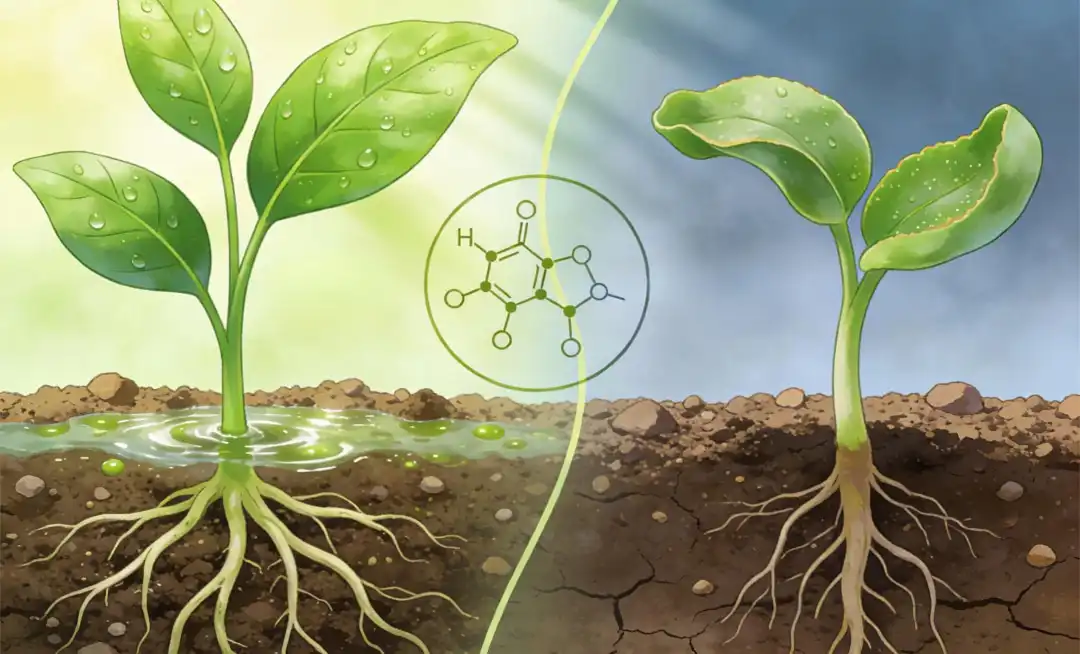
In practical agricultural settings, calcium deficiency often manifests as blossom-end rot in tomatoes, tip burn in leafy vegetables, and bitter pit in apples. Magnesium deficiency typically appears as interveinal chlorosis, beginning in older leaves and progressing to younger tissues as the condition worsens. These visible symptoms usually indicate that internal physiological damage has already occurred, emphasizing the importance of early detection and proactive nutrient management.
Causes and Environmental Constraints
The availability of calcium and magnesium in soil is strongly influenced by pH conditions. Acidic soils can reduce nutrient accessibility, while alkaline soils often promote nutrient fixation, limiting plant uptake. Additionally, ionic competition in the soil, particularly from excessive potassium or sodium, can further inhibit calcium absorption.
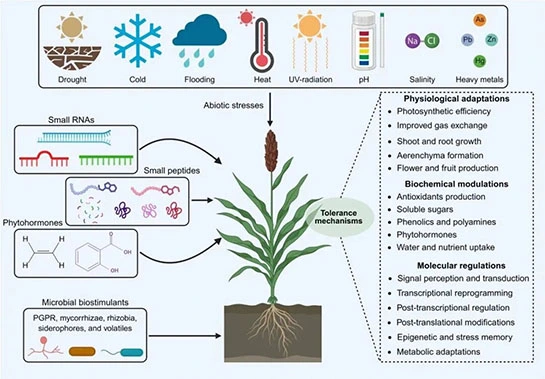
Environmental stress factors such as drought, salinity, and extreme temperatures exacerbate these challenges by restricting nutrient mobility within the soil and plant systems. Heavy rainfall or over-irrigation can lead to nutrient leaching, while compacted soils physically limit root expansion and access to available nutrients. These combined factors create complex constraints that conventional fertilization strategies often struggle to overcome.
Why Peptide Root Fertilizer is an Effective Solution
Molecular Mechanisms of Nutrient Delivery
Peptide root fertilizer formulations are characterized by the presence of bioactive oligopeptides with molecular weights typically below 1000 Daltons. This molecular size allows them to pass efficiently through root cell membranes via specific transport pathways, facilitating rapid nutrient absorption and translocation.
In addition to acting as carriers, these peptides function as signaling molecules that stimulate root activity and enhance the plant’s natural nutrient uptake mechanisms. Advanced enzymatic hydrolysis processes ensure a consistent molecular weight distribution and preserve the biological activity of peptides, enabling reliable performance across different soil and environmental conditions.
Agronomic Performance Advantages
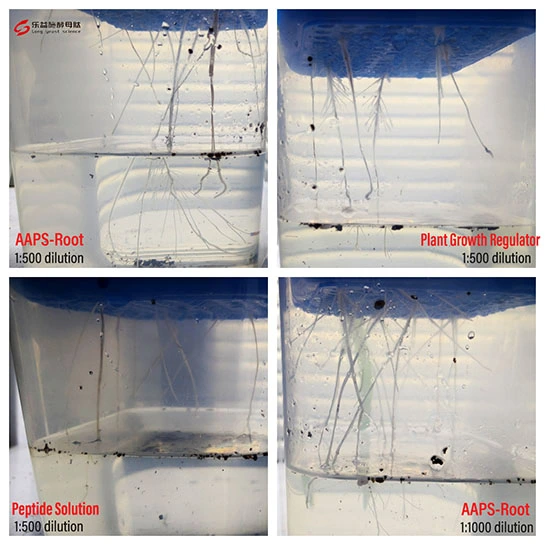
Compared with conventional fertilizers, peptide root fertilizer products offer improved nutrient utilization efficiency and reduced losses due to leaching or fixation. Research has shown that peptide-based formulations can significantly enhance lateral root development and root hair density, leading to a more efficient root system capable of absorbing nutrients and water more effectively.
Their amphoteric properties also provide buffering capacity, helping maintain nutrient availability across a wider pH range. This is particularly beneficial in alkaline soils, where traditional calcium sources may become insoluble and unavailable to plants. As a result, peptide-based solutions can deliver more consistent agronomic outcomes under variable field conditions.
Application Strategies for Peptide Root Fertilizers
Application Methods and Timing
The effectiveness of peptide root fertilizer depends on proper application methods and timing aligned with crop growth stages. Root-zone application techniques, such as root soaking or soil drenching, enable direct delivery of nutrients to the rhizosphere, ensuring immediate availability during periods of high demand. These stages typically include post-transplant establishment and reproductive development phases, when calcium and magnesium requirements are elevated.
Fertigation systems provide an efficient and scalable approach for delivering peptide-based nutrients through irrigation infrastructure. High-quality formulations are fully water-soluble, preventing clogging of irrigation equipment and ensuring uniform distribution across the field. Split application strategies can further optimize nutrient availability by maintaining consistent supply throughout the growing season.
Crop-Specific Implementation
Different crop systems require tailored application strategies to maximize the benefits of peptide root fertilizer technology. In vegetable production, early-season applications support seedling establishment, while additional treatments during fruit development help meet increased calcium demands. Crops such as tomatoes and peppers particularly benefit from sustained calcium supply during rapid fruit growth stages.
In orchard systems, peptide-based applications are often used during pre-flowering and post-harvest periods to support reproductive development and nutrient storage. Continuous application throughout active growth phases enhances stress tolerance and contributes to improved fruit quality. These crop-specific strategies demonstrate the adaptability of peptide root fertilizer across diverse agricultural contexts.
Procurement and Quality Evaluation
Product Quality Indicators
Selecting a reliable peptide root fertilizer requires careful assessment of formulation quality and production processes. Key indicators include a high proportion of oligopeptides within the sub-1000 Dalton range and a consistent molecular weight distribution that ensures efficient absorption. The degree of hydrolysis should reflect controlled enzymatic processing, while amino acid profiles should indicate balanced nutrient composition without excessive synthetic residues.
Safety and compliance are equally important, with quality products meeting strict limits for heavy metals such as arsenic, lead, and cadmium. Comprehensive laboratory analyses provide essential verification of product integrity and suitability for international agricultural use.
Supplier Selection Criteria
Reliable suppliers typically demonstrate strong production capacity, stable quality control systems, and access to advanced processing technologies such as enzymatic hydrolysis or proprietary peptide extraction methods. Independent field trial data and compatibility testing with common agricultural inputs further support product credibility.
Manufacturers employing advanced technologies, including full-spectrum enzymatic hydrolysis systems, often deliver higher bioactivity and better thermal stability, providing a competitive advantage in demanding agricultural environments. Long-term partnerships with such suppliers can enhance supply chain stability and ensure consistent product performance.
Economic and Sustainability Benefits
Return on Investment
The economic value of peptide root fertilizer is reflected in both direct and indirect performance improvements. Yield increases in the range of 8–15% are commonly reported, while enhanced crop quality can lead to higher market prices in premium segments. Improved stress tolerance reduces the need for additional chemical inputs, contributing to overall cost savings.
Operational efficiencies are also improved through simplified application processes and reduced compatibility issues in tank mixing. These factors collectively support a favorable return on investment for growers adopting peptide-based nutrition strategies.
Long-Term Agricultural Value
Beyond immediate performance gains, peptide root fertilizer contributes to long-term soil health by promoting beneficial microbial activity and enhancing nutrient cycling processes. This biological stimulation supports sustained soil fertility and reduces dependence on synthetic inputs over time.
As sustainability becomes an increasingly important priority in agriculture, peptide-based solutions align with environmental objectives by improving nutrient efficiency and reducing carbon footprints associated with conventional fertilization practices. These long-term benefits position peptide root fertilizer as a valuable component of modern sustainable farming systems.
Conclusion
Calcium and magnesium deficiencies continue to pose significant challenges to agricultural productivity worldwide, requiring innovative and efficient nutrient management strategies. Peptide root fertilizer technology offers a scientifically grounded solution by enhancing nutrient delivery at the molecular level and improving plant uptake efficiency under diverse environmental conditions.
By integrating peptide-based fertilization into crop management programs, growers can achieve improved yields, enhanced product quality, and more sustainable production systems. As research and technological advancements continue, peptide root fertilizer is expected to play an increasingly important role in addressing the nutritional challenges of modern agriculture.
FAQ
Q1: What distinguishes peptide root fertilizers from conventional amino acid products?
There are molecules called peptide fertilizers that send signals to genes and start certain genetic reactions, like pathways that make auxin. Not only does this add nutrients, but it also speeds up root growth. The oligopeptide structure lets cells talk to each other directly, which starts the growth processes that happen on their own.
Q2: Can peptide formulations be tank-mixed with copper fungicides or alkaline solutions?
Peptide links can be broken by very high copper concentrations or very high alkalinity, so the pH and oxidation potential of the solution are important for tank mixing. Jar testing should be done to make sure that everything works together before mixing on a big scale. There is a pH range of 5.0 to 7.0 where most peptide nutrients stay stable.
Q3: What application timing provides optimal results for peptide fertilizers?
The best times to use are when the roots are actively growing, like right after replanting, early flowering, or when the plant is getting better after being stressed. Because the roots and digestion aren't working as hard when plants are dormant, anything that was put on them won't work.
Partner with LYS for Advanced Peptide Root Fertilizer Solutions
The LYS company has been making enzyme hydrolysis technology for more than 70 years, making it one of the best companies that makes peptide root fertilizer. Using our unique FSDT method, we can make high-quality peptides from yeast. These peptides have molecular weights of 1000 Da or less, which means they are easily absorbed by cells and don't change when heated up. We can reliably serve farming businesses all over the world because we can make more than 10,000 MT of product every year. Our chloride-free recipes keep things the same even when the temperature changes, and the way they are made up of nucleotides makes crops do better. You can email Alice at alice@aminoacidfertilizer.com to talk about making custom recipes and buying in bulk that work for your business and the environment.
References
1. Agricultural Sciences Research Institute. "Peptide Signaling Pathways in Root Development and Nutrient Uptake Mechanisms." Journal of Plant Nutrition and Soil Science, vol. 45, no. 3, 2023, pp. 234-251.
2. International Crop Nutrition Society. "Bioactive Peptides in Sustainable Agriculture: Molecular Mechanisms and Field Applications." Plant and Soil Biology Review, vol. 28, no. 7, 2022, pp. 412-438.
3. European Association of Agricultural Biostimulants. "Enzymatic Hydrolysis Technology for Enhanced Nutrient Delivery Systems." Agricultural Technology Advances, vol. 15, no. 2, 2023, pp. 89-106.
4. Smith, J.R. and K.L. Thompson. "Calcium-Magnesium Deficiency Management Through Advanced Peptide Delivery Systems." Crop Science and Technology, vol. 67, no. 4, 2022, pp. 1245-1262.
5. Global Institute for Sustainable Agriculture. "Economic Analysis of Peptide-Based Fertilizer Technologies in Commercial Crop Production." Agricultural Economics Quarterly, vol. 39, no. 1, 2023, pp. 78-95.
6. Chen, M.H., et al. "Root Architecture Modification Through Oligopeptide Signaling in Nutrient-Deficient Soils." Plant Physiology and Biochemistry, vol. 182, no. 6, 2022, pp. 334-349.

Tell us your needs — we’ll provide the right solution for your crops and markets.
Innovating Agriculture with Yeast-Derived Amino Acid Peptides