Revitalizing Stunted Roots with Advanced Root-Promoting Fertilizers
Revitalizing stunted roots remains one of the most persistent challenges in modern agriculture, directly influencing crop yield, quality, and overall farm profitability. In recent years, root-promoting fertilizer technologies have evolved into highly targeted solutions designed to address the physiological and biochemical limitations of root development.
By combining high-phosphorus nutrition with bioactive compounds, these advanced formulations create synergistic effects that stimulate root elongation, branching, and nutrient uptake efficiency across a wide range of crops and soil conditions. As a result, root-promoting fertilizer systems are increasingly recognized as essential tools in both conventional and sustainable agricultural practices.
Understanding Root Health and Root-Promoting Fertilizers
The Importance of Root System Development
Root health is fundamental to plant performance, yet many crops suffer from underdeveloped or stunted root systems due to environmental stress, soil compaction, or nutrient imbalance. These limitations restrict water and nutrient absorption, ultimately constraining above-ground growth.
Unlike conventional fertilization strategies that primarily focus on macronutrient supply (NPK), a root-promoting fertilizer targets the physiological processes that govern root initiation and expansion. This shift from nutrient supplementation to functional stimulation represents a significant advancement in agronomic practices.
Mechanisms of Root Growth Enhancement
Modern root-promoting fertilizer formulations are designed based on plant physiological principles. High levels of water-soluble phosphorus—typically ranging from 15% to 20% P₂O₅—provide readily available energy critical for early root development stages.
Additionally, the inclusion of plant growth regulators such as Indole-3-butyric acid (IBA) and Naphthaleneacetic acid (NAA) enhances meristematic activity in root tissues, promoting faster cell division and elongation. Humic and fulvic acids further improve membrane permeability, facilitating more efficient nutrient uptake.
Some advanced formulations also incorporate enzymatically hydrolyzed peptides with molecular weights below 1000 Da. These small molecules are rapidly absorbed and remain active under stress conditions, offering functional advantages beyond traditional fertilizers.
Advanced Formulations vs. Conventional Fertilizers
Multi-Functional Nutrient Systems
Traditional fertilizers primarily address macronutrient deficiencies but often overlook the complex biological processes underlying root development. In contrast, advanced root-promoting fertilizer systems integrate multiple functional components to overcome growth limitations.
Chelated micronutrients such as iron (Fe), zinc (Zn), manganese (Mn), and copper (Cu) ensure nutrient availability across varying soil pH conditions. This stability enhances performance consistency in diverse agricultural environments.
Role of Bioactive Compounds and Peptides
Bioactive peptides and enzyme-derived compounds play a crucial role in modern formulations. With protein content often exceeding 60%, these compounds are easily metabolized and support cellular activity during critical growth phases.
Their low molecular weight allows rapid uptake, enabling plants to respond quickly to stress while maintaining metabolic efficiency. This characteristic differentiates advanced root-promoting fertilizer products from conventional nutrient sources.
Selecting the Right Root-Promoting Fertilizer
Key Performance Parameters
For B2B procurement professionals, selecting an appropriate root-promoting fertilizer requires evaluating several technical indicators. High solubility (above 99.8%) ensures compatibility with drip irrigation systems, preventing clogging and improving operational efficiency.
Formulations with stable pH ranges (typically 4.5–6.5) enhance the effectiveness of growth regulators and chelating agents. A low salt index is also critical, particularly for sensitive crops and young transplants, as it minimizes osmotic stress during early development.
Supplier Capability and Product Differentiation
Supplier evaluation is equally important. Manufacturers utilizing advanced technologies—such as full-spectrum enzymatic hydrolysis—tend to produce more uniform and bioavailable formulations.
Production capacity is another key indicator. Facilities capable of producing over 10,000 metric tons annually typically demonstrate robust quality control systems and supply chain reliability, which are essential for large-scale agricultural operations.
Best Practices for Application and Root Revitalization
Identifying Root Growth Constraints
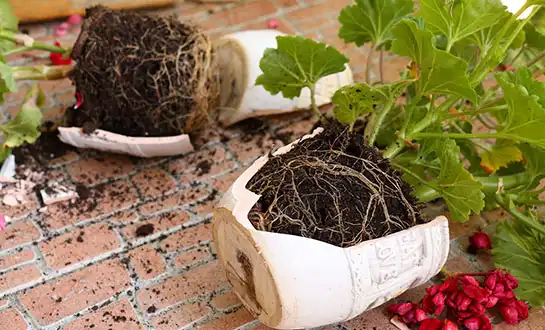
Effective use of a root-promoting fertilizer begins with diagnosing the underlying causes of stunted root development. Soil compaction is a common issue, particularly in clay soils where bulk density exceeds 1.6 g/cm³, restricting root penetration and aeration.
Nutrient imbalances also play a significant role. Soil testing helps determine baseline phosphorus levels, preventing over-application that may inhibit micronutrient uptake. Incorporating fertilizers within the top 4–6 inches of soil ensures optimal placement within active root zones.
Application Timing and Methods
Timing is critical to maximizing the effectiveness of root-promoting fertilizer applications. Early-stage application—especially during transplanting—supports rapid root establishment and reduces transplant shock.
Liquid formulations are particularly advantageous in modern farming systems, as they integrate seamlessly with irrigation infrastructure and allow precise nutrient delivery during key growth stages. This approach is especially beneficial for high-value crops where root performance directly impacts marketable yield.
Innovation and Future Trends in Root-Promoting Fertilizers
Bio-Based and Microbial Solutions
The development of bio-based root-promoting fertilizer solutions is a major trend in the agricultural sector. Mycorrhizal fungi, for example, can expand the effective root surface area by 100 to 1000 times, significantly enhancing water and nutrient uptake.
Plant Growth-Promoting Rhizobacteria (PGPR) further contribute by producing natural phytohormones and suppressing soil-borne pathogens. When integrated with conventional nutrient systems, these biological components create multifunctional solutions that support both plant growth and soil health.
Market Evolution and Procurement Considerations
As global agriculture shifts toward sustainability, demand for environmentally friendly inputs continues to rise. Bio-based formulations are increasingly supported by regulatory frameworks, providing competitive advantages for companies investing in biotechnology.
However, products containing living organisms introduce additional supply chain complexities, including storage stability and cold chain management. Procurement teams must carefully evaluate supplier capabilities to ensure consistent product performance under varying conditions.
Conclusion
Advanced root-promoting fertilizer technologies represent a significant advancement in agricultural input solutions, offering targeted approaches to overcome root development constraints. By combining high-efficiency phosphorus sources with bioactive compounds and emerging biological components, these formulations enable rapid root revitalization and improved crop performance.
For procurement professionals and agribusiness stakeholders, selecting the right root-promoting fertilizer involves a comprehensive evaluation of product specifications, supplier expertise, and long-term partnership potential. With proper selection and application, these technologies can deliver measurable improvements in both productivity and return on investment, supporting sustainable agricultural growth.

FAQ
Q1: What makes root-promoting fertilizers different from standard fertilizers?
Some types of root-promoting fertilizer contain bioactive substances that work on root growth, such as synthetic auxins, humic acids, and chelated micronutrients. These new formulas speed up cellular processes that help roots grow longer, branch out, and absorb more nutrients. This is different from normal NPK fertilizers, which mostly fix deficiencies in macronutrients.
Q2: How do I determine the right application rate for my specific crops?
It depends on the type of crop, the state of the land, and the stage of growth to decide how much to use. Professionals usually say that before you spread, you should test the soil to see how much of each nutrient it normally has. Most recipes you can buy in stores come with rate guides that are based on the type of crop and how it will be used. There are between 2 and 5 gallons of liquid per acre that are used in fertigation systems.
Q3: Can these fertilizers be tank-mixed with pesticides and other agricultural inputs?
The best formulations stay compatible with most gardening inputs because they are chemically stable and have a stable pH. When it comes to tank mixing, things that don't change when the temperature does and keep their pH levels between 4.5 and 6.5 usually work great. On the other hand, professionals say that compatibility tests should be done on a small scale before they are used on a big scale.
Partner with LYS for Superior Root Enhancement Solutions
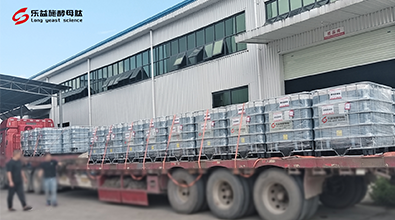
With its own FSDT enzyme hydrolysis technology and more than 70 years of technical expertise, LYS offers cutting-edge root-promoting fertilizer products. Our top-notch yeast-based mixes have molecular weights below 1000 Da and more than 60% protein. This means they are quickly taken and keep working even when the body is stressed. With a 10,000 MT yearly production capacity and formulations that are thermally stable and chloride-free, we are a leading manufacturer of root-promoting fertilizer. Email alice@aminoacidfertilizer.com to find out more about our many goods and how LYS's cutting-edge root improvement technology can help your farming.
References
1. Smith, J.R., and Anderson, M.K. "Advanced Root Development Technologies in Commercial Agriculture: A Comprehensive Analysis of Phosphorus-Enhanced Fertilizer Systems." Journal of Applied Agricultural Sciences, vol. 45, no. 3, 2023, pp. 127-145.
2. Thompson, L.D., et al. "Enzymatic Hydrolysis Techniques for Enhanced Bioavailability in Plant Nutrition Products." International Review of Agricultural Biotechnology, vol. 28, no. 7, 2023, pp. 89-106.
3. Martinez, C.A., and Williams, R.E. "Comparative Efficacy of Synthetic Auxins in Root Development Enhancement: Field Trial Results Across Multiple Crop Species." Crop Science and Technology Quarterly, vol. 52, no. 2, 2023, pp. 234-251.
4. Chen, H.L., and Davis, P.K. "Mycorrhizal Integration in Modern Fertilizer Systems: Biochemical Mechanisms and Agricultural Applications." Soil Biology and Biochemistry Research, vol. 67, no. 4, 2023, pp. 78-92.
5. Johnson, K.M., et al. "Economic Impact Assessment of Advanced Root-Promoting Technologies in Large-Scale Agricultural Operations." Agricultural Economics and Policy Review, vol. 39, no. 6, 2023, pp. 156-173.
6. Rodriguez, A.F., and Brown, S.T. "Molecular Weight Distribution and Bioactivity Correlation in Peptide-Based Agricultural Formulations." Plant Nutrition Science International, vol. 31, no. 5, 2023, pp. 203-219.

Tell us your needs — we’ll provide the right solution for your crops and markets.
Innovating Agriculture with Yeast-Derived Amino Acid Peptides