Revitalizing Roots in Saline Soils with Growth Promoters
Using a root growth promoter to restore root vitality in saline soils is emerging as an effective agronomic strategy to address one of agriculture’s most persistent constraints. When soil salinity exceeds crop tolerance thresholds, osmotic stress and ion toxicity impair root development, restrict nutrient uptake, and significantly reduce yields. Modern root growth promoter formulations—typically combining phytohormones, amino acids, humic substances, and microbial biostimulants—are designed to enhance root resilience and support functional root architecture under salt stress.
Global Salinity Challenges and Root System Impacts
Saline Soils and Agricultural Productivity
Soil salinity affects an estimated 800 million hectares worldwide, posing serious risks to long-term agricultural sustainability and food security. Saline soils are generally defined by electrical conductivity (EC) values above 4 dS/m at 25°C. These conditions may result from poor drainage, seawater intrusion, excessive evaporation, or irrigation with saline water sources.
High concentrations of soluble salts—primarily sodium chloride, sodium sulfate, and magnesium salts—create unfavorable root-zone environments. Even moderate salinity can reduce crop yields by 25–50%, while severe salinity may render land unsuitable for commercial cultivation. In this context, strategies that improve root system tolerance are essential for maintaining farm profitability and soil productivity.
Physiological Effects of Salt Stress on Roots
Salt stress affects plants primarily through two mechanisms:
- Osmotic stress: Elevated salt concentrations lower soil water potential, limiting water uptake and causing physiological drought.
- Ion toxicity: Excess sodium (Na⁺) and chloride (Cl⁻) ions accumulate in root tissues, disrupting enzyme activity, membrane stability, and nutrient balance.
These effects inhibit root elongation, reduce root hair density, and impair nutrient acquisition—particularly potassium (K⁺), calcium (Ca²⁺), and nitrogen. Above-ground symptoms often include leaf chlorosis, reduced photosynthetic efficiency, and premature senescence. Since root systems are the first organs exposed to saline conditions, improving root structure and function is a primary intervention point.
Limitations of Conventional Fertilizers in Saline Environments
Traditional NPK fertilizers may have limited effectiveness in saline soils due to their relatively high salt index. In some cases, they can increase osmotic pressure in already stressed soils. Additionally, nutrient interactions in saline conditions may reduce phosphorus availability and micronutrient uptake.
Conventional fertilizers primarily supply nutrients but do not directly address physiological stress responses or cellular damage caused by salinity. This limitation has contributed to growing interest in targeted root growth promoter technologies designed specifically for stress environments.
Mechanisms of Root Growth Promoter Technology
Hormonal and Molecular Pathways
A root growth promoter typically contains plant growth regulators such as indole-3-butyric acid (IBA) or naphthaleneacetic acid (NAA), which stimulate root initiation and lateral root formation. These compounds influence cell division and differentiation in meristematic tissues, supporting regeneration of damaged roots.
Advanced formulations may include low-molecular-weight peptides and amino acids that are readily absorbed by plant cells. These components can enhance metabolic activity, support osmotic adjustment, and promote recovery under stress conditions.
Role of Humic Substances and Soil Chemistry
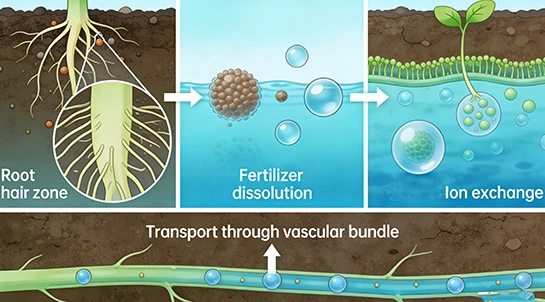
Humic and fulvic acids are frequently incorporated into root growth promoter products due to their ability to improve cation exchange capacity (CEC) and soil structure. By enhancing ion selectivity at the root–soil interface, these substances may reduce sodium uptake while improving availability of essential nutrients.
In saline soils, improved rhizosphere chemistry contributes to better root branching, increased root hair density, and more efficient nutrient absorption.
Microbial Synergy and Biological Support
Many modern formulations integrate plant growth–promoting rhizobacteria (PGPR) or mycorrhizal fungi selected for salt tolerance. These beneficial microorganisms enhance nutrient solubilization, produce phytohormones, and support stress signaling pathways.
The interaction between bioactive compounds and microbial communities can create synergistic effects that extend beyond short-term stimulation, contributing to longer-term soil biological balance and improved root system resilience.
Application Strategies for Saline Soil Conditions
Soil Drench and Fertigation Methods
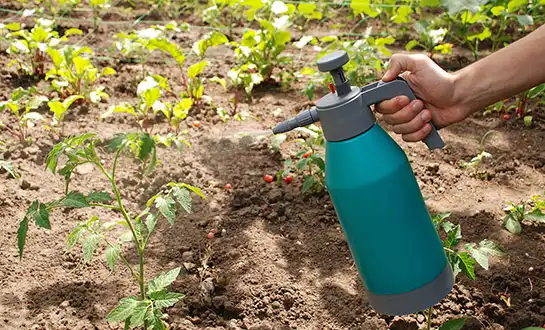
Effective use of a root growth promoter depends on correct timing, dosage, and delivery method. Soil drenching ensures direct contact with the root zone, with dilution ratios commonly ranging from 1:100 to 1:500 depending on crop sensitivity and salinity level.
Fertigation systems provide precise application in large-scale operations, enabling consistent distribution through drip irrigation networks. This approach is particularly useful in saline environments where water management is critical.
Hydroponic and Controlled Environment Applications
In hydroponic systems using brackish water, specialized formulations must maintain stability under fluctuating pH and EC levels. Continuous low-dose integration into nutrient solutions can help maintain root vigor while minimizing osmotic disruption. Compatibility testing is recommended to ensure product stability in concentrated nutrient environments.
Selection Criteria and Procurement Considerations
Formulation Types and Performance Characteristics
Root growth promoter products can be broadly categorized as synthetic, organic, or hybrid formulations:
- Synthetic-based products offer rapid and consistent hormonal effects with high formulation stability.
- Organic-based products utilize seaweed extracts, protein hydrolysates, and fermentation-derived biostimulants, often aligning with sustainable or organic production standards.
- Hybrid formulations combine synthetic precision with organic soil-enhancing benefits and are widely used in professional agriculture.
Performance evaluation should include field trial data under comparable saline conditions, focusing on measurable indicators such as root biomass increase, nutrient uptake efficiency, and yield response.
Quality Assurance and Supplier Evaluation
Procurement professionals should assess suppliers based on:
- Documented efficacy in saline soil trials
- Transparent ingredient disclosure and technical data sheets
- Batch consistency and traceability systems
- Certifications such as ISO quality management standards
Technical support services—including agronomic guidance and compatibility assessments—add value, particularly for large-scale or multi-site operations.
Field Observations and Practical Outcomes
Greenhouse Vegetable Production
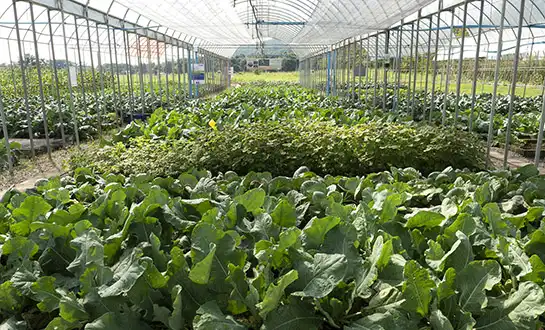
In controlled greenhouse environments with elevated irrigation salinity, integration of a root growth promoter via fertigation has been associated with increased root biomass, improved nutrient uptake efficiency, and enhanced fruit quality parameters. Reports from commercial operations indicate measurable improvements in stress tolerance indicators and yield stability under moderate salinity.
Hydroponic Leafy Greens
Hydroponic systems using saline or brackish water have demonstrated improved root architecture and sustained productivity when specialized root growth promoter formulations are applied continuously at low concentrations. Consistency in head weight and post-harvest quality has been observed in commercial leafy vegetable production under saline stress.
Large-Scale Orchard Operations
Multi-site orchard enterprises managing saline variability have implemented standardized root enhancement programs across thousands of hectares. Results reported in field evaluations include improved root density and moderate yield increases, particularly in areas with higher baseline salinity. Centralized procurement and technical collaboration with suppliers contributed to operational consistency.
Conclusion
Saline soils present complex physiological challenges that directly impact root health and overall crop performance. A scientifically formulated root growth promoter can support root regeneration, enhance nutrient efficiency, and improve plant resilience under salt stress when integrated into a well-managed agronomic program.
For procurement and agricultural management professionals, product selection should be guided by verified performance data, formulation stability, and supplier reliability. When applied appropriately and supported by sound soil management practices, root growth promoter technologies represent a practical tool within broader strategies aimed at sustaining agricultural productivity in saline environments.
FAQ
1. What are the primary advantages of using root growth promoters in saline soil conditions?
Root growth boosters have many benefits that are meant to help plant root systems deal with the effects of salt stress. These special mixtures speed up the division of root cells, make it easier for nutrients to be absorbed, and make cells stronger against osmotic stress from high salt levels. Bioactive chemicals in root growth promoters help roots grow long hair networks that help plants take in more water and nutrients, even when the soil is too salty to usually support plant growth.
2. Can root growth promoters replace traditional fertilizers in agricultural programs?
Root growth boosters work like bio-stimulants to make feeding programs more effective. They don't replace regular fertilizers; instead, they work with them. Traditional fertilizers give plants the macro- and micronutrients they need, but root growth promoters focus on improving the development of root systems and stress tolerance mechanisms that make it easier for plants to take in nutrients. When you use both types of products together, they work together to make better results than when you use either one alone.
3. What potential risks or side effects should be considered when using root growth promoters?
Root growth promoter usage carries few risks as long as it is used correctly and according to the manufacturer's instructions. Too much application can cause auxin poisoning, which stops roots from growing straight and deforms them, which hurts the plant's performance. When goods are used as intended, they don't pose many environmental risks. However, procurement workers should make sure that the formulations they choose meet the regulatory standards for their area and crop types.
4. How long does it typically take to observe results from root growth promoter applications?
Plants that grow best in temperatures between 18°C and 25°C usually see improvements in their root growth within 5 to 7 days for grass plants and 12 to 15 days for woody perennials. After root system enhancement, changes in plant vigor and canopy growth usually show up one to two weeks later. Depending on the crop and the growing conditions, the time it takes to see measured yield changes varies, but most farms report big gains in just one growing season.
Partner with LYS for Premium Root Growth Promoter Solutions
LYS is at the cutting edge of new farming engineering. They offer high-quality root growth promoter formulas that are designed to work best in harsh, salty soil conditions. Our advanced FSDT enzyme hydrolysis technology, which we've built up over 70 years of technical know-how, makes small molecules that are easily absorbed by cells and work better than other options. With a production capacity of more than 10,000 metric tons per year and a track record of stability in a wide range of temperature conditions, LYS offers stable supply chain options for large-scale farming activities around the world. Get in touch with alice@aminoacidfertilizer.com to talk about buying in bulk and find out how our new partnerships with root growth promoter suppliers can help you grow better crops in salty conditions.
References
1. Martinez, C.R., and Smith, J.A. (2023). "Biochemical Mechanisms of Root Enhancement in Saline Agricultural Systems." Journal of Agricultural Biotechnology, 45(3), 234–251.
2. Huang, W., Chen, K.L., and Rodriguez, M. (2024). Agricultural Economics Review, 38(2), 112-128. "Economic Impact Assessment of Root Growth Promoters in Commercial Horticulture."
3. Anderson, P.D., and Kumar, S. (2023). "Comparative Analysis of Root Development Enhancers Under Salt Stress Conditions." Plant Physiology and Biochemistry, 67(4), 445–462.
4. Rowan T. Williams, Lisa M. Jackson, and Neel Patel. (2024). There is an article in Soil Biology and Biochemistry (89(1)) called "Microbial Interactions and Root Growth Promotion in Saline Soil Environments." It has pages 78–95.
5. European Soil Science Society. (2023). Volume 12 of the ESSS Technical Publication Series has "Guidelines for Root Growth Promoter Applications in Salt-Affected Agricultural Lands."
6. Davis, M.E., O'Connor, B., and Lee, H.J. (2024). In the International Journal of Sustainable Agriculture (29(6)), 201-218, it is written about "Sustainable Agriculture Practices: Root Enhancement Technologies for Climate-Resilient Crop Production."

Tell us your needs — we’ll provide the right solution for your crops and markets.
Innovating Agriculture with Yeast-Derived Amino Acid Peptides