Metabolic Priming Agents: Helping High-Value Crops Beat the Heat
Rising global temperatures are increasingly threatening agricultural productivity, creating unprecedented challenges for crop management systems. Metabolic priming agents have emerged as an innovative approach to enhancing plant resilience by optimizing cellular metabolism and improving tolerance to heat stress. These compounds function at the molecular level, preparing plants to respond more effectively to temperature extremes while maintaining growth and productivity.
By modulating metabolic pathways and activating endogenous defense systems, metabolic priming agents represent a shift from reactive crop protection to proactive stress management. This approach is particularly relevant for high-value crops that are highly sensitive to environmental fluctuations, offering a scientifically grounded strategy to mitigate the impacts of climate variability.

Understanding Metabolic Priming Agents and Their Mechanisms
Types and Classification of Metabolic Priming Compounds
Metabolic priming agents encompass a diverse range of compounds that differ in origin and mode of action, yet share the common function of enhancing plant preparedness for stress conditions. Natural metabolites, including amino acid derivatives, phenolic compounds, and fatty acids, stimulate intrinsic plant defense pathways and are often compatible with sustainable farming systems. Synthetic compounds such as azelaic acid and acibenzolar-S-methyl are designed to activate systemic resistance mechanisms, while osmopriming agents like potassium nitrate and polyethylene glycol improve seed vigor and stress tolerance during early developmental stages.
In recent years, small-molecule peptides have gained attention as a distinct category of metabolic priming agents due to their high bioavailability and stability across a wide range of environmental conditions. Their compatibility with fertilizers and crop protection products further enhances their practical applicability in integrated crop management systems.
Cellular-Level Mechanisms for Heat Tolerance
The effectiveness of metabolic priming agents is rooted in their ability to induce a “primed state” within plant cells, characterized by metabolic, transcriptional, and signaling adjustments that enable rapid responses to stress. These agents enhance mitochondrial activity and energy production through improved oxidative phosphorylation, ensuring that plants maintain metabolic function under elevated temperatures.
At the same time, metabolic priming stimulates the production of heat shock proteins, stabilizes cellular membranes, and regulates osmotic balance, all of which are critical for maintaining cellular integrity during heat stress. Enhanced antioxidant systems reduce oxidative damage, while protection of chlorophyll structures and enzyme systems supports sustained photosynthetic activity even under adverse conditions.
Scientific Validation and Research Evidence
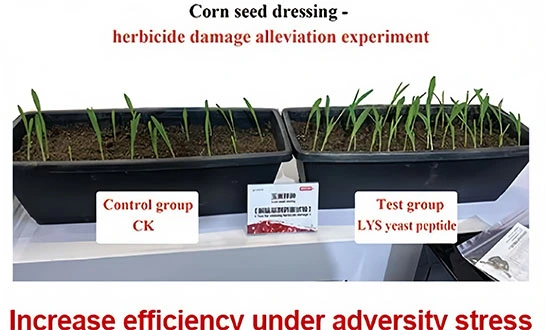
A growing body of research supports the effectiveness of metabolic priming agents across multiple crop systems. Field trials conducted under heat-stress conditions have reported yield improvements ranging from 15% to 25% compared to untreated controls. These gains are supported by laboratory findings demonstrating increased expression of stress-related proteins and improved cellular repair mechanisms in treated plants.
In addition to yield improvements, studies have shown enhancements in crop quality attributes, including nutrient content, shelf life, and uniformity. These outcomes provide a strong scientific foundation for the adoption of metabolic priming agents in both conventional and advanced agricultural systems.
Benefits and Agricultural Applications of Metabolic Priming Agents
Heat Stress Mitigation and Crop Resilience
Metabolic priming agents are particularly effective in preparing plants for periods of elevated temperature, reducing the physiological disruptions typically associated with heat stress. Treated plants maintain higher photosynthetic efficiency during heat events, allowing continued energy production when untreated plants experience metabolic slowdown. Improved cellular repair systems also enable faster recovery following stress exposure, minimizing long-term impacts on crop performance.
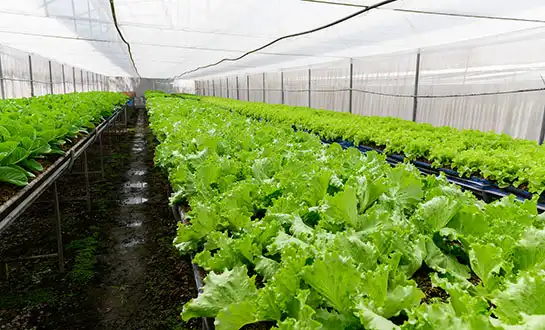
In practical applications, growers have observed improved fruit set, reduced flower drop, and more consistent crop development when metabolic priming strategies are implemented ahead of anticipated heat waves. These benefits are especially significant for high-value horticultural crops where quality and uniformity are critical.
Yield Quality and Biomass Enhancement
Beyond stress mitigation, metabolic priming agents contribute to improved overall plant productivity by enhancing metabolic efficiency. Treated plants exhibit improved nutrient uptake, more robust root development, and increased biomass accumulation throughout the growth cycle. This optimized resource allocation allows plants to prioritize reproductive development rather than diverting energy solely toward stress responses.
As a result, crops often demonstrate measurable quality improvements, such as higher sugar accumulation in fruits, increased protein content in grains, and enhanced coloration in specialty crops. These attributes can translate into higher market value and improved economic returns for growers.
Advantages Over Traditional Crop Protection Methods
Traditional agricultural inputs such as fertilizers and pesticides primarily address nutrient supply or specific pest and disease pressures. In contrast, metabolic priming agents operate at a systemic level, enhancing the plant’s intrinsic capacity to cope with a wide range of environmental stresses. This holistic mode of action reduces dependency on reactive interventions and supports more resilient cropping systems.
Their compatibility with existing agricultural practices allows for seamless integration into current management programs without requiring significant operational changes. Additionally, formulations that are free from chloride or other potentially harmful components expand their suitability for sensitive crops and early growth stages.
Selection Criteria and Sourcing Strategies
Product Evaluation and Quality Standards
Selecting effective metabolic priming agents requires careful evaluation of product specifications and quality indicators. High-performance formulations typically demonstrate purity levels above 98.5%, verified through analytical methods such as high-performance liquid chromatography. Molecular weight distribution is another critical parameter, as smaller molecules are more readily absorbed and utilized within plant systems.
Product stability under varying environmental conditions is essential to ensure consistent field performance. Reputable manufacturers provide comprehensive documentation, including data on heavy metal content, microbiological safety, and compliance with international quality standards, enabling informed procurement decisions.
Natural Versus Synthetic Solutions
Both natural and synthetic metabolic priming agents offer distinct advantages depending on the production system and crop requirements. Naturally derived products are often preferred in sustainable and organic agriculture due to their environmental compatibility, although they may require higher application rates. Synthetic compounds, on the other hand, provide precise and consistent targeting of specific metabolic pathways.
Peptide-based solutions derived from biological sources represent a balanced approach, combining natural origin with enhanced bioactivity. These products often exhibit high protein content, strong environmental stability, and broad compatibility with other agricultural inputs, making them suitable for diverse applications.
Supplier Evaluation and Procurement Considerations
Reliable suppliers play a critical role in ensuring product consistency and long-term performance. Key evaluation criteria include manufacturing capacity, adherence to quality control standards, and availability of technical support. Suppliers employing advanced production technologies, such as enzymatic hydrolysis systems, are often better equipped to deliver consistent and high-performance products.
From a procurement perspective, balancing cost efficiency with product quality is essential. Long-term supply agreements can help stabilize pricing and ensure availability during peak demand periods, while strategic inventory management reduces the risk of supply disruptions.
Application Practices and Risk Management
Application Methods and Timing Strategies
Effective use of metabolic priming agents depends on proper application timing and techniques. Preventative applications are generally more effective than reactive treatments, as they allow plants to establish a primed physiological state before exposure to stress conditions. Application methods vary depending on the crop system and may include foliar sprays, soil drenches, or integration into fertigation programs.
Timing applications during key developmental stages, such as early vegetative growth or pre-flowering phases, maximizes the impact of metabolic priming. These periods are characterized by active metabolic activity, enabling more efficient uptake and utilization of the applied compounds.
Safety Considerations and Environmental Impact
When used according to recommended guidelines, metabolic priming agents are generally associated with favorable safety profiles and minimal environmental risk. Many formulations are designed to be biodegradable and compatible with ecological farming practices, reducing concerns related to environmental persistence.
Proper handling, storage, and adherence to label instructions are essential to maintain product integrity and ensure safe application. Standard agricultural safety protocols, including the use of appropriate protective equipment, further support responsible use.
Common Challenges and Mitigation Strategies
Despite their advantages, the effectiveness of metabolic priming agents can be influenced by factors such as improper mixing, extreme pH conditions, or suboptimal application timing. Incompatible tank mixtures may reduce bioactivity, while environmental conditions can affect stability and uptake.
Conducting compatibility tests and following manufacturer recommendations can help mitigate these challenges. Continuous monitoring and adjustment of application strategies based on field conditions further enhance the reliability and effectiveness of metabolic priming programs.
Conclusion
Metabolic priming agents represent a significant advancement in agricultural stress management, offering a proactive and scientifically supported approach to improving crop resilience under heat stress conditions. By enhancing cellular metabolism and activating intrinsic defense mechanisms, these compounds enable plants to maintain productivity in increasingly challenging environments.
As climate variability continues to impact agricultural systems, the adoption of metabolic priming agents provides a practical pathway toward sustainable and resilient crop production. Their ability to integrate with existing practices while delivering measurable improvements in yield, quality, and stress tolerance positions them as a valuable component of modern agricultural strategies.
FAQ
Q1: What makes metabolic priming agents different from traditional fertilizers?
Metabolic priming agents function at the cellular level to enhance plant metabolism and stress tolerance, while traditional fertilizers primarily provide nutritional support. Priming agents prepare plants for future stress events by optimizing metabolic pathways and activating defense mechanisms, offering proactive rather than reactive crop protection.
Q2: How quickly do crops respond to metabolic priming applications?
Initial metabolic changes occur within hours of application, with visible improvements in stress tolerance typically observed within 48-72 hours. Full benefits, including enhanced growth and improved stress resistance, develop over 7-14 days as treated plants establish optimized metabolic states.
Q3: Can these agents be safely used with organic farming practices?
Many metabolic priming agents qualify for organic production systems, particularly those derived from natural sources like yeast extracts and plant metabolites. Certification requirements vary by region, requiring verification with local organic certification bodies before commercial application.
Q4: What crops benefit most from metabolic priming treatments?
High-value crops, including fruits, vegetables, and specialty grains, show the most dramatic responses to metabolic priming applications. Heat-sensitive crops like leafy greens, tomatoes, and citrus fruits particularly benefit from enhanced thermal tolerance provided by these treatments.
Q5: How do storage and handling requirements affect product selection?
Premium metabolic priming products maintain stability under normal storage conditions without requiring special handling procedures. Products with extended shelf life and temperature stability simplify inventory management and reduce procurement complexity for large-scale operations.
Partner with LYS for Advanced Metabolic Priming Solutions
LYS delivers cutting-edge metabolic priming agent technology backed by seven decades of research and development expertise. Our proprietary FSDT enzymatic hydrolysis system produces premium small-molecule peptides with proven bioavailability and field performance across diverse agricultural applications. We serve as a trusted metabolic priming agent supplier, offering comprehensive technical support, consistent product quality, and flexible supply solutions tailored to your specific crop protection needs. Contact alice@aminoacidfertilizer.com to discuss your requirements and discover how our innovative solutions can enhance your crop resilience and productivity.
References
1. Chen, L., et al. "Metabolic Priming Mechanisms in Heat Stress Tolerance of Agricultural Crops." Journal of Plant Physiology, 2023, 285: 154-167.
2. Rodriguez, M., and Thompson, K. "Cellular Adaptation Strategies: Role of Metabolic Priming in Crop Resilience." Agricultural Biotechnology Reviews, 2023, 15(3): 89-104.
3. Williams, S., et al. "Field Evaluation of Metabolic Priming Agents in High-Value Crop Production Systems." Crop Science International, 2022, 62(4): 278-291.
4. Anderson, P., and Liu, J. "Mitochondrial Enhancement Technologies for Agricultural Stress Management." Plant Molecular Biology Today, 2023, 41(2): 156-173.
5. Kumar, R., et al. "Economic Impact Assessment of Metabolic Priming Applications in Commercial Agriculture." Agricultural Economics Quarterly, 2023, 28(1): 45-62.
6. Zhang, H., and Martinez, A. "Comparative Analysis of Natural and Synthetic Metabolic Priming Compounds in Crop Protection." Journal of Agricultural Innovation, 2022, 18(6): 234-248.

Tell us your needs — we’ll provide the right solution for your crops and markets.
Innovating Agriculture with Yeast-Derived Amino Acid Peptides