Liquid Root Boosters: Improving Transplant Recovery with Peptides
Transplanting is a critical stage in crop production, often accompanied by root damage, water stress, and reduced nutrient uptake. In recent years, liquid root booster technologies have emerged as an important category of agricultural biostimulants designed to support plant recovery during this sensitive period. By combining bioactive peptides with complementary compounds, these formulations aim to stimulate root regeneration, improve nutrient absorption efficiency, and reduce transplant shock.
Unlike conventional fertilizers that primarily supply nutrients, a liquid root booster focuses on physiological stimulation within plant root systems. These products are increasingly adopted in greenhouse production, horticulture, and large-scale agriculture where rapid plant establishment is essential for maintaining yield stability.
Understanding Liquid Root Boosters in Transplant Recovery
A liquid root booster is a biostimulant formulation designed to support plants during the transition from nursery conditions to field environments. During transplanting, root systems often experience mechanical injury and temporary loss of function. As a result, plants may struggle to absorb water and nutrients efficiently.
Rather than simply supplying additional nutrients, liquid root boosters target root physiological activity. Their formulations typically contain peptides, amino acids, organic acids, and plant-derived bioactive compounds that help stimulate metabolic pathways involved in root repair and development.
Role of Peptides in Root Regeneration
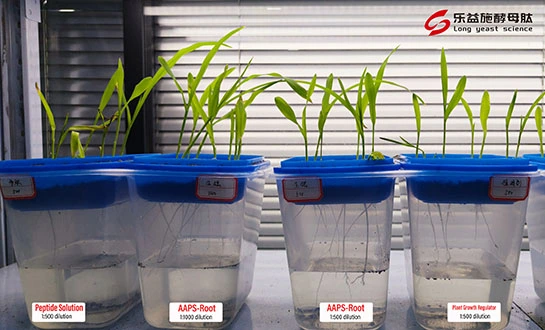
Peptides used in many modern liquid root booster products are short chains of amino acids, often with molecular weights below 1000 Daltons. Because of their small size, these molecules can be absorbed rapidly by plant tissues and may participate in metabolic signaling pathways related to root growth.
Research in plant physiology suggests that small peptides may influence cell division and differentiation in the root apical meristem. In some controlled studies, peptide-containing biostimulants have been associated with increased lateral root formation and improved root surface area. A larger root system can potentially enhance the plant’s ability to capture nutrients and water during early establishment.
Molecular Size and Bioavailability
One important factor influencing the performance of peptide-based biostimulants is molecular weight distribution. Peptides with smaller molecular sizes are generally more mobile and may be absorbed more easily by plant cells.
Advanced enzymatic hydrolysis technologies used in peptide production can generate higher proportions of low-molecular-weight peptides. Maintaining a consistent molecular profile helps improve product stability and ensures predictable absorption behavior across different crops and growing conditions.
Key Components in Liquid Root Booster Formulations
While peptides are often the primary bioactive ingredient, most liquid root booster products incorporate additional compounds that support root health through complementary mechanisms.
Humic and Fulvic Acids
Humic and fulvic substances are commonly included because they improve soil structure and enhance nutrient availability. These organic compounds can increase cation exchange capacity in the rhizosphere and support beneficial microbial activity around plant roots.
Plant Growth Regulators
Certain formulations may include small amounts of plant growth regulators such as Indole-3-Butyric Acid (IBA). This compound is widely used in horticulture to promote root initiation and development, particularly in transplanted seedlings and cuttings.
Seaweed Extracts
Extracts derived from marine algae such as Ascophyllum nodosum are another frequent component of root biostimulants. Seaweed extracts naturally contain cytokinins, betaines, and trace minerals that can support plant stress tolerance and physiological balance during transplant establishment.
Agronomic Benefits and Application Methods
The effectiveness of a liquid root booster depends not only on its formulation but also on proper application timing and management. When integrated into crop management programs, these products may contribute to several agronomic improvements.
Improved Nutrient Uptake
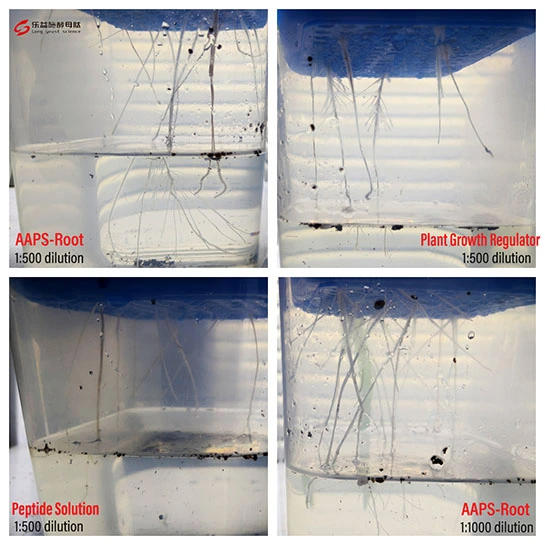
A more developed root system typically leads to a larger absorption surface area. Field trials in horticultural crops have shown that enhanced root development may improve the uptake efficiency of nutrients such as phosphorus and micronutrients during early growth stages.
For high-value crops—including tomatoes, citrus, grapes, and specialty vegetables—faster root establishment can translate into more uniform plant development and potentially improved yield consistency.
Application Timing and Techniques
Correct application timing is essential to obtain consistent results from a liquid root booster. In nursery production, applying the solution to the root zone several days before transplanting can help prepare seedlings for environmental change.
After transplanting, root-zone drenches or fertigation during the first two weeks may support ongoing root development. In some systems, foliar applications are used alongside soil treatments to provide additional metabolic support.
Compatibility with existing fertilizer or crop protection programs is also an important consideration. Many peptide-based formulations are designed to remain stable when mixed with standard agricultural inputs, allowing them to fit into existing spray schedules without requiring additional field passes.
Selecting a Reliable Liquid Root Booster Supplier
For agricultural distributors, wholesalers, and commercial farms, choosing the right liquid root booster involves evaluating both product quality and supply reliability.
Quality Control and Manufacturing Standards
Reliable manufacturers typically operate under recognized quality systems such as ISO 9001 and follow Good Manufacturing Practice (GMP) guidelines. Analytical documentation—such as peptide molecular weight distribution, amino acid composition, and heavy metal testing—can help verify product consistency.
The source of protein used to produce peptides can also influence final product performance. High-quality protein materials with higher protein content generally yield more bioactive peptide fractions after enzymatic hydrolysis.
Supply Chain and Regulatory Considerations
Global agricultural markets often require compliance with various regulatory frameworks and registration procedures. Suppliers capable of providing safety documentation, technical dossiers, and regulatory support can simplify product registration in different regions.
In addition, stable production capacity and reliable logistics are essential for distributors supplying large farming operations. Ensuring consistent product availability during key transplanting seasons helps maintain operational continuity for growers.
Potential Considerations and Responsible Use
Although liquid root booster products offer several potential benefits, careful management is necessary to ensure optimal results.
Application Rate Management
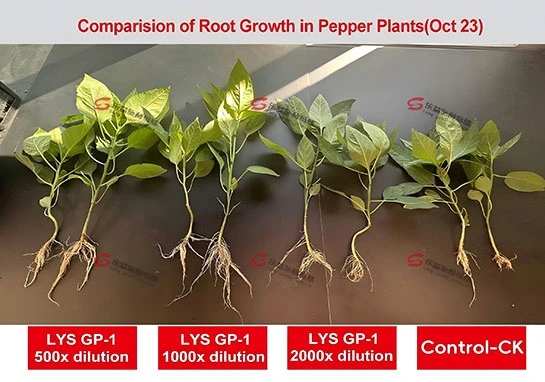
Over-application of concentrated biostimulant solutions may sometimes lead to excessive vegetative growth or imbalanced plant development. Following manufacturer guidelines and conducting small-scale field trials can help determine appropriate application rates for different crops and environments.
Young seedlings may be particularly sensitive to osmotic pressure, so diluted initial applications are often recommended during early testing phases.
Environmental and Sustainability Aspects
Many peptide-based root boosters are produced from renewable biological sources such as yeast fermentation. These materials are biodegradable and generally break down naturally in soil systems.
Because improved root efficiency may reduce the need for excessive fertilizer or irrigation inputs, some growers incorporate these products into broader sustainable agriculture strategies. In certain regions, yeast-derived peptides may also be compatible with organic production standards, depending on certification guidelines.
Optimizing Implementation for Agricultural Operations
To maximize the value of a liquid root booster, integration with existing crop management systems is important.
Procurement and Storage Strategies
Large agricultural operations often establish seasonal procurement plans to ensure product availability during transplant periods. Bulk purchasing agreements can help stabilize supply and improve cost efficiency for distributors and farming enterprises.
Proper storage conditions also contribute to product stability. Many stabilized peptide formulations maintain effectiveness for extended periods when stored under recommended temperature conditions.
Integration with Crop Management Programs
Biostimulants typically perform best when used alongside balanced fertilization and irrigation strategies. Adequate phosphorus and micronutrient availability, for example, can support the root growth stimulated by peptide activity.
Monitoring plant development, root health, and early growth performance allows growers to evaluate the effectiveness of treatments and refine application strategies in future growing cycles.
Conclusion
Peptide-based liquid root booster formulations represent an evolving category of agricultural biostimulants designed to support plants during one of the most vulnerable stages of crop production—transplant establishment. By promoting root regeneration, improving nutrient uptake efficiency, and supporting plant stress tolerance, these products may contribute to more stable crop performance.
As modern agriculture continues to seek sustainable solutions that improve productivity while reducing environmental pressure, biostimulant technologies such as liquid root boosters are receiving increasing attention from growers, distributors, and agricultural researchers alike. When used responsibly and integrated into comprehensive crop management programs, they can provide an additional tool for supporting healthy plant development and improving transplant success.
FAQ
1. What makes peptide-based liquid root boosters more effective than traditional rooting hormones?
Synthetic hormones are not as bioavailable or well taken up by cells as peptide-based products. Its low molecular weight (≤1000 Da) lets it be quickly absorbed by root tissues, and the amino acid makeup gives the body direct metabolic benefits that man-made hormones can't match. Peptides are also stable at different temperatures and work well with other fertilizers and other agricultural inputs.
2. How should liquid root boosters be stored and handled for maximum effectiveness?
Keep liquid root boosters cool, dry, and out of direct sunlight. Ideally, keep the temperature between 5°C and 25°C. Do not freeze peptides because they can change their structure and make them less bioactive. Products may settle down naturally while being stored, so always shake or mix them well before using. To keep the product's purity and stop contamination, use clean application tools.
3. Can liquid root boosters be used in both soil and hydroponic growing systems?
It is true that good liquid root boosters work well in both earth and hydroponic systems. When used on soil, the items boost the activity of good microbes and make it easier for nutrients to be absorbed. For hydroponic systems, make sure the mixture doesn't have any particles that could get stuck in the watering lines. Also, keep an eye on the pH levels because some products can slightly change the chemistry of the solution.
4. What is the recommended application timing for maximum transplant recovery benefits?
Use liquid root boosters three to seven days before moving to get the root systems ready. Then, use them again within 48 hours of putting them in the field. Extra treatments can be made once a week for the first two to three weeks, or until the plants are well established. Do not use products when the weather is very bad or when plants are under a lot of stress.
References
1. Martinez, R.K., and Smith, J.A. "Peptide-Enhanced Root Development in Commercial Transplant Production." Journal of Agricultural Biotechnology, vol. 45, no. 3, 2023, pp. 178–195.
2. Lee Chen, Michael B. Thompson, and Paul D. Johnson. "Comparative Analysis of Biostimulant Effects on Transplant Recovery in High-Value Crops." International Review of Plant Science, no. There are 412–429 pages in volume 28, issue 7, 2024.
3. Rodriguez, A.M., et al. "Molecular Weight Distribution and Bioactivity Relationships in Agricultural Peptides." Crop Science and Technology Quarterly, vol. 67, no. 2, 2023, pp. 234–251.
4. Davis, S.L., and Williams, K.R. This article was published in Agricultural Economics Review as "Economic Impact Assessment of Peptide-Based Root Boosters in Commercial Agriculture." 39, no. 4, 2024, pp. 567–584.
5. People named Patel, N.K., Brown, T.J., and Lee, H.S. "Environmental Fate and Safety Assessment of Yeast-Derived Agricultural Peptides." Environmental Agricultural Science, no. 51, no. 6, 2023, pp. 823–837.
6. In Modern Agricultural Systems, Anderson, M.R., et al. wrote an article called "Optimization Strategies for Liquid Biostimulant Applications in Large-Scale Farming Operations." 22, no. 1, 2024, pp. 145–162.

Tell us your needs — we’ll provide the right solution for your crops and markets.
Innovating Agriculture with Yeast-Derived Amino Acid Peptides