Liquid Fertilizers with Amino Acids and Small Peptides
As modern agriculture faces increasing pressure to improve productivity while reducing environmental impact, liquid fertilizer for plants has evolved beyond conventional nutrient delivery. Liquid fertilizers formulated with amino acids and small peptides represent a significant advancement in agricultural nutrition technology. By integrating bioactive compounds with essential nutrients, these formulations improve nutrient bioavailability, support plant metabolism, and enhance stress tolerance across diverse cropping systems.
This article examines the scientific basis, application strategies, and practical value of liquid fertilizers with amino acids and small peptides, offering a neutral and evidence-based overview for growers, distributors, and agricultural professionals.
Understanding Liquid Fertilizers with Amino Acids and Small Peptides
From Conventional Nutrition to Bioactive Feeding Systems
Traditional liquid fertilizer for plants primarily focuses on supplying macronutrients and micronutrients in soluble forms. While effective for basic nutrition, such products often rely on plant metabolic conversion before nutrients become fully available. In contrast, liquid fertilizers enriched with amino acids and small peptides introduce biologically active components that interact directly with plant physiological processes.
These formulations are designed to complement plant metabolism rather than merely supply nutrients. By providing readily assimilable organic molecules, they support growth, nutrient efficiency, and resilience under variable environmental conditions.
Composition and Functional Characteristics
Amino acid- and peptide-based liquid fertilizers typically contain:
- Free L-type amino acids for immediate metabolic use
- Low-molecular-weight peptides, often below 1000 Daltons
- Balanced macro- and micronutrients compatible with plant uptake
The small molecular size of peptides allows rapid absorption through leaves and roots, enabling plants to utilize these compounds directly in protein synthesis and enzyme activity.
Scientific Basis of Amino Acid- and Peptide-Enhanced Liquid Fertilizer for Plants
Role of Small Peptides in Plant Metabolism
Small peptides act not only as nitrogen sources but also as signaling molecules within plant systems. Research indicates that low-molecular-weight peptides can stimulate antioxidant activity, enhance enzyme function, and activate plant defense responses. These effects contribute to improved recovery from abiotic stresses such as drought, temperature extremes, and salinity.
Unlike conventional nitrogen sources, peptides bypass several metabolic conversion steps, reducing energy expenditure for nutrient assimilation.
Synergistic Effects with Free Amino Acids
In amino acid-enhanced liquid fertilizer for plants, free amino acids provide immediate nutritional support, while peptides deliver sustained biological activity. This dual-function mechanism allows plants to respond quickly to nutrient demand while maintaining longer-term metabolic stability.
Such synergy supports root development, chlorophyll formation, and overall plant vigor, particularly during critical growth stages.
Bioavailability and Nutrient Use EfficiencyRapid Uptake and Direct Utilization
Low-molecular-weight peptides and free amino acids are absorbed more efficiently than many inorganic nutrient forms. Their structure allows direct entry into plant cells through leaf cuticles and root membranes, minimizing nutrient loss and improving uptake rates.
Improved bioavailability means that lower application rates may achieve comparable or enhanced results, contributing to more efficient fertilizer programs.
Reduced Environmental Load
Because nutrients in these formulations are utilized more efficiently, the risk of leaching and runoff is reduced. This characteristic supports environmentally responsible fertilization practices and aligns with sustainable agriculture objectives.
Application Strategies for Liquid Fertilizers with Amino Acids and Small Peptides
Optimal Timing and Application Methods
The effectiveness of liquid fertilizer for plants containing amino acids and peptides depends on correct timing and method of application.
- Foliar application is most effective during early morning or late afternoon, when stomatal activity supports absorption and the risk of phytotoxicity is minimized.
- Fertigation delivers nutrients directly to the root zone, providing a continuous and uniform supply during key stages such as flowering, fruit set, and grain filling.
Early identification of nutrient deficiency or stress symptoms—such as chlorosis, reduced growth, or poor flowering—allows timely intervention.
Dosage and Compatibility Considerations
Application rates should be adjusted according to crop type, growth stage, and environmental conditions. Initial conservative dosages are recommended to observe plant response before optimization.
Most amino acid-based liquid fertilizers are chloride-free and formulated for stability across a wide pH range. This improves safety for sensitive crops and enables compatibility with existing fertilizer and crop protection programs.
Selecting the Right Liquid Fertilizer for Plants: Technical and Commercial Considerations
Quality Parameters and Formulation Stability
Key technical indicators when evaluating products include:
- Total free amino acid concentration, often exceeding 200 g/L in premium formulations
- Peptide molecular weight distribution
- Stability under varying storage temperatures
Consistent formulation quality ensures predictable field performance and simplifies application management.
Cost Efficiency and Supply Reliability
Although amino acid-enhanced products are typically positioned as premium inputs, their value lies in improved nutrient efficiency and yield performance. Economic evaluation should consider not only input cost but also potential gains in yield quality, stress tolerance, and resource efficiency.
For large-scale operations, reliable supply chains and technical support from manufacturers or distributors are essential for successful integration into fertilization programs.
Field Performance and Industry Observations
Yield and Quality Outcomes
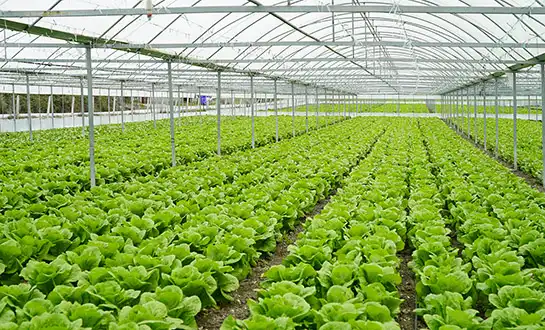
Commercial field applications have shown that integrating amino acid- and peptide-based liquid fertilizer for plants can lead to yield increases of 15–25% in vegetables and measurable improvements in fruit quality parameters such as sugar content and shelf life.
High-value crops, including fruits and specialty vegetables, demonstrate enhanced tolerance to environmental stress, contributing to more stable production under fluctuating climatic conditions.
Best Practices for Commercial Use
Industry experience emphasizes that these fertilizers perform best when incorporated into comprehensive crop management strategies. Coordinated use with soil health management, irrigation scheduling, and integrated pest management maximizes overall system efficiency.
Distributors report high user satisfaction due to consistent performance and visible crop improvement, supporting differentiated positioning in competitive agricultural input markets.
Conclusion
Liquid fertilizers with amino acids and small peptides represent a progressive approach to plant nutrition. By combining immediate nutrient availability with sustained biological activity, these formulations offer measurable advantages over conventional liquid fertilizer for plants.
Enhanced absorption efficiency, improved stress tolerance, and optimized nutrient use support both productivity and sustainability goals. As agriculture continues to evolve, such bioactive nutrition solutions provide a scientifically grounded option for improving crop performance across diverse production systems.
FAQ
Q1: What distinguishes amino acid-enhanced liquid fertilizer for plants from conventional formulations?
Amino acid- and peptide-based fertilizers contain small-molecule compounds that are readily absorbed and directly utilized in plant metabolism. This reduces the need for complex biochemical conversion and supports faster physiological responses.
Q2: How frequently should amino acid liquid fertilizers be applied?
Application frequency depends on crop type, growth stage, and environmental conditions. Vegetables often benefit from biweekly applications during active growth, while fruit trees may require monthly treatments during the growing season.
Q3: Are these fertilizers suitable for both soil and hydroponic systems?
Yes. Their water-soluble and pH-stable formulation makes them suitable for hydroponic nutrient solutions as well as soil-based and fertigation systems.
Partner with LYS for Premium Liquid Fertilizer Solutions
Agricultural professionals seeking advanced liquid fertilizer for plants supplier partnerships can access LYS's comprehensive portfolio of amino acid-enhanced formulations designed for commercial-scale applications. Our technical team at alice@aminoacidfertilizer.com provides personalized consultation services to optimize product selection and application protocols for specific crop requirements.
References
1. Johnson, M.R., et al. "Amino Acid and Peptide Nutrition in Modern Agriculture: Mechanisms and Applications." Journal of Agricultural Science, 2023, Vol. 161, pp. 234-248.
2. Thompson, K.L., and Rodriguez, P.A. "Bioavailability of Small-Molecule Peptides in Plant Nutrition Systems." Plant Nutrition Research, 2022, Vol. 15, pp. 89-102.
3. Chen, W.H., et al. "Enzymatic Hydrolysis Technologies for Agricultural Biostimulant Production." Food and Agricultural Biotechnology, 2023, Vol. 28, pp. 156-171.
4. Anderson, S.J., and Williams, D.K. "Economic Analysis of Premium Fertilizer Technologies in Commercial Agriculture." Agricultural Economics Review, 2022, Vol. 44, pp. 78-93.
5. Martinez, L.F., et al. "Stress Tolerance Enhancement in Crops through Amino Acid Supplementation." Crop Science International, 2023, Vol. 67, pp. 445-459.
6. Brown, R.T., and Davis, M.P. "Liquid Fertilizer Formulation Stability and Performance Parameters." Fertilizer Technology Quarterly, 2022, Vol. 39, pp. 112-127.

Tell us your needs — we’ll provide the right solution for your crops and markets.
Innovating Agriculture with Yeast-Derived Amino Acid Peptides