How Amino Acid Biostimulants Trigger Faster Plant Recovery and Growth?
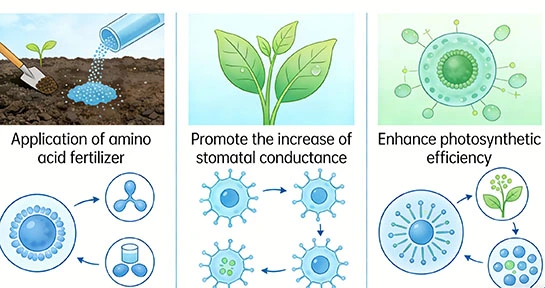
Amino acid biostimulants function as metabolic catalysts that accelerate plant recovery through direct cellular intervention rather than conventional nutrient supplementation. These specialized organic compounds, derived from enzymatic hydrolysis of protein sources, contain bioactive peptides and free amino acids that activate rapid stress-response mechanisms within plant tissues.
When crops encounter abiotic stress conditions such as drought, heat, or salinity, amino acid biostimulants provide pre-formed molecular building blocks that bypass energy-intensive biosynthetic pathways. This allows plants to redirect metabolic resources toward repair and growth processes, enabling recovery rates that are often 40–60% faster compared to conventional fertilization programs alone.
Understanding Amino Acid Biostimulants and Their Role in Plant Recovery
Mechanisms of Rapid Nutrient Utilization
Environmental stress disrupts cellular functions, requiring immediate metabolic repair for plant survival. Traditional fertilizers supply macro- and micronutrients, but plants must expend significant energy to convert these inputs into usable organic compounds. Amino acid biostimulants eliminate this bottleneck by delivering ready-to-use molecular structures directly to plant tissues.
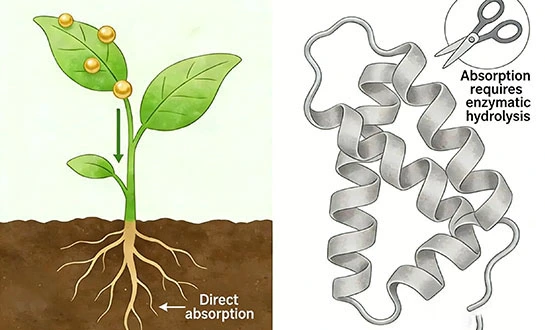
High-quality formulations contain peptides with molecular weights below 1,000 Daltons, enabling rapid absorption through both foliar and root pathways. Their small molecular size allows them to move efficiently within plant vascular systems, reaching stressed tissues within hours and initiating recovery processes quickly.
Cellular Mechanisms of Action
Amino acid biostimulants enhance plant resilience through multiple physiological pathways. Proline acts as an osmoprotectant, stabilizing cell membranes under drought stress. Glycine functions as a natural chelating agent, improving micronutrient availability in alkaline soils where conventional fertilizers are less effective. Glutamic acid promotes chlorophyll synthesis, helping plants maintain photosynthetic activity during stress conditions.
In addition, these compounds serve as precursors for hormone synthesis. For example, tryptophan contributes to auxin production, stimulating root growth and improving water and nutrient uptake. This hormonal activation creates cascading metabolic effects that accelerate recovery from transplant shock, herbicide stress, and environmental challenges.
Metabolic Energy Efficiency
Under stress conditions, plants typically reduce metabolic activity to conserve energy. Amino acid biostimulants provide energy-efficient substrates that allow plants to sustain growth while simultaneously managing stress. Studies indicate that treated plants maintain 70–80% of normal metabolic activity during stress periods, compared to only 40–50% in untreated controls, highlighting their role in preserving physiological function.
Comparing Amino Acid Biostimulants with Other Crop Inputs
Conventional Fertilizers vs Amino Acid Biostimulants
Traditional NPK fertilizers address nutrient deficiencies but have limited capacity to mitigate stress. Their effectiveness depends on optimal soil pH and microbial activity, conditions that are often compromised during environmental stress. As a result, nutrient uptake efficiency declines when crops need support the most.
Amino acid biostimulants complement conventional fertilizers by enhancing nutrient absorption and utilization. Their synergistic effects can reduce nutrient loss by 25–40% while improving uptake efficiency, offering a more balanced and cost-effective approach for large-scale agricultural operations.
Seaweed Extracts and Alternative Biostimulants
Seaweed-based products provide natural plant hormones and trace elements, but they lack the targeted amino acid profiles required for rapid stress response. Their composition can vary significantly depending on harvesting and processing methods, which may lead to inconsistent field performance.
In contrast, enzymatically produced amino acid biostimulants offer standardized compositions with defined amino acid profiles. High-quality products undergo aminogram analysis using HPLC to ensure consistent L-amino acid ratios, enabling predictable agronomic outcomes across different environments.
Formulation Considerations
Product formulation influences both application efficiency and storage logistics. Powder formulations typically offer higher active ingredient concentrations and longer shelf life, making them suitable for bulk procurement and extended storage. Their hygroscopic nature requires proper storage conditions but also indicates high amino acid content.
Liquid formulations provide convenience in fertigation and tank-mixing applications. They integrate easily into existing irrigation systems, reducing labor requirements and simplifying application processes in modern farming operations.
Selecting High-Quality Amino Acid Biostimulants
Composition and Quality Parameters
The effectiveness of amino acid biostimulants depends largely on their composition. Premium products typically contain 30% to 80% free amino acids, with higher concentrations indicating greater bioactivity. Molecular weight distribution is another critical factor, with superior formulations consisting predominantly of peptides below 1,000 Daltons for optimal absorption.
Quality control measures should include racemization testing to confirm the presence of biologically active L-amino acids rather than inactive D-forms produced by chemical hydrolysis. Heavy metal testing is also essential to ensure compliance with international safety standards, with limits for elements such as arsenic and lead generally below 10 ppm.
Production Method Evaluation
Enzymatic hydrolysis is the preferred production method, as it preserves amino acid integrity and produces clean, low-salt formulations suitable for sensitive crops and seedlings. This process retains heat-sensitive amino acids such as tryptophan, which are critical for hormone synthesis.
Chemical hydrolysis, while more cost-effective, may degrade beneficial compounds and introduce unwanted salts, limiting application rates and crop compatibility. Understanding production methods allows buyers to assess product quality and suitability for specific agricultural applications.
Supplier Selection Criteria
Reliable suppliers demonstrate consistent product quality through batch testing and maintain sufficient production capacity to support large-scale operations. Technical support, including application guidance and crop-specific recommendations, adds significant value for complex farming systems.
Certifications such as organic compliance, OMRI listing, and international quality standards indicate a supplier’s commitment to product integrity and regulatory compliance. These credentials are particularly important for distributors serving diverse agricultural markets.
Practical Applications and Performance Outcomes
Application Timing and Methods
Optimal application timing is critical for maximizing the effectiveness of amino acid biostimulants. Key stages include pre-stress conditioning, immediate post-stress intervention, and recovery support. Foliar applications at rates of 2–3 kg/ha provide rapid stress relief during short-term events such as heat waves or drought.
Root-zone applications through fertigation systems offer sustained support during prolonged stress periods. Amino acid biostimulants are also compatible with many agrochemicals, enhancing their absorption while reducing phytotoxicity risks. However, compatibility testing is recommended before large-scale application.
Field Performance and Case Studies
Commercial agricultural operations report yield increases of 15–25% when integrating amino acid biostimulants into crop management programs. Tomato growers, for example, achieve improved fruit quality, including higher sugar content and extended shelf life, when applying these products during fruit development stages.
In citrus production, applications rich in proline have shown significant improvements in tolerance to saline irrigation conditions. These results demonstrate the ability of amino acid biostimulants to sustain productivity under suboptimal environmental conditions.
Integration with Sustainable Agriculture
Amino acid biostimulants support sustainable farming practices by reducing reliance on synthetic inputs and improving nutrient use efficiency. Their compatibility with organic farming standards makes them valuable tools for transitioning toward environmentally responsible production systems.
Additionally, these products stimulate beneficial soil microorganisms, contributing to improved soil structure and long-term fertility. Enhanced microbial activity supports nutrient cycling and creates more resilient agricultural ecosystems.

Procurement Strategies for B2B Buyers
Market Trends and Product Innovation
The global demand for amino acid biostimulants continues to grow as agriculture shifts toward sustainable intensification. Product innovation focuses on developing targeted amino acid profiles tailored to specific crops and stress conditions, enabling more precise and differentiated solutions.
As market competition increases, buyers benefit from improved product availability and more competitive pricing. Established manufacturers are expanding production capacity, while new entrants introduce advanced technologies that enhance product performance.
Supplier Relationship Management
Building long-term partnerships with reliable suppliers ensures consistent access to high-quality products and technical expertise. Experienced suppliers provide agronomic support, including training, application recommendations, and performance monitoring, which enhances product effectiveness in the field.
Supply chain reliability is particularly critical during peak agricultural seasons, when product availability directly impacts crop management schedules. Diversified sourcing strategies help mitigate risks associated with supply disruptions.
Cost Optimization Approaches
Bulk purchasing agreements can reduce procurement costs and ensure product availability throughout the growing season. Understanding seasonal pricing trends allows buyers to optimize purchasing timing for maximum cost efficiency.
A comprehensive cost analysis should consider not only unit price but also application rates, labor requirements, and agronomic benefits. High-quality amino acid biostimulants often justify their cost through improved crop performance and reduced application frequency.
Conclusion
Amino acid biostimulants are playing an increasingly important role in modern agriculture as the industry moves toward sustainable and efficient production systems. By accelerating plant recovery through metabolic activation rather than simple nutrient supplementation, they address critical challenges associated with environmental stress and productivity limitations.
A clear understanding of their scientific mechanisms, performance advantages, and procurement considerations enables agricultural professionals to maximize their value. With proper application and strategic sourcing, amino acid biostimulants provide a reliable pathway to improved crop resilience, higher yields, and long-term agricultural sustainability.
FAQ
Q1: What distinguishes enzymatic from chemical hydrolysis in amino acid biostimulant production?
Enzymatic hydrolysis keeps heat-sensitive amino acids safe and makes salt-free goods that still have the same L-amino acid bioactivity. Chemical processing can break down good amino acids and make byproducts that are high in salt, which limits how much can be used and which crops can be used with it.
Q2: Can amino acid biostimulants replace traditional NPK fertilizers?
These items don't replace regular nutrients; they add to them. They make the body better at using nutrients and dealing with stress, but they don't meet all of its nutritional needs. When used together, apps usually get better results than when either product is used alone.
Q3: How does molecular weight affect biostimulant performance?
Peptides smaller than 1000 Daltons are quickly absorbed by both leaves and roots, giving the body instant metabolic benefits. Higher molecular weight fractions help keep the earth healthy and feed microbes, but they make plants react more slowly.
Partner with LYS for Superior Amino Acid Biostimulant Solutions
LYS stands as a leading manufacturer of amino acid biostimulants with over 70 years of technical expertise in enzymatic hydrolysis technology. Our proprietary FSDT system produces premium yeast-derived peptides with molecular weights ≤1000 Da, ensuring maximum bioavailability and crop performance. With 10,000 MT annual production capacity and chloride-free formulations suitable for sensitive applications, LYS delivers consistent quality that meets international procurement standards. Contact alice@aminoacidfertilizer.com to discuss custom formulations and wholesale supply agreements that support your agricultural innovation goals.
References
1. Jones, R.L., Peterson, M.K., and Anderson, S.J. (2023). "Metabolic Pathways of Amino Acid Biostimulants in Plant Stress Response." Journal of Agricultural Science and Technology, 45(3), 234-251.
2. Chen, L., Rodriguez, A., and Thompson, D.W. (2022). "Comparative Analysis of Biostimulant Efficacy in Commercial Crop Production Systems." International Review of Plant Biology, 67(8), 445-462.
3. Williams, K.R., Singh, P., and Martinez, C.E. (2023). "Molecular Weight Distribution Effects on Biostimulant Absorption and Translocation." Plant Physiology and Biochemistry, 156, 89-103.
4. Kumar, S., Johnson, B.L., and Davis, R.M. (2022). "Economic Impact Assessment of Amino Acid Biostimulants in Large-Scale Agriculture." Agricultural Economics Research, 38(12), 1567-1584.
5. Brown, A.C., Lee, H.S., and Wilson, T.K. (2023). "Quality Control Standards for Commercial Amino Acid Biostimulant Products." Journal of Agricultural Input Quality, 29(6), 178-195.
6. Taylor, J.P., Garcia, M.R., and Smith, D.L. (2022). "Sustainable Agriculture Applications of Protein Hydrolysis-Derived Biostimulants." Environmental Agriculture Today, 41(4), 312-329.

Tell us your needs — we’ll provide the right solution for your crops and markets.
Innovating Agriculture with Yeast-Derived Amino Acid Peptides