Fix Nutrient Deficiencies with Peptide Micronutrients
Peptide micronutrients represent an emerging approach in modern crop nutrition. By combining essential trace elements with small peptide molecules, this technology aims to improve how plants absorb and utilize nutrients. Compared with traditional micronutrients for plants, peptide-based complexes can maintain higher stability across a wider range of soil conditions and pH levels, helping ensure that crops receive consistent micronutrient availability throughout the growing cycle.
As agricultural systems face increasing pressure to improve yield efficiency and sustainability, innovations in nutrient delivery are becoming increasingly important. Understanding how micronutrients function, why deficiencies occur, and how new delivery technologies perform under real field conditions can help growers and agribusiness decision-makers make more informed fertilizer management choices.
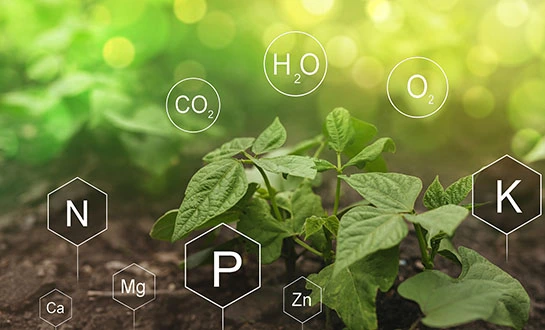
Understanding Micronutrient Deficiencies in Plants
Micronutrient deficiencies are often described as a form of “hidden hunger” in agriculture. Even when crops receive sufficient nitrogen, phosphorus, and potassium, a lack of trace elements can still limit overall productivity. Because these elements are required in very small quantities, deficiencies may develop before visible symptoms appear, yet still significantly affect plant physiology and yield potential.
The Role of Essential Trace Elements
Essential trace elements—including iron, zinc, manganese, copper, boron, molybdenum, and nickel—participate in many critical biochemical processes in plants.
Iron is closely associated with chlorophyll formation and electron transport during photosynthesis. Zinc plays an important role in enzyme activation and protein synthesis, with more than 300 enzymes depending on zinc for proper function. Manganese contributes to the oxygen-evolving complex in photosynthesis, while copper participates in lignin formation that supports plant structural integrity.
Although required only in parts-per-million concentrations, deficiencies in any of these elements can trigger Liebig’s Law of the Minimum, where the scarcest nutrient limits overall crop growth regardless of the abundance of other nutrients.
Research suggests that mild micronutrient deficiencies may reduce crop yields by 10–30% before clear visual symptoms develop. This issue is particularly significant for modern high-yield crop varieties, which have been bred to maximize genetic productivity but may also have higher nutritional demands.
Soil pH and Bioavailability Challenges
Soil chemistry plays a central role in determining the availability of micronutrients for plants. Many micronutrients are sensitive to soil pH, which can significantly influence their solubility and plant uptake.
In alkaline soils (pH above 7.5), iron, manganese, and zinc can rapidly convert into insoluble forms that roots cannot absorb efficiently. Conversely, strongly acidic soils (pH below 5.5) may lead to excessive manganese or aluminum availability, which can interfere with root function and nutrient balance.
High bicarbonate levels in soil or irrigation water may further contribute to iron chlorosis in sensitive crops such as citrus and grapes. For agronomists and growers, understanding these soil–nutrient interactions is essential for designing effective fertilization programs that maintain micronutrient availability throughout the growing season.
Limitations of Traditional Micronutrient Supply Methods
Traditional micronutrient fertilizers have supported agricultural production for decades, but they also present several limitations related to stability, efficiency, and predictability under different soil conditions.
Bioavailability and Absorption Issues
Many conventional micronutrient products rely on simple inorganic salts. In alkaline environments, these salts can quickly react with soil compounds to form insoluble hydroxides or carbonates.
For example, iron sulfate is widely used because of its relatively low cost, yet its availability in alkaline soils may decline rapidly after application. Similarly, studies indicate that only a small proportion of zinc sulfate applied to calcareous soils is ultimately absorbed by plants.
Foliar applications can provide short-term corrections for nutrient deficiencies, but their effectiveness depends heavily on timing and environmental conditions. Rainfall may wash nutrients from leaf surfaces before absorption occurs, while high salt concentrations can sometimes cause leaf injury if application rates are not carefully managed.
Cost and Operational Considerations
From a procurement and farm management perspective, input costs must be balanced against performance reliability. Synthetic chelating agents such as EDTA and DTPA improve micronutrient stability in soil solutions, but they also increase product cost.
In situations where nutrient availability remains inconsistent, growers may compensate by applying higher rates or repeating applications more frequently, which can raise overall input expenses.
In hydroponic systems and controlled environment agriculture, product compatibility becomes an additional concern. Some micronutrient formulations may precipitate in nutrient solutions, potentially clogging irrigation emitters or requiring system maintenance.
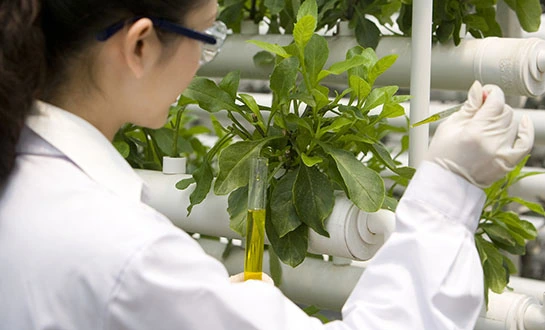
Peptide Micronutrients and Their Potential Role in Nutrient Delivery
Recent developments in agricultural biotechnology have introduced peptide-based approaches for delivering micronutrients for plants. These systems use small peptide molecules derived from protein hydrolysis to form complexes with trace elements, potentially improving nutrient stability and uptake.
Chelation Mechanisms and Peptide Structures
Peptides contain multiple functional groups that can bind metal ions, allowing them to form stable complexes with micronutrients such as iron, zinc, and manganese. These complexes may help protect micronutrients from rapid soil fixation, particularly in challenging soil environments.
Compared with some traditional chelating agents, peptide-based complexes may provide multiple binding sites, which can contribute to their structural stability. In theory, this structure may also support gradual nutrient release in the rhizosphere as microbial and enzymatic activity breaks down peptide molecules.
Stability and Compatibility in Agricultural Applications
One potential advantage of peptide-based micronutrients is their compatibility with a wide range of agricultural practices. Because peptides are derived from natural protein structures, they may exhibit good solubility and stability in liquid formulations.
This property can be beneficial in fertigation systems, tank mixtures, or foliar sprays where precipitation or incompatibility could otherwise reduce application efficiency. In addition, peptide carriers may remain stable across a broad range of temperatures and storage conditions, which can simplify product handling and logistics for distributors and growers.
Additional Biological Components
Some peptide micronutrient formulations may also contain naturally occurring compounds such as nucleotides or amino acids that participate in plant metabolic pathways. These molecules are associated with processes including cell repair, stress response, and metabolic regulation.
Although research in this area is still evolving, the integration of bioactive compounds with micronutrient carriers may offer additional opportunities for improving nutrient efficiency and plant resilience under environmental stress conditions.
Selecting Peptide Micronutrient Solutions for Agricultural Programs
When evaluating new micronutrient technologies, growers and agricultural input buyers typically consider several factors, including product quality, supplier reliability, and compatibility with existing fertilization systems.
Quality Standards and Supplier Evaluation
Reliable production methods and consistent raw material quality are essential for any agricultural input product. For peptide micronutrients, manufacturing processes such as controlled enzymatic hydrolysis influence peptide size distribution, purity, and chelation capacity.
Agricultural buyers often review product specifications, stability data, and field trial results to assess performance reliability. Technical support services—such as agronomic consultation or application guidelines—can also play an important role in helping growers integrate new nutrient technologies effectively.
Compatibility with Modern Fertilization Systems
Modern farming systems frequently rely on fertigation, drip irrigation, and hydroponic nutrient delivery. Micronutrient products used in these systems must maintain stable solutions without causing precipitation or equipment blockage.
Peptide-based micronutrient formulations may offer advantages in this context due to their solubility and compatibility with other fertilizers or crop protection products. For sensitive crops or seedlings, chloride-free formulations can further reduce the risk of salt stress.
Economic Considerations
Although peptide micronutrients may have a higher initial cost compared with basic mineral salts, their value is often evaluated based on overall nutrient efficiency. If nutrient uptake improves and application frequency decreases, total input costs may remain competitive.
Improved compatibility with existing fertilization programs can also reduce labor requirements and operational complexity, which contributes to the broader economic evaluation of these products in commercial farming systems.

Implementing Peptide Micronutrient Programs
Successful nutrient management programs typically combine diagnostic monitoring, targeted applications, and integration with existing fertilization strategies.
Soil and Tissue Testing
Accurate diagnosis of nutrient deficiencies is a critical first step. Soil testing provides information about pH, organic matter content, and nutrient availability, while plant tissue analysis offers direct insight into nutrient uptake during specific growth stages.
By combining these diagnostic tools, growers can determine which micronutrients for plants require adjustment and design targeted application programs.
Integration with Existing Fertilization Plans
Peptide micronutrients are generally used as a complement to standard macronutrient fertilization programs rather than as replacements. Aligning micronutrient applications with key growth stages—such as flowering, fruit set, or grain filling—can improve nutrient utilization efficiency.
Compatibility with tank mixes and fertigation systems also allows growers to incorporate micronutrients into existing schedules without major changes to operational workflows.
Sustainability Considerations
Environmental sustainability has become an increasingly important factor in agricultural production and supply chains. Improving nutrient use efficiency can help reduce nutrient losses to the environment while supporting crop productivity.
Because peptides are biodegradable molecules derived from natural protein sources, peptide-based chelates may present fewer concerns related to long-term soil accumulation compared with certain synthetic chelating agents. This characteristic may support sustainability initiatives and regulatory compliance in some agricultural markets.
Conclusion
Advances in micronutrient delivery technologies are helping address long-standing challenges in crop nutrition. Peptide-based systems represent one approach aimed at improving the stability, availability, and efficiency of micronutrients for plants under diverse soil and environmental conditions.
By combining trace elements with biologically derived peptide carriers, these formulations may help reduce nutrient fixation in soil, improve compatibility with modern fertilization systems, and support more consistent crop nutrition.
As global agriculture continues to balance productivity with environmental responsibility, innovations in micronutrient management will likely remain an important area of research and development. For growers, agronomists, and agricultural input suppliers, understanding the potential benefits and limitations of emerging technologies such as peptide micronutrients can support more informed nutrient management decisions and sustainable crop production strategies.

FAQ
1. How do peptide micronutrients differ from traditional chelated fertilizers?
Instead of man-made chemicals like EDTA or DTPA, peptide vitamins use protein pieces that come from living things as chelating agents. This organic method is more stable across a wider pH range, plants can recognize and take it in better, and it completely breaks down in the environment without any worries about building up.
2. What response timeline can growers expect after application?
Depending on the type of crop and how bad the shortage is, visual changes usually show up 7–14 days after applying to the leaves and 2–3 weeks after applying to the soil. Within 24 to 48 hours of uptake, the body starts to feel better, with better respiration and enzyme action.
3. Are peptide micronutrients suitable for all crop types and growing conditions?
Our peptide micronutrients work well on a wide range of crops, such as grains, veggies, fruits, and specialty crops. The fixed recipe works the same way in hydroponic, field, and greenhouse systems, even when the temperature and pH levels change.
Elevate Your Agricultural Operations with LYS Peptide Micronutrient Solutions
In order to provide premium micronutrients for plants that improve crop growth, LYS blends 70 years of experience in protein chemistry with cutting-edge farming science. Our FSDT technology makes stability and bioavailability that can't be beat, so results are always the same in a wide range of growing situations and food systems. Our 10,000 MT yearly output capability and full technical support are trusted by commercial growers, distributors, and agricultural makers all over the world. Get in touch with alice@aminoacidfertilizer.com to talk about custom peptide vitamin solutions that will help your crop nutrition programs work better, and find out why top farming companies choose LYS as their first choice for micronutrients for plants.
References
1. Alloway, B.J. "Micronutrient Deficiencies in Global Crop Production." Springer Netherlands Agricultural Sciences, 2008.
2. Marschner, P. "Marschner's Mineral Nutrition of Higher Plants: Third Edition." Academic Press Agricultural Biochemistry, 2012.
3. Shuman, L.M. "Micronutrient Fertilizers and Soil Amendments." Communications in Soil Science and Plant Analysis, 2019.
4. Römheld, V. & Neumann, G. "The Rhizosphere: Contributions of the Soil-Root Interface to Sustainable Soil Systems." CRC Press Soil Chemistry, 2006.
5. Chen, J. & Liu, X. "Peptide-Based Micronutrient Delivery Systems in Modern Agriculture." Journal of Agricultural and Food Chemistry, 2021.
6. Singh, B. & Schulze, D.G. "Soil Minerals and Plant Nutrition: Advances in Understanding Micronutrient Bioavailability." Soil Science Society of America Journal, 2020.

Tell us your needs — we’ll provide the right solution for your crops and markets.
Innovating Agriculture with Yeast-Derived Amino Acid Peptides