Biostimulant vs. Fertilizer: What’s the Real Difference?
In modern agricultural development, biostimulants have emerged as an important complement to conventional fertilizers. But what truly differentiates them? Biostimulants are substances or microorganisms that enhance nutrient uptake, improve stress tolerance, and support overall plant quality—without directly supplying nutrients. Fertilizers, by contrast, deliver essential minerals such as nitrogen, phosphorus, and potassium.
This fundamental distinction means that while fertilizers feed plants directly, biostimulants help plants better utilize available nutrients and improve their resilience. They support root development, stimulate soil microbial activity, and optimize plant physiological processes. As a result, biostimulants can increase nutrient-use efficiency, reduce environmental impact, and improve crop quality—key priorities for sustainable agriculture.
What Defines a Biostimulant vs. a Traditional Fertilizer?
The distinction between biostimulants and traditional fertilizers lies in their core functions and mechanisms of action. Let's delve deeper into what sets these two agricultural inputs apart:
Primary Function
Fertilizers provide a direct source of nutrients required for plant growth. They typically contain macronutrients such as nitrogen (N), phosphorus (P), and potassium (K), along with various micronutrients essential for photosynthesis, cell division, and energy transfer.
Biostimulants, however, focus on improving natural physiological processes. They enhance nutrient uptake, support stress resistance, and improve overall plant health without supplying significant amounts of nutrients. Biostimulants function by optimizing plant metabolism and improving soil conditions to support more efficient nutrient absorption.
Composition and Regulation
Fertilizers are strictly regulated based on their nutrient content. Farmers can calculate nutrient applications precisely based on the guaranteed N-P-K values required by law.
Biostimulants fall under a different regulatory category, assessed by their functional benefits rather than nutrient content. Common biostimulant materials include seaweed extracts, amino acids, humic substances, peptides, and beneficial microorganisms.
Mode of Action
Fertilizers work by increasing nutrient availability in soil or through foliar application. Plants absorb these nutrients directly for growth and metabolism.
Biostimulants act through more complex mechanisms. Some stimulate root growth, expanding the plant’s ability to explore soil resources. Others enhance microbial activity that supports nutrient cycling. Certain biostimulants activate plant metabolic pathways, improving enzyme activity and photosynthetic efficiency.
How Do Biostimulants Stimulate Metabolism and Root Growth?
Biostimulants influence multiple physiological processes that drive plant growth and resilience. Understanding these mechanisms highlights their unique value in modern crop management.
Enhancing Metabolic Efficiency
Biostimulants improve plant metabolism through several pathways:
- Enzyme Activation: Some biostimulants activate enzymes related to nutrient assimilation and energy production, improving photosynthesis and biomass formation.
- Hormonal Balance: Certain compounds regulate plant hormones, optimizing growth and internal resource allocation.
- Antioxidant Production: By stimulating antioxidant synthesis, biostimulants help plants mitigate oxidative stress that can impair vital metabolic functions.
Promoting Root Growth and Development
A healthy root system is essential for water and nutrient uptake. Biostimulants support root development by:
- Root Initiation: Auxin-like compounds promote new root formation, expanding the root network.
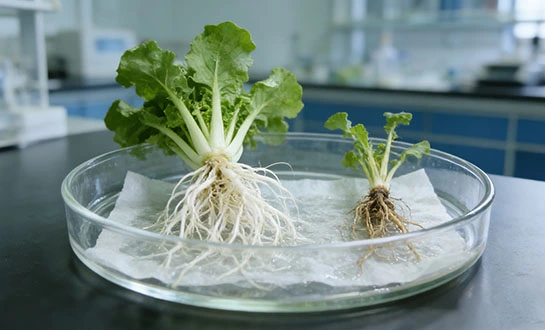
- Root Elongation: Enhanced cell division and elongation result in deeper and wider root systems, especially valuable under drought stress.
- Root Hair Formation: Biostimulants stimulate root hair growth, increasing the absorptive surface area.
Improving Nutrient Uptake and Translocation
Biostimulants enhance nutrient acquisition through mechanisms such as:
- Chelation: Certain biostimulants bind to soil nutrients, improving their availability.
- Membrane Permeability: They can influence cell membrane transport, making nutrient movement more efficient.
- Transport Gene Expression: Some biostimulants upregulate genes involved in nutrient transport within the plant.When to Choose Biostimulants Over Conventional Fertilizers?
Both inputs are important, but certain conditions make biostimulants especially valuable.
Stress Management
Biostimulants help crops overcome environmental stress:
- Drought: Enhanced water-use efficiency and improved root systems support drought tolerance.
- Temperature Extremes: Biostimulants help regulate cellular balance to withstand heat or cold.
- Salinity: They reduce the impact of salt stress on plant growth and development.
Soil Health Improvement
When soil quality is a concern, biostimulants offer key benefits:
- Microbial Activity: They stimulate beneficial soil microbes that enhance nutrient cycling.
- Organic Matter: Some biostimulants help increase soil organic matter, improving fertility and water retention.
- Soil Structure: Improved aggregation supports aeration and root penetration.
Nutrient Use Efficiency
Biostimulants are especially valuable when maximizing fertilizer efficiency is critical:
- Reduced fertilizer input requirements
- Improved recycling of existing soil nutrients
- Enhanced uptake of micronutrients
Crop Quality Enhancement
Biostimulants can elevate market quality in addition to yield:
- Improved fruit set, size, and uniformity
- Higher nutritional value, including vitamins and antioxidants
- Better post-harvest performance and shelf life
Conclusion
While conventional fertilizers remain essential for supplying plant nutrition, biostimulants provide a complementary strategy that significantly enhances plant performance—especially under challenging environmental conditions. Understanding their unique roles enables growers and agricultural professionals to make informed decisions about integrating biostimulants into crop management programs.
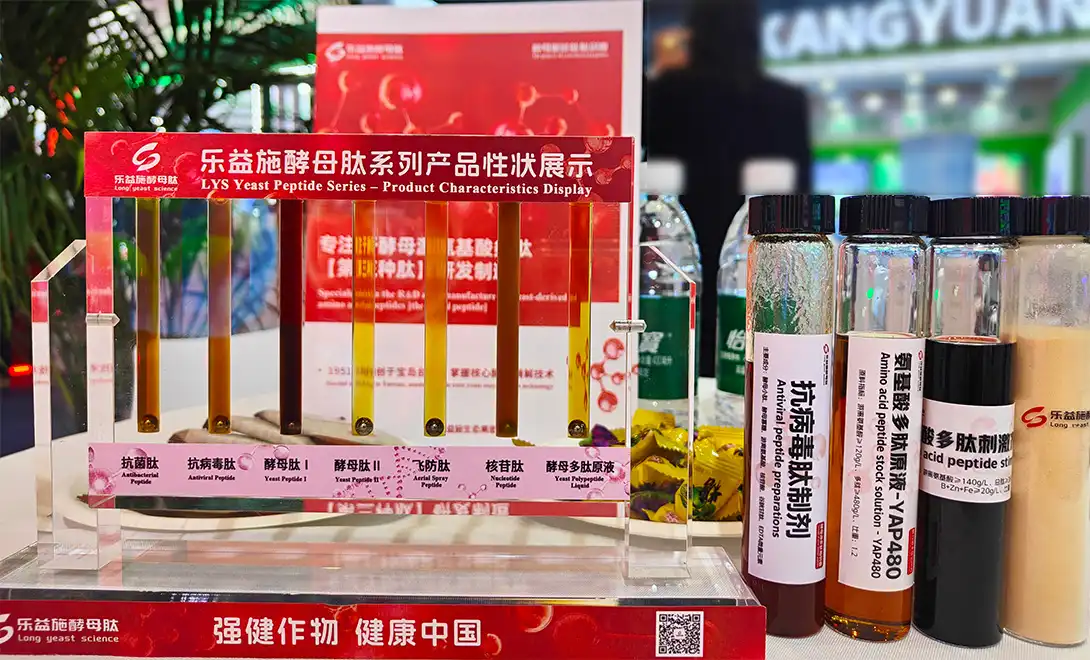
LYS Biotech, with over 70 years of experience in yeast-enzyme technology, offers innovative biostimulant solutions tailored for agrochemical manufacturers, large distributors, and commercial farming operations. Our patented peptide and nucleotides-based biostimulant technologies support crop growth, stress resistance, and yield improvement across tobacco, cotton, sugarcane, rice, fruits, and vegetables.
Whether you are an agrochemical company seeking high-quality raw materials, a distributor aiming to expand premium product lines, or a commercial farm facing soil and climate challenges, LYS Biotech provides reliable, science-based solutions that align with global sustainability trends.
FAQs
Q1: How do biostimulants differ from traditional fertilizers in terms of environmental impact?
A: Biostimulants, by and large, have a more positive natural profile compared to conventional fertilizers. They can diminish the requirement for manufactured fertilizers, minimizing chemical runoff and soil contamination. Biostimulants work by improving the plant's normal forms and improving soil health, which can lead to more sustainable agrarian practices.
Q2: Can biostimulants completely replace traditional fertilizers?
A: Whereas biostimulants offer various benefits, they cannot regularly totally supplant conventional fertilizers. In step, they work best when utilized in conjunction with fertilizers as part of a coordinated approach to plant nutrition. Biostimulants upgrade the effectiveness of supplement take-up and utilization, possibly permitting for diminished fertilizer utilize while maintaining or moving forward edit performance.
Q3: How quickly can I expect to see results after applying biostimulants?
A: The timeline for unmistakable comes about can change depending on the type of biostimulant, edit, and natural conditions. A few impacts, such as progressed stretch resistance, may be discernible within days or weeks. Other benefits, like upgraded root advancement or progressed abdicate, may take longer to gotten to be clear. Reliable application over time regularly yields the most critical results.
Advanced Biostimulant Solutions for Sustainable Agriculture | LYS
Ready to transform your agricultural practices with state-of-the-art biostimulants technology? LYS Biotech offers a comprehensive range of innovative biostimulant solutions designed to meet the evolving needs of modern agriculture. Our products, backed by over 70 years of research and development in yeast enzyme technology, are tailored to enhance crop performance, improve stress tolerance, and boost overall yield quality.
Whether you're an agrochemical manufacturer looking for high-quality raw materials, a large-scale distributor seeking differentiated products, or a commercial farm owner aiming to optimize crop production, LYS has the expertise and solutions to meet your needs. Our commitment to quality, innovation, and sustainability ensures that you receive products that not only perform exceptionally but also align with environmentally conscious agricultural practices.
Don't let your crops underperform. Elevate your agricultural inputs with LYS ECO's advanced biostimulant solutions. Contact us today at alice@aminoacidfertilizer.com to discover how our products can revolutionize your approach to crop management and help you achieve superior results in the field. Let's work together towards a more productive and sustainable future in agriculture.
References
1. Johnson, A. et al. (2022). "Comparative Analysis of Biostimulants and Traditional Fertilizers in Sustainable Agriculture." Journal of Agricultural Sciences, 45(3), 287-302.
2. Smith, B. C. (2021). "Biostimulants: Enhancing Crop Resilience in Changing Climates." Agricultural Research Quarterly, 18(2), 112-128.
3. García-Mina, J. M., & Adams-Phillips, L. (2023). "Mechanisms of Action in Plant Biostimulants: From Lab to Field." Annual Review of Plant Biology, 74, 523-549.
4. Brown, P., & Saa, S. (2020). "Biostimulants in Agriculture: A Comprehensive Review." Frontiers in Plant Science, 11, 40.
5. Thompson, R. L. et al. (2022). "Economic Impact of Biostimulant Use in Commercial Agriculture." Agronomy Journal, 114(4), 1789-1805.
6. Yakhin, O. I. et al. (2021). "Biostimulants in Plant Science: A Global Perspective." Frontiers in Plant Science, 7, 2049.

Tell us your needs — we’ll provide the right solution for your crops and markets.
Innovating Agriculture with Yeast-Derived Amino Acid Peptides