Citrus greening disease, also known as Huanglongbing (HLB), continues to pose one of the most severe threats to global citrus production. In recent years, peptide biostimulants have emerged as a promising tool in supporting citrus tree resilience and mitigating the impacts of this destructive disease. By leveraging the biological activity of small protein fragments, peptide biostimulants enhance natural plant defenses and improve overall tree performance, providing growers with a more sustainable solution compared with conventional chemical methods.
Unlike traditional insecticides that target only pest vectors, peptide biostimulants offer a multifaceted defense strategy. They strengthen metabolic functions, help trees cope with HLB-induced stress, and support long-term orchard productivity. As research progresses, peptide-based technologies are contributing to a shift toward more efficient and environmentally responsible citrus disease management.

How Peptides Help Fight Citrus Greening Disease?
Peptide biostimulants assist citrus trees in responding more effectively to HLB infection through several reinforcing mechanisms.
Strengthening Natural Defenses
A primary benefit of peptide biostimulants is their ability to activate the tree’s innate immune system. These peptides trigger a cascade of defensive reactions, enabling citrus trees to respond faster and more effectively when exposed to Candidatus Liberibacter asiaticus, the bacterium responsible for HLB. This “priming effect” prepares the plant to limit disease severity and maintain physiological function even under pathogen pressure.
Encouraging the Health of Plants
Beyond immunity, peptide biostimulants support core biological processes that influence plant vigor. They can stimulate root development, enhance nutrient uptake, and increase photosynthetic efficiency. Healthier, well-nourished trees exhibit denser canopies, improved fruit retention, and stronger tolerance to environmental stress—traits that are especially critical in HLB-affected orchards.
Direct Antimicrobial Activity
Some peptide biostimulants also demonstrate direct antibacterial activity by disrupting bacterial cell membranes, which helps suppress pathogen populations within infected trees. This targeted effect complements the plant’s own defense mechanisms, aiding in disease suppression while supporting stable fruit production.
Extensive field trials conducted in citrus-producing regions have provided valuable insights into the practical performance of peptide biostimulants under real orchard conditions.
Yield Improvements
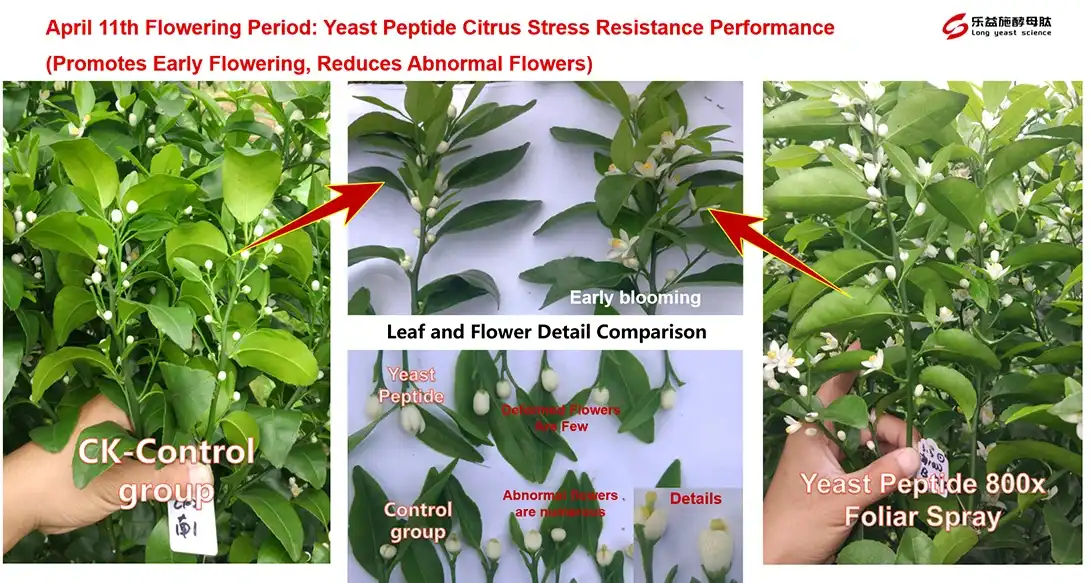
One of the most consistent findings is the notable increase in fruit yield among treated trees. Multiple orchard trials have reported up to 50% higher yields when compared with untreated controls. By supporting both immune function and reproductive processes, peptide biostimulants help citrus trees allocate resources more effectively despite disease stress.
Enhanced Tree Vigor and Recovery
Field observations also show accelerated recovery in HLB-affected trees. Treated trees often demonstrate higher chlorophyll content, stronger canopy density, more frequent flushing, and better root regeneration. These improvements contribute to long-term stability and reduce the visible symptoms associated with citrus greening.
Fruit Quality Development
In addition to yield benefits, citrus fruit quality—such as size, uniformity, juice content, and Brix—has shown measurable improvement in treated orchards. More balanced nutrient distribution and improved metabolic efficiency contribute to enhanced market value and consumer acceptance.

Immune-Boosting Mechanisms of Peptide Biostimulants
The effectiveness of peptide biostimulants is closely linked to their influence on key plant immune pathways.
Systemic Acquired Resistance (SAR) Activation
Peptide biostimulants are known to induce Systemic Acquired Resistance (SAR), a broad-spectrum defensive state that strengthens both local and systemic tissues. Unlike some synthetic inducers, peptide-based SAR activation typically causes minimal metabolic stress, allowing the plant to maintain energy for growth and fruiting while benefiting from long-lasting protection.
Jasmonate Pathway Enhancement
Several peptides support the jasmonate signaling pathway, which plays a critical role in regulating plant responses to pathogens and pests. By stabilizing essential proteins associated with jasmonate pathways, peptide biostimulants help citrus trees maintain a heightened level of defense readiness across tissues.
Cell Protection and Repair
Protecting and repairing plant cells is a key component of peptide biostimulants' immune-boosting activities. Particularly in immature tissues that are more susceptible to infection, some peptides have been demonstrated to fortify cell walls, making it more difficult for pathogens to enter and spread infection. Furthermore, by promoting the synthesis of antioxidants, they can lessen the harm that HLB-induced stress causes to cells and preserve better metabolic health. The total ability of sick citrus plants to recover is enhanced by these combined preventative measures, which also support greater tissue integrity.
A thorough method for managing HLB is provided by the multifaceted way that peptide biostimulants increase citrus tree immunity. These novel chemicals offer a sustainable solution for the long-term health of citrus orchards by treating both the symptoms and underlying causes of disease susceptibility.
Conclusion
The development of peptide biostimulants represents a significant advancement in the ongoing effort to manage citrus greening disease. With their ability to enhance immunity, support plant vigor, and stabilize production, peptide biostimulants are becoming an increasingly valuable tool for citrus growers seeking sustainable, long-term solutions.
At LYS Biotech, we focus on developing innovative peptide biostimulant technologies tailored to the specific needs of the citrus industry. Backed by more than 70 years of expertise in yeast-enzyme technology, our team is committed to delivering sustainable and effective solutions for global citrus growers.
Whether you are an agricultural distributor, an agrochemical manufacturer, or a large-scale citrus operation, we welcome you to explore how peptide biostimulant technologies can strengthen your crop resilience and improve orchard performance.
FAQs
Q1: How soon may I anticipate seeing effects from my citrus trees after using peptide biostimulants?
A: Many producers report observable increases in tree vigor after three to six months of regular application, while results might vary based on variables like ambient conditions and tree health. However, maintaining a consistent application schedule for at least one entire growing season is advised for notable production increases.
Q2: Is it safe to use peptide biostimulants in organic citrus farming?
A lot of peptide biostimulants come from natural sources and are thought to be safe for use in organic agriculture. To guarantee adherence to organic standards in your area, it is crucial to verify the particular product certifications and speak with regional organic certifying organizations.
Q3: Can citrus greening disease be fully cured with peptide biostimulants?
A: Peptide biostimulants are not a cure for citrus greening disease, despite their impressive effectiveness in enhancing tree health and productivity in HLB-affected orchards. Rather, they should be seen as an effective tool in an integrated management strategy that incorporates pest control, appropriate nutrition, and other citrus horticulture best practices.
Premium Peptide Biostimulants for Citrus Health | LYS
Are you prepared to transform your citrus production using cutting-edge peptide biostimulant technology? LYS Biotech provides cutting-edge solutions designed to improve overall orchard health and prevent citrus greening. Field-tested outcomes and a wealth of research support our goods. Please email us at alice@aminoacidfertilizer.com to learn more about how our peptide biostimulants might help your citrus crops or to talk about potential partnerships. Let's collaborate to ensure your citrus groves have a prosperous future.
References
1. Johnson, E.G., et al. (2022). "Advances in Peptide-Based Biostimulants for Citrus Greening Management." Journal of Citrus Pathology, 9(1), 1-15.
2. Wang, N., & Trivedi, P. (2023). "Citrus Huanglongbing: A Review of Pathogen Virulence, Host Responses, and Disease Management." Annual Review of Phytopathology, 61, 283-306.
3. Martínez-Bello, L., et al. (2021). "Peptide-Induced Priming for Enhanced Immunity in Citrus Against Candidatus Liberibacter asiaticus." Molecular Plant-Microbe Interactions, 34(7), 777-786.
4. Alferez, F., et al. (2023). "Field Evaluation of Novel Peptide Biostimulants for HLB Management in Florida Citrus." HortScience, 58(4), 442-449.
5. Zhang, M., et al. (2022). "Transcriptomic Analysis of Citrus Response to Peptide Biostimulant Treatment Under HLB Stress." BMC Plant Biology, 22(1), 156.
6. Grosser, J.W., et al. (2023). "Integration of Peptide Biostimulants in Citrus Breeding Programs for Enhanced HLB Resistance." Scientia Horticulturae, 307, 111509.