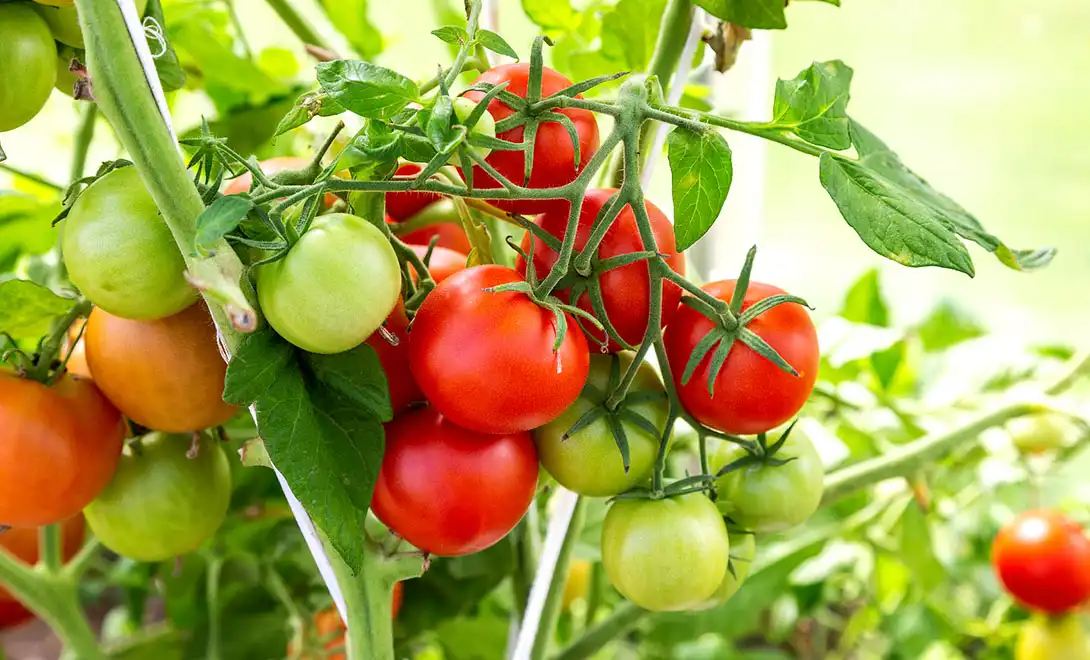
Tomato plants have distinct nutritional needs throughout their growth cycle. Aligning foliar fertilizer formulations with each stage helps maximize efficiency and reduce nutrient waste.
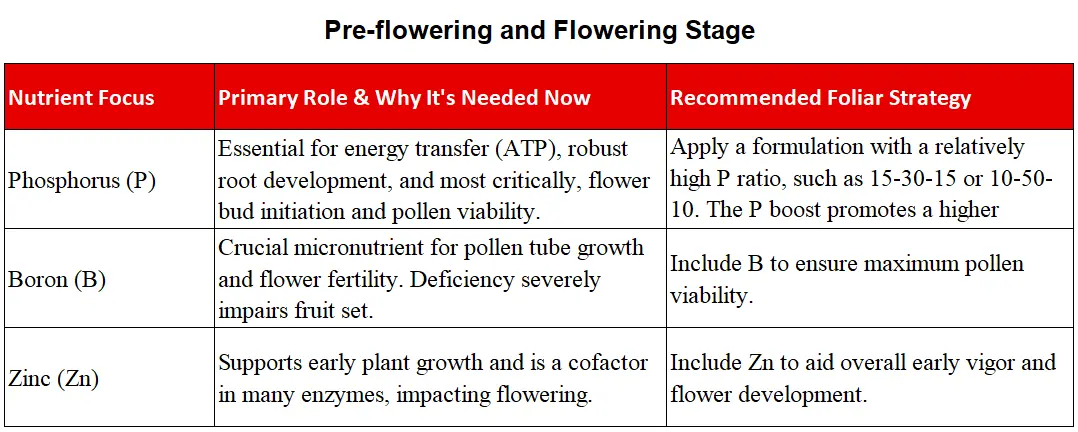
Pre-flowering and flowering stage
During early vegetative growth and flowering, phosphorus plays a central role in energy transfer, flower initiation, and pollen viability. Foliar fertilizers with a relatively high phosphorus ratio (such as 15-30-15) are commonly used to promote healthy flower development and improve fruit set potential.
Fruit Set and Fruit Enlargement Stage
This is the phase of peak demand for nutrients, especially those that contribute to fruit size and quality.
- Potassium (K):Potassium requirements increase significantly. Potassium is a “quality element” that supports carbohydrate (sugar) transport, cell turgidity, disease resistance, and fruit color/flavor development.Apply a high-potassium formulation like 15-15-30. This directly encourages uniform fruit growth and improved size.
- Calcium (Ca):Calcium is a key nutrient for fruit quality and cell wall strength. Deficiency at this stage leads to blossom end rot (BER).Essential to include in almost every foliar feed during the fruiting period. Foliar Ca application is a highly effective way to prevent or correct BER in the developing fruit.
Fruit Ripening and Senescence Stage
As the plant focuses on ripening, the need for Nitrogen decreases while Potassium and Calcium remain critical.
- Nitrogen (N): Reduce the N component to avoid excessive vegetative growth (leafy, non-fruiting) and encourage the plant to put energy into ripening the existing fruit.
- Potassium (K): Maintain high K levels to enhance sugar accumulation, color intensity, and shelf life.
Role of secondary and micronutrients
In addition to macronutrients, calcium, magnesium, boron, and zinc are essential for tomato production. Calcium strengthens cell walls and helps reduce physiological disorders, while magnesium supports photosynthesis. Boron and zinc contribute to flower fertility and fruit development. Foliar fertilizer programs frequently include these elements to address short-term deficiencies and support balanced plant nutrition.
How Foliar Fertilizers Support Tomato Fruit Set
Foliar fertilizer application enhances tomato fruit set by providing nutrients rapidly and efficiently, particularly during periods of high physiological demand.
Rapid nutrient absorption through leaves
When nutrients are applied directly to leaf surfaces, they bypass limitations associated with root uptake. This rapid absorption is especially valuable during flowering and early fruit development, when nutrient demand often exceeds soil supply.
Targeted nutrient delivery
As the first flowers appear, increase the frequency of foliar sprays. Focus on high-phosphorus formulations to support robust flower development and improve pollination success. Apply every 7-10 days during this critical period.
Fruit development stage
Foliar fertilizers can be precisely formulated to deliver nutrients that directly influence fruit set. For example, phosphorus-rich foliar sprays applied during flowering can enhance pollen activity and improve flower retention, contributing to a more consistent fruit set.
Addressing soil-related nutrient constraints
Soil conditions such as unfavorable pH, nutrient fixation, or limited root activity may restrict nutrient availability. Foliar fertilizer application provides an effective alternative route for nutrient delivery under such conditions, ensuring plants receive essential elements when needed.
Supporting plants under environmental stress
Temperature fluctuations, drought stress, or other environmental challenges can negatively affect flower retention and fruit set. Foliar nutrition supplies readily available nutrients that help maintain plant metabolic activity and resilience during stress periods.
Optimal Timing and Application Strategies for Foliar Fertilizers
Proper timing and formulation selection are essential for maximizing the effectiveness of foliar fertilizer programs in tomato cultivation.
Pre-flowering application
Foliar sprays are often initiated approximately one week before flowering. At this stage, balanced formulations with slightly elevated phosphorus levels prepare plants for the upcoming reproductive phase.
Flowering stage applications
As flowering begins, foliar fertilizer applications are typically intensified. High-phosphorus formulations are commonly applied every 7–10 days to support flower development, pollination, and early fruit set.
Fruit development stage
Once fruit set is established, growers usually shift to potassium-dominant foliar fertilizers. Applications every 10–14 days can help promote fruit enlargement, uniformity, and quality throughout the fruiting period.
Environmental and application considerations
For optimal absorption, foliar fertilizers should be applied during early morning or late afternoon hours. Spraying during extreme heat or before rainfall should be avoided to reduce evaporation, leaf injury, and nutrient loss.
Foliar Fertilization Versus Soil Fertilization: A Comparative Perspective
Both foliar and soil fertilization play important roles in tomato nutrient management, and understanding their differences helps growers design effective programs.
Nutrient use efficiency and speed of response
Foliar fertilization generally provides faster visible responses compared to soil application, as nutrients are absorbed directly by leaves. This makes foliar fertilizers particularly useful for correcting deficiencies and supporting critical growth stages.
Nutrient supply capacity and long-term effects
Soil fertilization allows for the application of larger nutrient quantities and contributes to long-term soil fertility. Foliar fertilizers, while efficient, are typically used as supplements rather than sole nutrient sources, especially for macronutrients.
Environmental and economic considerations
When applied correctly, foliar fertilizers may reduce nutrient losses through leaching or runoff. Although they can be more costly per unit of nutrient, their targeted nature and higher uptake efficiency can result in improved cost-effectiveness for high-value crops such as tomatoes.
Integrated nutrient management approach
Many commercial tomato producers adopt an integrated strategy, combining soil fertilization for baseline nutrition with foliar fertilizer applications for timely and targeted support. This complementary approach often delivers the most consistent results in terms of fruit set and size.
Conclusion
Selecting the best foliar fertilizer for tomatoes to boost fruit set and size requires a clear understanding of tomato nutrient demands across different growth stages. Because nutrient requirements shift from flowering to fruit development, foliar fertilization offers a flexible and efficient way to supply targeted nutrients when plants need them most.
When properly timed and formulated, foliar fertilizers can support flower development, improve fruit set, and promote uniform fruit enlargement, particularly during periods of high nutrient demand or limited soil nutrient availability. Their rapid uptake through leaf tissues makes them a valuable complement to soil-based fertilization programs.
It is important to note that foliar fertilization is most effective when used alongside sound soil nutrient management rather than as a replacement. By integrating foliar fertilizer applications with appropriate soil fertilization, careful timing, and ongoing crop monitoring, tomato growers can improve nutrient use efficiency, enhance yield stability, and achieve consistent improvements in fruit size and quality.
FAQs
Q1: How often should I apply foliar fertilizer to my tomato plants?
A: The frequency of foliar fertilizer application depends on the growth stage of your tomato plants. Generally, apply every 7-10 days during the flowering stage and every 10-14 days during fruit development. Always follow the specific product instructions and adjust based on your plants' needs and environmental conditions.
Q2: Can foliar fertilizers replace soil fertilisation for tomatoes?
A: While foliar fertilizers are highly effective for quick nutrient boosts and addressing specific deficiencies, they shouldn't completely replace soil fertilisation. A balanced approach using both methods typically yields the best results, as soil fertilisation provides long-term nutrient supply while foliar sprays offer targeted, rapid-action supplementation.
Q3: What are the signs that my tomato plants need foliar fertilisation?
A: Signs that your tomato plants may benefit from foliar fertilisation include yellowing leaves (especially between the veins), slow growth, poor flower development, or small fruit size. However, it's best to use foliar sprays proactively during key growth stages rather than waiting for deficiency symptoms to appear.
High-Performance Foliar Fertilizers for Tomato Production | LYS
Looking to maximise your tomato crop's potential? LYS Biotech offers state-of-the-art foliar fertilizer solutions designed to boost fruit set, increase size, and enhance overall crop quality. Our products leverage advanced yeast enzyme technology and patented ingredients to deliver superior results for commercial growers, distributors, and agricultural companies.
Experience the difference that scientifically formulated, highly bioactive foliar fertilizers can make in your tomato production. From addressing specific nutrient deficiencies to supporting critical growth stages, our range of products is tailored to meet the diverse needs of modern agriculture.
Ready to take your tomato crop to the next level? Contact us today at alice@aminoacidfertilizer.com to discover how our innovative foliar fertilizers can help you achieve higher yields, better fruit quality, and improved profitability. Let LYS be your partner in agricultural success!
References
1. Smith, J. et al. (2022). "Optimizing Foliar Nutrition for Tomato Production: A Comprehensive Review." Journal of Plant Nutrition, 45(8), 1123-1140.
2. Garcia, M. and Lopez, R. (2021). "Comparative Analysis of Foliar vs. Soil Fertilization in Commercial Tomato Crops." HortScience, 56(4), 521-530.
3. Johnson, K. (2023). "Timing and Composition of Foliar Sprays for Enhanced Tomato Fruit Set and Size." Acta Horticulturae, 1345, 75-82.
4. Patel, N. and Brown, S. (2022). "Micronutrient Foliar Applications: Impact on Tomato Yield and Quality." Plant and Soil, 470, 303-315.
5. Wilson, E. et al. (2023). "Sustainable Tomato Production: Integrating Foliar Nutrition Strategies." Sustainability in Agriculture, 12(3), 405-420.
6. Thompson, R. (2021). "Advanced Formulations in Foliar Fertilizers for High-Value Vegetable Crops." Advances in Agronomy, 168, 179-210.