Abiotic Stress Tolerance: Why Your Crops Need Signaling Molecules?
Climate variability, soil degradation, and increasing food demand are reshaping modern agriculture. Drought, salinity, heat waves, and temperature fluctuations are becoming more frequent, directly affecting crop yield and quality. Traditional agronomic strategies such as irrigation management or chemical protection alone are often insufficient to address complex stress interactions.
In this context, the plant signaling molecule has emerged as an important biological tool. These molecular messengers regulate how plants perceive environmental stress and coordinate cellular responses. By activating internal defense pathways, signaling molecules help crops maintain metabolic balance under adverse conditions.
Understanding how plant signaling molecule technologies function provides valuable insight into next-generation stress management strategies.

Understanding the Role of Plant Signaling Molecules in Abiotic Stress Tolerance
What Is a Plant Signaling Molecule?
A plant signaling molecule is a bioactive compound that transmits information within plant tissues. These molecules coordinate communication between cells, triggering physiological adjustments when environmental conditions change.
Examples include naturally occurring phytohormones such as abscisic acid (involved in drought response) and jasmonates (associated with defense signaling). In agricultural applications, both natural and synthetic signaling compounds are utilized to enhance crop resilience.
Small peptides, often with molecular weights below 1000 Daltons, have gained attention because of their ability to penetrate plant tissues efficiently and initiate rapid signaling cascades.
Molecular Mechanisms of Stress Signal Transduction
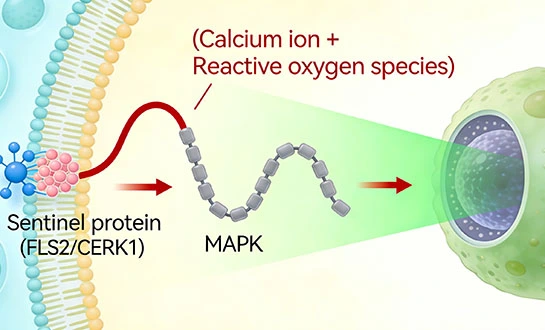
When crops encounter abiotic stresses such as water deficit or high salinity, specialized receptors detect these environmental changes and activate a signaling cascade typically involving protein kinases, secondary messengers, and transcription factors. These pathways regulate gene expression, leading to the production of protective proteins, osmolytes, and antioxidant enzymes that help stabilize cell membranes, balance osmotic pressure, and reduce oxidative damage. Research indicates that crops supported by optimized plant signaling molecule programs can maintain higher photosynthetic activity and metabolic stability under stress compared with untreated controls.
Plant Signaling Molecule Strategies vs. Conventional Stress Management
Limitations of Traditional Methods
Conventional abiotic stress management often relies on increased irrigation, chemical protectants, and selective breeding or genetic modification. Although these approaches can be effective in specific situations, they usually target single stress factors rather than building systemic plant resilience. Excess irrigation may lead to nutrient leaching and root damage, while chemical inputs can raise environmental concerns, and genetic solutions require long development cycles and strict regulatory approval. As such, these methods often fail to fully address the complex and interconnected nature of plant stress responses.
Advantages of Molecular Signaling Approaches
A plant signaling molecule–based strategy offers several potential advantages:
Rapid Activation
Signaling compounds can trigger cellular responses within hours, supporting early protection before visible damage occurs.
Multi-Stress Coordination
Unlike single-target treatments, signaling pathways often regulate multiple defense mechanisms simultaneously, offering broader protection.
Environmental Compatibility
Many signaling molecules are biodegradable and integrate into natural plant metabolic pathways, minimizing ecological disruption.
Operational Efficiency
Low application rates and compatibility with existing fertilization programs make signaling solutions adaptable for large-scale agriculture.
These characteristics position signaling technologies as complementary tools within integrated crop management systems.
Field Performance Observations
Field evaluations across different crop systems have reported measurable benefits when plant signaling molecule treatments are incorporated into stress management programs. In drought-prone environments, yield improvements of 15–25% have been documented in certain trials. Fruit and vegetable crops have shown improvements in parameters such as fruit size uniformity, soluble solids content, and post-harvest stability.
Although results vary depending on climate, soil, and crop species, consistent trends suggest enhanced stress tolerance when signaling pathways are properly supported.
Selecting and Evaluating Plant Signaling Molecule Solutions
Key Selection Criteria
Procurement and agronomic teams should evaluate several key factors when selecting plant signaling molecule products, including stability under storage conditions, compatibility with fertilizers and crop protection agents, consistency across production batches, and verified bioactivity levels. Analytical documentation, such as molecular weight distribution analysis and purity testing, supports informed and reliable decision-making.
Types of Signaling Molecules and Applications
Different categories of signaling molecules serve distinct roles:
- Peptide-based molecules for rapid cellular activation
- Hormone analogs for long-term stress modulation
- Secondary metabolites targeting specific environmental challenges
Products with molecular weights below 1000 Daltons are generally associated with higher absorption efficiency. Reported bioavailability rates above 80% in optimized formulations suggest effective tissue distribution when applied correctly.
Supplier Evaluation and Quality Assurance
Reliable suppliers typically demonstrate:
- Advanced production technologies such as enzymatic hydrolysis
- Documented annual production capacity for supply stability
- Technical support for field implementation
- Compliance with international regulatory standards
Quality assurance programs should include batch testing, stability assessments, and transparent specification sheets detailing protein content and molecular characteristics.
Implementation Strategies: From Procurement to Field Application
Receptor Activation and Timing Considerations
The efficacy of a plant signaling molecule depends not only on formulation quality but also on timing. Pre-stress application—before anticipated drought or heat events—often provides better outcomes than reactive treatment after stress symptoms appear.
Foliar spraying enables rapid uptake and immediate activation of signaling pathways, while soil applications may offer prolonged support through root absorption.
Monitoring environmental conditions such as soil moisture, temperature, and UV exposure helps optimize application timing.
Environmental Factors Influencing Performance
Soil composition, pH, and microbial activity can affect molecule stability and plant uptake. Early morning or late afternoon applications reduce degradation risks and improve absorption efficiency.
Proper storage—protected from excessive heat and light—preserves bioactivity throughout the growing season, particularly in global distribution networks.
Innovation and Future Trends
Ongoing research is exploring enhanced formulations that combine multiple signaling compounds for synergistic effects. Controlled-release systems and nanotechnology-based delivery methods are under investigation to extend protective duration.
Precision agriculture tools, including sensor networks and AI-driven monitoring systems, are expected to integrate with plant signaling molecule programs. Automated detection of stress indicators could enable targeted applications, improving both efficiency and sustainability.
Fermentation-based and enzymatic production methods continue to evolve, offering environmentally compatible solutions aligned with carbon-reduction objectives.
Conclusion
Abiotic stress remains one of the most significant constraints on global crop productivity. Plant signaling molecule technologies provide a biologically grounded approach to enhancing crop resilience by activating natural defense pathways rather than relying solely on external inputs.
Scientific research and field observations indicate that properly selected and applied signaling molecules can support improved stress tolerance, yield stability, and crop quality under challenging environmental conditions.
Successful implementation requires careful product evaluation, appropriate timing strategies, and integration within comprehensive crop management systems. As agriculture adapts to climate variability and sustainability requirements, plant signaling molecule solutions are expected to play an increasingly important role in modern stress management frameworks.

FAQ
1. What are plant signaling molecules, and how do they work?
Plant signaling molecules are biochemicals that make plants' natural defenses work when they are stressed. They attach to certain receptors on cells and start defensive processes that make plants more resistant to drought, saltiness, temperature changes, and other environmental problems.
2. How do signaling molecules compare to traditional fertilizers?
Unlike regular fertilizers, which give plants nutrition, signaling molecules turn on the plants' own defense systems. They work at much lower application rates, protect against multiple stresses, and can be mixed with regular nutrients in the tank to improve plant health overall.
3. What crops benefit most from signaling molecule applications?
All crops can benefit, but fruits, veggies, and specific grains that are worth a lot do better. The best return on investment is usually seen in commercial farms, greenhouse operations, and field crops that are grown in places that are prone to stress.
Partner with LYS for Advanced Plant Signaling Molecule Solutions
LYS offers cutting edge plant plant signaling molecule solutions backed by more than 70 years of technical know-how and its own FSDT enzymatic hydrolysis technology. Our high-quality peptides made from yeast have molecular weights below 1000 Daltons and are bioavailable over 80% of the time. This means they are quickly absorbed and keep working even when the body is under stress.
LYS gives farming workers the security, quality, and expert support they need. They can produce 10,000 MT of products every year and make formulations that are safe for all application methods and don't contain chloride. Our plant signaling molecule manufacturer approval makes sure that the product always works the same way, and our detailed application methods make the most of your crop protection investment.
Get in touch with alice@aminoacidfertilizer.com to talk about your needs and find out how LYS signaling molecules can help your farming. For full technical details and instructions on how to use lyspeptide, go to lyspeptide.com.
References
1. Zhang, L., & Wang, M. (2023). Molecular mechanisms of plant abiotic stress signaling pathways and agricultural applications. Journal of Agricultural Biotechnology, 45(3), 234-251.
2. Rodriguez, C., Thompson, K., & Chen, H. (2022). Comparative analysis of peptide-based signaling molecules in crop stress tolerance enhancement. Plant Stress Biology Review, 18(7), 445-462.
3. Anderson, D., Kumar, S., & Martinez, R. (2023). Economic evaluation of plant signaling molecule applications in commercial agriculture. Agricultural Economics Quarterly, 39(2), 178-195.
4. Liu, X., Brown, J., & Patel, A. (2022). Small molecule peptides in sustainable agriculture: synthesis, stability, and field performance. Sustainable Agriculture Technology, 12(4), 89-107.
5. Johnson, P., Lee, K., & Williams, S. (2023). Enzymatic hydrolysis technologies for agricultural signaling molecule production. Biotechnology Advances in Agriculture, 28(1), 56-73.
6. Garcia, M., Singh, R., & Davis, L. (2022). Climate adaptation strategies using plant signaling molecules: global field trial results. Climate-Smart Agriculture Journal, 15(6), 312-329.

Tell us your needs — we’ll provide the right solution for your crops and markets.
Innovating Agriculture with Yeast-Derived Amino Acid Peptides