Maximizing the effectiveness of amino acid peptide foliar spray requires a clear understanding of application timing, dilution protocols, equipment selection, and integration with existing crop management systems. By delivering bioactive peptides and free amino acids directly through leaf absorption, foliar peptide sprays bypass common soil-related limitations and support plant metabolism, stress tolerance, and yield quality.
This guide provides evidence-based recommendations for agronomists, procurement managers, distributors, and OEM partners seeking to optimize crop performance while improving return on investment through precise and efficient biostimulant use.

Understanding Amino Acid Peptide Foliar Spray
Composition and Bioactive Properties
Amino acid peptide foliar spray formulations are produced through controlled enzymatic hydrolysis of high-quality protein sources, resulting in a concentrated mixture of bioactive peptides and free amino acids. Typical premium formulations contain ≥200 g/L peptides and ≥200 g/L free amino acids, forming a dual-action nutrient system.
The bioactivity of these products is largely determined by the presence of low-molecular-weight peptides (≤1000 Da) and L-type amino acids, which exhibit higher physiological compatibility and absorption efficiency than synthetic or racemic alternatives. These peptides participate directly in metabolic regulation, enzyme activation, and stress signaling pathways.
Absorption Pathways and Plant Response
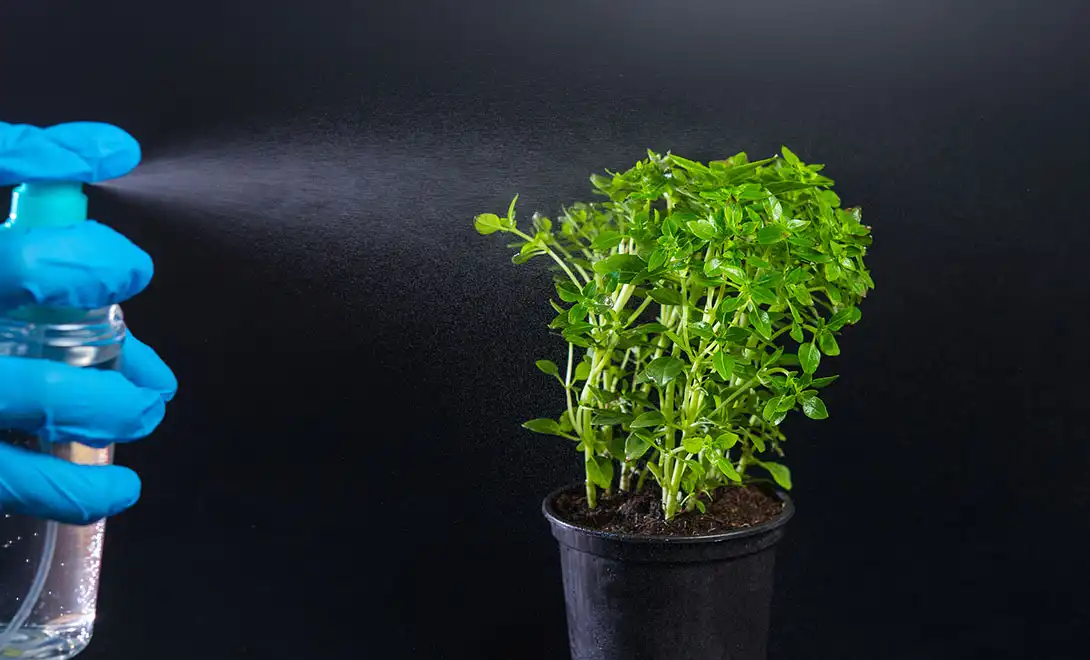
Foliar uptake occurs primarily through stomata and the leaf cuticle. Amino acid peptide foliar spray enhances membrane permeability and facilitates rapid translocation to metabolically active tissues. This delivery pathway bypasses soil constraints such as pH imbalance, nutrient fixation, and root-zone competition.
Physiological responses include increased antioxidant enzyme activity, enhanced chlorophyll synthesis, improved osmotic regulation, and stabilized cellular membranes. These changes support sustained plant vigor, improved photosynthetic efficiency, and enhanced resilience under environmental stress.
Best Practices for Amino Acid Peptide Foliar Spray Application
Optimal Timing and Environmental Conditions
Application timing is a critical determinant of foliar spray performance. Treatments are most effective when stomatal conductance is high, typically:
- Early morning (2–3 hours after sunrise)
- Late afternoon or evening when temperatures fall below 25°C
Relative humidity above 60% is recommended to reduce droplet evaporation and extend absorption time. Applications should be aligned with key growth stages, with early vegetative stages showing strong responsiveness and later applications during flowering and reproductive development contributing to yield and quality enhancement.
Avoid application during severe drought, extreme heat, or acute stress events, as reduced stomatal activity limits foliar uptake efficiency.
Dosage Recommendations and Mixing Guidelines
Recommended application rates vary by crop type and growth stage:
- Vegetable crops: 3–4 L/ha every 2–3 weeks during active growth
- Fruit trees: 4–5 L/ha at monthly intervals from bud break to fruit development
- Field crops: 2–3 L/ha applied at critical stages such as tillering, flowering, and grain filling
When tank-mixing, always conduct a jar test to confirm physical compatibility. High-quality amino acid peptide foliar spray products are generally stable across a wide pH range and compatible with most fertilizers and crop protection products when properly formulated.
Application Equipment and Technical Considerations
Sprayer Configuration and Coverage
Uniform leaf coverage is essential for consistent results. Flat-fan nozzles producing droplet sizes of 200–300 microns offer an effective balance between coverage and drift control. Spray pressure should be maintained between 2–3 bar to preserve droplet integrity and reduce runoff.
Water volumes typically range from 200–400 L/ha, depending on crop canopy density. Dense canopies require higher volumes to ensure penetration to lower leaf surfaces, while open-field crops can achieve adequate coverage with lower volumes.
Operational Consistency
Maintaining consistent travel speed, nozzle height, and spray pattern across treated areas ensures uniform nutrient delivery. Calibration should be performed regularly to account for equipment wear and varying field conditions.

Performance Advantages Over Conventional Fertilizers
Nutrient Efficiency and Utilization
Comparative trials show that amino acid peptide foliar spray significantly improves nutrient use efficiency. Peptide complexes facilitate intracellular transport of minerals, increasing nutrient utilization rates by 40–60% compared to conventional soil-applied fertilizers.
Foliar delivery directs nutrients to photosynthetically active tissues where metabolic demand is highest, resulting in faster plant response, reduced nutrient losses, and improved cost efficiency per unit of applied input.
Economic and Environmental Impact
From an economic perspective, improved yield quality, reduced fertilizer inputs, and enhanced stress tolerance contribute to favorable return-on-investment outcomes, particularly in high-value crop systems.
Environmentally, peptide-based foliar sprays reduce risks of leaching and groundwater contamination, minimize soil salinity buildup, and support sustainable production systems aligned with regulatory and market expectations.
Procurement and Integration into Crop Management Systems
Supplier Evaluation and Quality Assurance
Bulk buyers and distributors should evaluate suppliers based on manufacturing capability, quality control systems, regulatory compliance, and technical support capacity. Quality assurance should include standardized testing for peptide content, molecular weight distribution, amino acid profiles, heavy metals, and microbiological safety.
Certifications such as ISO compliance and organic-input listings enhance product credibility and facilitate global market acceptance.
System Integration and Performance Monitoring
When integrated into existing fertilization, irrigation, and pest management programs, amino acid peptide foliar spray delivers additive and synergistic effects without disrupting established practices.
Ongoing performance monitoring—using crop growth indicators, tissue analysis, and yield data—allows continuous optimization of application timing and dosage based on local conditions and seasonal variability.
Company Overview and Technical Support
LYS leverages more than 70 years of biotechnology expertise and proprietary FSDT (Full-Spectrum Directed Enzymatic Hydrolysis) technology to produce high-quality amino acid peptide foliar spray solutions from yeast-derived proteins. With an annual production capacity of 10,000 MT, LYS ensures consistent quality through strict process control and advanced manufacturing systems.
LYS peptide liquids contain ≥200 g/L peptides and ≥200 g/L free amino acids, with ≥80% of peptides below 1000 Da, ensuring high bioavailability and stable performance across diverse climatic conditions. In addition to product supply, LYS provides formulation customization, application protocol optimization, and ongoing technical advisory services to support successful market deployment.
Conclusion
Effective use of amino acid peptide foliar spray depends on precise application timing, correct dosage, appropriate equipment selection, and strategic integration into existing crop management systems. Compared with conventional fertilizers, peptide-based foliar solutions offer superior bioavailability, enhanced nutrient efficiency, and improved environmental compatibility.
By partnering with reliable suppliers and applying evidence-based practices, agricultural professionals can leverage these advanced biostimulants to achieve higher crop performance, improved stress tolerance, and sustainable economic returns in modern farming systems.
Frequently Asked Questions
1. How soon can results be observed after application?
Visible improvements typically appear within 7–14 days, with enhanced leaf color and vigor observed first. Stress tolerance benefits may develop within 3–5 days, while yield and quality improvements accumulate over the growing season.
2. Is amino acid peptide foliar spray compatible with pesticides and fertilizers?
High-quality formulations are generally compatible with most agrochemicals. Jar testing is recommended prior to tank mixing, and highly alkaline products should be avoided to preserve peptide integrity.
3. What storage conditions ensure product stability?
Store between 5–25°C in a cool, dry environment away from direct sunlight and freezing. Properly stored products maintain stability for 24–36 months in original, sealed containers.
Partner with LYS for Premium Amino Acid Peptide Foliar Spray Solutions
LYS delivers industry-leading amino acid peptide foliar spray solutions backed by patented FSDT technology and over seven decades of biotechnology expertise. Our high-purity formulations provide superior bioavailability and proven performance across diverse crop systems worldwide. We support B2B partners with customized formulation development, technical consultation, and reliable supply chain management that ensures consistent product availability and quality. Agricultural distributors, specialty fertilizer manufacturers, and crop management professionals benefit from our comprehensive approach to sustainable crop nutrition and stress management. Discover how our premium peptide solutions can enhance your product portfolio and provide competitive advantages in demanding markets. For detailed product specifications, technical datasheets, and customized procurement solutions, contact us at alice@aminoacidfertilizer.com or visit lyspeptide.com to explore our complete range of biostimulant ingredients for sale.
References
1. Chen, M., Rodriguez, J., & Thompson, K. (2023). "Foliar Application of Amino Acid-Peptide Complexes: Mechanisms of Plant Uptake and Physiological Response." Journal of Agricultural Science and Technology, 45(3), 127-142.
2. Williams, A.R., Kumar, S., & Martinez, L. (2022). "Comparative Efficacy of Peptide-Based Foliar Fertilizers in Horticultural Crop Production Systems." International Review of Plant Nutrition, 38(7), 203-218.
3. Johnson, P.D., Lee, H., & Anderson, R.T. (2024). "Economic Analysis of Amino Acid Peptide Foliar Applications in Commercial Agriculture: Cost-Benefit Evaluation Across Multiple Crop Systems." Agricultural Economics Research, 51(2), 89-104.
4. Zhang, L., Brown, C.E., & Wilson, M.J. (2023). "Molecular Mechanisms of Stress Tolerance Enhancement Through Exogenous Peptide Applications in Field Crops." Plant Stress Biology Quarterly, 29(4), 156-171.
5. Garcia, R.M., Taylor, S., & O'Connor, D. (2022). "Optimization of Foliar Application Timing and Frequency for Maximum Nutrient Uptake Efficiency in Vegetable Production." Horticultural Science International, 67(8), 245-260.
6. Patel, N.K., Davies, J.R., & Smith, T.L. (2024). "Sustainable Agriculture Through Biotechnology: The Role of Amino Acid-Peptide Biostimulants in Modern Crop Management." Environmental Agriculture Today, 42(1), 78-93.