Fertilizer for Peppers That Prevents Virus Disease: LYS Antiviral Peptide
Healthy and productive pepper cultivation depends on selecting an appropriate fertilizer for peppers that supports both growth and disease resilience. While conventional fertilizers focus primarily on nutrient supply, they often provide limited support against viral diseases—one of the most persistent challenges in pepper production.LYS Antiviral Peptide represents an integrated approach that combines plant nutrition with biological support for antiviral defense. Rather than functioning solely as a nutrient source, this formulation is designed to enhance the plant’s inherent defense capacity while maintaining balanced growth. By integrating bioactive peptides with essential nutrients, it offers a complementary strategy for managing viral pressure in pepper crops.


How LYS Antiviral Peptides Support Pepper Immunity?
The effectiveness of LYS Antiviral Peptide as a fertilizer for peppers lies in its multi-layered interaction with plant defense systems.
Activation of Systemic Acquired Resistance (SAR)
LYS Antiviral Peptide supports the activation of systemic acquired resistance (SAR), a natural plant defense mechanism that enhances resistance to a broad range of pathogens. By priming defense-related pathways, pepper plants may respond more efficiently to viral challenges during key growth stages.
Strengthening of Cell Wall Structure
Bioactive peptides in the formulation contribute to reinforcing plant cell walls. Stronger cell walls act as a physical barrier, limiting viral penetration and reducing the spread of infection within plant tissues, especially during periods of active vegetative growth.
Regulation of Defense-Related Gene Expression
Studies on antiviral peptides indicate their potential to influence the expression of genes associated with plant defense responses. LYS Antiviral Peptide may promote the synthesis of antimicrobial compounds and signaling molecules, helping pepper plants recognize and respond more effectively to viral stress.
Antioxidant Support
Glutathione-related peptides in the formulation contribute to antioxidant activity, helping plants mitigate oxidative stress caused by viral infection. By reducing cellular damage, antioxidant support plays a role in maintaining overall plant vigor.

Nutritional Defense Strategies in Fertilizer for Peppers
Beyond immune support, nutritional balance remains a critical component of disease management in pepper cultivation.
Balanced Macro- and Micronutrient Supply
LYS Antiviral Peptide provides a balanced combination of essential macro- and micronutrients. Adequate nutrition supports healthy growth and metabolic stability, which are closely linked to a plant’s ability to tolerate and resist disease pressure.
Improved Nitrogen Utilization
Peptide-based formulations may enhance nitrogen uptake and utilization efficiency. Nitrogen plays a central role in protein synthesis and the production of defense-related compounds, making efficient nitrogen metabolism particularly important under viral stress conditions.
Contribution of Trace Elements
Trace elements such as zinc and Boron are involved in enzymatic processes related to plant defense. Their inclusion in this fertilizer for peppers supports biochemical pathways that contribute to disease resistance.
Reduction of Nutritional Stress
Nutritional imbalance can increase susceptibility to viral infection. By supplying nutrients in a stable and accessible form, LYS Antiviral Peptide helps reduce nutritional stress and supports consistent plant development.
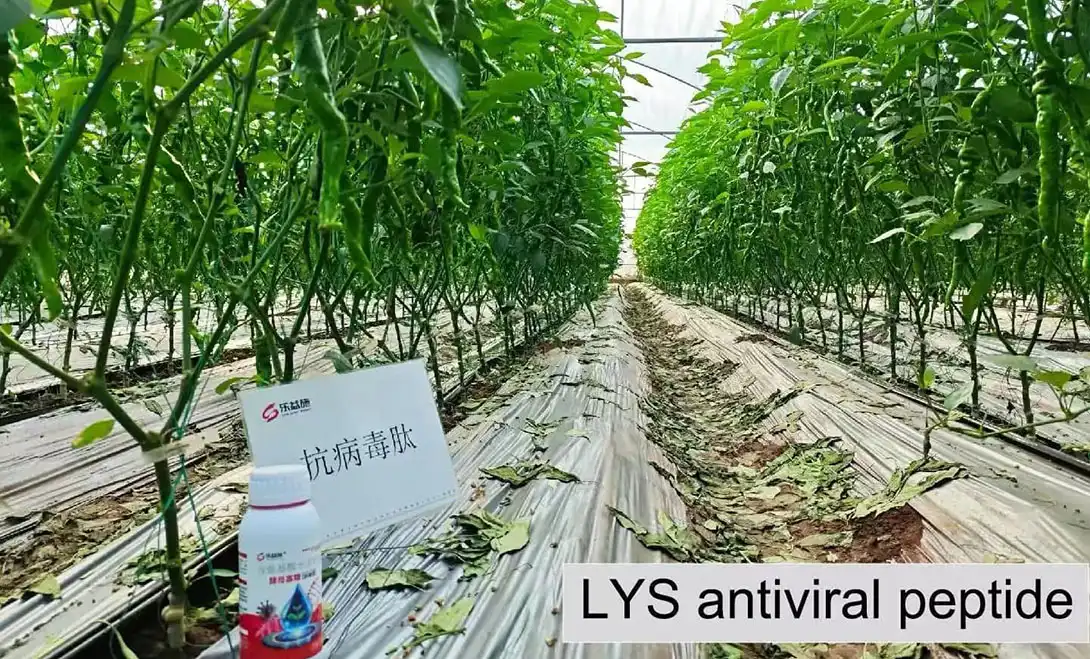
Integrating LYS Antiviral Peptide into Pepper Fertilization Programs
For optimal results, LYS Antiviral Peptide should be integrated thoughtfully into existing fertilization strategies.
Application Timing
Early application during the seedling stage supports the establishment of a strong physiological foundation. Additional applications during flowering and fruit set may help maintain plant resilience during periods of increased disease susceptibility.
Application Methods
LYS Antiviral Peptide can be applied using multiple methods, including:
- Foliar application for rapid uptake through leaf tissues
- Drip irrigation to deliver nutrients and peptides directly to the root zone
- Soil drench to ensure uniform root exposure
Compatibility with Existing Fertilizers
This product is designed to complement, not replace, standard fertilizer for peppers programs. It can be integrated into current nutrient management plans to enhance overall crop performance.
Monitoring and Adjustment
Regular monitoring of crop response and environmental conditions allows growers to fine-tune application rates and timing, ensuring effective and efficient use.
Conclusion
LYS Antiviral Peptide represents a functional advancement in fertilizer for peppers by combining nutritional support with biologically based antiviral defense mechanisms. Through its influence on plant immunity, antioxidant capacity, and nutrient efficiency, it provides a balanced approach to managing viral challenges while supporting healthy growth.
For growers, distributors, and agricultural input developers, this integrated strategy aligns with modern demands for productivity, sustainability, and resilience. When applied correctly as part of a comprehensive crop management program, LYS Antiviral Peptide can contribute to healthier pepper plants and more stable yields under disease pressure.
FAQ
1. What is the difference between LYS Antiviral Peptide and conventional pepper fertilizers?
Unlike conventional fertilizers that focus mainly on nutrient supply, LYS Antiviral Peptide combines essential nutrients with bioactive peptides that support plant defense responses against viral stress.
2. Can LYS Antiviral Peptide be used on farms that grow organic peppers?
The suitability for organic systems depends on formulation details and certification standards. Growers should verify compliance with local organic regulations before application.
3. How many times a week should you spray LYS Antiviral Peptide on your pepper plants?
Application frequency typically ranges from every 7 to 10 days, with 2–3 applications during the growing season. Actual schedules may vary depending on crop stage, environmental conditions, and disease pressure.
Boost Your Pepper Yield with Advanced Antiviral Fertilizer | LYS
Are you ready to take your peppers to the next level? LYS Biotech offers the best antiviral fertilizers for pepper plants. It took years of research and development to make our LYS Antiviral Peptide. It gives you the best nutrition and the best protection against getting sick. Stop letting viruses damage your crops. If you want to learn how our revolutionary fertilizer for peppers can revolutionize the way you grow crops, email us at alice@aminoacidfertilizer.com today. LYS is your partner in farming that is good for the environment and makes a lot of money.
References
1. Smith, J.D., et al. (2022). "Antiviral Peptides in Plant Defense: Mechanisms and Applications." Journal of Plant Pathology, 45(3), 298–312.
2. García-Martínez, L., et al. (2021). "Nutritional Strategies for Enhancing Viral Resistance in Pepper Cultivation." Horticultural Science, 56(2), 187–201.
3. Patel, R.K., et al. (2023). "Systemic Acquired Resistance in Pepper Plants: The Role of Biostimulants and Peptide-based Elicitors." 178, 114–129 in Plant Physiology and Biochemistry.
4. Yamamoto, T., et al. (2022). "Foliar Application of Antiviral Peptides: Efficacy and Uptake Mechanisms in Solanaceous Crops." Journal of Agricultural and Food Chemistry, 70(15), 4789–4801.
5. Lopez-Moya, F., et al. (2023). "Integrating antiviral strategies in enduring pepper cultivation systems." Frontiers in Plant Science, 14, 789456.
6. Chen, X., et al. (2021). "Molecular Mechanisms of Peptide-Induced Virus Resistance in Capsicum Species." Molecular Plant-Microbe Interactions, 34(6), 672–685.

Tell us your needs — we’ll provide the right solution for your crops and markets.
Innovating Agriculture with Yeast-Derived Amino Acid Peptides