Citrus Fertilizers: Improving Fruit Quality Under Climate Stress
Climate-related stress has become one of the most significant constraints affecting citrus production worldwide. Rising temperatures, prolonged droughts, irregular rainfall patterns, and increasing soil salinity directly influence citrus tree physiology, fruit quality, and yield stability. These environmental pressures challenge growers’ ability to maintain consistent market standards and protect long-term economic returns.
Modern citrus fertilizer programs must must move beyond basic nutrient supply. They need to support stress physiology, stabilize fruit development, and enhance resilience across diverse production regions. When combined with appropriate irrigation and orchard management practices, targeted fertilization strategies can help mitigate climate stress and preserve citrus fruit quality.
Climate stress refers to a range of environmental factors that disrupt normal citrus tree physiology and fruit development. Extreme heat events, irregular rainfall, and elevated soil salinity increasingly affect both tree health and fruit formation.
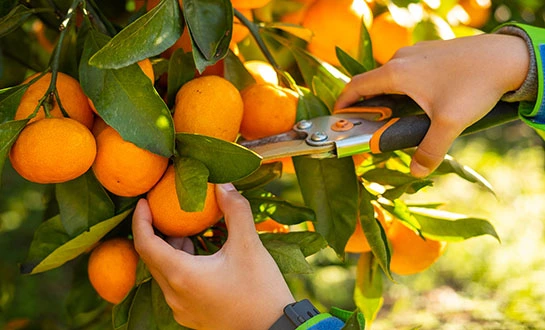
Common Climate Stress Symptoms in Citrus Trees
Citrus trees exposed to sustained climate stress often show visible physiological symptoms. Leaf chlorosis is among the most common indicators, typically associated with impaired chlorophyll synthesis and micronutrient imbalance. Premature fruit drop occurs when carbohydrate production and transport are insufficient to support fruit development to maturity.
Additional symptoms may include shoot dieback, reduced vegetative growth, weak canopy structure, and irregular flushing patterns. If these stress responses persist, long-term orchard productivity and tree lifespan can be significantly reduced.
Effects on Fruit Quality and Market Value
Climate stress has a direct and measurable impact on citrus fruit quality. Limited water and nutrient availability during critical growth stages often result in smaller fruit size and inconsistent sizing. Changes in sugar accumulation and organic acid metabolism affect flavor balance, while thicker rinds and reduced juice content lower both fresh-market appeal and processing efficiency.
These outcomes highlight the importance of citrus fertilizer strategies that strengthen tree resilience and stabilize fruit development under increasingly variable environmental conditions.
Nutritional Requirements of Citrus Trees Under Climate Stress
Citrus trees experiencing environmental stress require carefully balanced nutrition that supports both survival and fruit quality. Fertilization programs must address stress-related limitations without stimulating excessive vegetative growth or increasing water demand.
Essential Macronutrients for Stress Management
Nitrogen remains essential for maintaining photosynthesis, enzyme activity, and protein synthesis during stress periods. However, excessive nitrogen can increase transpiration rates and heighten sensitivity to drought and heat stress. Controlled nitrogen management is therefore critical in climate-stressed orchards.
Phosphorus supports root development and energy transfer, which are particularly important under drought and high-temperature conditions. Potassium plays a central role in osmotic regulation, stomatal function, carbohydrate transport, and disease resistance, making it a key nutrient in citrus fertilizer programs designed for climate resilience.
Role of Micronutrients in Fruit Quality Preservation
Micronutrient availability often declines under stress conditions. Magnesium, a central component of chlorophyll, supports photosynthetic efficiency during heat stress. Zinc deficiency is commonly observed in stressed orchards and directly affects shoot growth, fruit size, and uniformity.
Iron availability frequently decreases in alkaline or saline soils, requiring chelated forms for effective uptake. Manganese supports enzyme activation and chlorophyll synthesis, while boron contributes to cell wall integrity, flowering, and fruit set under challenging environmental conditions.
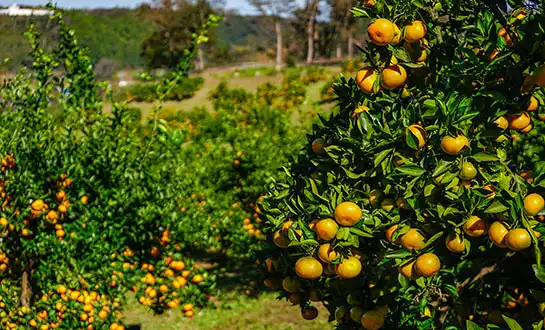
Citrus Fertilizer Strategies for Climate-Resilient Orchards
Effective fertilization under climate stress requires careful consideration of timing, formulation, and application method. Nutrient uptake efficiency fluctuates significantly as soil moisture, temperature, and root activity change.
Timing and Frequency of Fertilizer Applications
Pre-stress fertilization helps build metabolic reserves before anticipated heat or drought events. During active stress periods, split applications can provide a steady nutrient supply without overwhelming compromised root systems.
Post-stress fertilization supports recovery by restoring nutrient balance and encouraging renewed vegetative and reproductive growth. Monitoring weather forecasts, soil moisture levels, and tree condition is essential for optimizing fertilizer timing.
Application Methods and Soil Considerations
Liquid citrus fertilizer formulations allow rapid nutrient availability and flexible adjustment to changing stress levels. Granular fertilizers provide longer-term nutrient release and are suitable for baseline nutrition programs.
Foliar applications deliver nutrients directly to leaves, bypassing root uptake limitations during drought or salinity stress. Fertigation systems integrate nutrient delivery with irrigation, improving nutrient and water-use efficiency in water-limited environments.
Soil texture and pH strongly influence nutrient availability. Sandy soils typically require more frequent applications due to leaching, while heavier soils may need improved drainage and formulation adjustments to ensure effective uptake.
Selecting Citrus Fertilizers from a B2B Procurement Perspective
For commercial citrus producers, fertilizer selection involves evaluating both agronomic performance and supplier reliability. Procurement decisions must balance cost efficiency with long-term orchard performance and risk management.
Evaluating Fertilizer Formulations
Slow-release fertilizers provide sustained nutrient availability during extended stress periods but may not correct acute deficiencies quickly. Fast-acting formulations allow rapid response but require precise management to avoid nutrient loss or imbalance.
Specialized citrus fertilizer products incorporating biostimulants or stress-support components are increasingly adopted to improve nutrient efficiency and enhance tree resilience under adverse conditions.
Supplier Capability and Quality Assurance
Reliable suppliers demonstrate consistent product quality through third-party testing, certifications, and transparent nutrient specifications. Technical support services add value by assisting with application strategies and addressing site-specific challenges.
Supply chain stability and logistics capacity are especially important during narrow application windows associated with stress-response programs. Long-term partnerships help ensure continuity and operational reliability for large-scale citrus operations.
Yeast Peptide Technology in Advanced Citrus Fertilizers
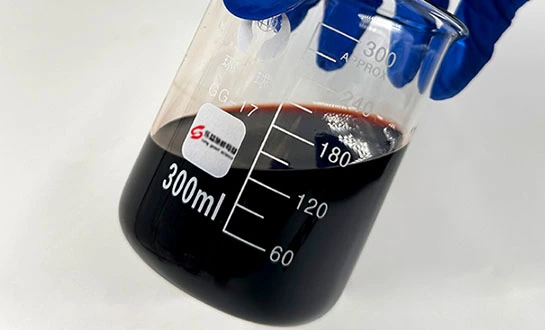
Yeast peptide-based citrus fertilizer formulations represent an advanced approach to nutritional support under climate stress. Through enzymatic hydrolysis, yeast proteins are converted into small-molecule peptides that enhance nutrient availability and metabolic efficiency.
Functional Characteristics of Yeast Peptide Citrus Fertilizers
Peptides with molecular weights ≤1000 Da demonstrate high solubility, temperature stability, and compatibility with other agricultural inputs. These characteristics support safe tank mixing and flexible application methods, including foliar spraying and fertigation.
Chloride-free formulations with low salt content reduce phytotoxicity risks, making them suitable for sensitive growth stages such as seedling establishment and early fruit development.
Contribution to Stress Tolerance and Fruit Quality
Yeast-derived peptides support stress tolerance by enhancing nutrient uptake efficiency, promoting antioxidant activity, and improving recovery following environmental stress events. Their interaction with plant metabolic pathways contributes to improved fruit size, uniformity, and internal quality parameters.
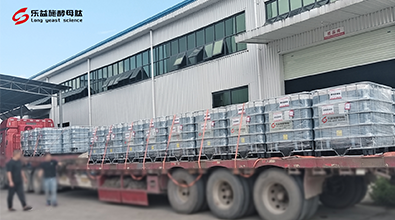
Industrial-scale production capacity ensures consistent supply for commercial citrus operations, while stable formulations maintain performance across a wide range of storage and application conditions.
Conclusion
Climate stress continues to challenge citrus production systems worldwide, necessitating more adaptive and science-based fertilizer strategies. Understanding stress physiology, aligning nutrient supply with environmental conditions, and selecting appropriate citrus fertilizer formulations are essential for maintaining fruit quality and economic viability.
Advanced fertilizer technologies, including yeast peptide-based formulations, offer promising tools for improving nutrient efficiency, stress tolerance, and fruit quality under increasingly variable climate conditions. Strategic investment in such technologies positions citrus producers to remain competitive as environmental and market pressures evolve.
FAQs
Q1: How can citrus fertilizer programs be adjusted for climate stress?
Effective programs emphasize balanced nutrition, increased potassium for stress tolerance, and readily available micronutrients. Application timing and frequency should be adjusted based on stress severity and soil moisture conditions.
Q2: Are standard fertilizers sufficient for climate-stressed citrus trees?
General-purpose fertilizers may not meet the specific needs of stressed citrus trees. Specialized citrus fertilizer formulations designed for stress conditions typically provide better nutrient efficiency and recovery support.
Q3: How frequently should fertilization strategies be reviewed under variable climates?
Fertilization programs should be reassessed regularly throughout the growing season. Continuous monitoring of tree condition, soil nutrients, and weather trends allows for timely adjustments that improve outcomes under prolonged stress.
Partner with LYS for Advanced Citrus Fertilizer Solutions
LYS offers comprehensive support for agricultural professionals seeking innovative citrus fertilizer solutions that deliver results under challenging climate conditions. Our technical team provides customized consultation services to help you develop fertilization strategies tailored to your specific operational needs and environmental challenges.
Contact alice@aminoacidfertilizer.com to discuss your citrus fertilizer requirements and explore how our yeast peptide technology can enhance your fruit quality and operational efficiency. As a trusted citrus fertilizer manufacturer, we provide reliable supply chain solutions, technical guidance, and product innovation that support your long-term success.
References
1. García-Sánchez, F., Syvertsen, J. P., & Martínez, V. (2023). Citrus nutrition under abiotic stress conditions: Recent advances in fertilization strategies for climate resilience. Journal of Plant Nutrition and Soil Science, 186(4), 512-528.
2. Kumar, R., Singh, A., & Patel, M. (2024). Impact of climate change on citrus fruit quality: Nutritional interventions and fertilization approaches. Agricultural Systems, 195, 103-118.
3. Thompson, L. M., Rodriguez, C., & Wang, H. (2023). Micronutrient management in citrus under drought stress: A comprehensive review of fertilization practices. Scientia Horticulturae, 312, 111-125.
4. Anderson, P. K., Chen, Y., & Miller, D. J. (2024). Organic versus synthetic fertilizers for citrus production under climate stress: A comparative analysis. Crop Science, 64(2), 789-804.
5. Williams, S. A., Brown, K. L., & Davis, R. T. (2023). Precision fertilization techniques for enhancing citrus resilience to environmental stress. Precision Agriculture, 24(6), 2341-2359.
6. Lopez, M. E., Johnson, B. R., & Taylor, N. S. (2024). Economic evaluation of specialized fertilization programs for climate-stressed citrus orchards. Agricultural Economics Review, 41(3), 445-462.

Tell us your needs — we’ll provide the right solution for your crops and markets.
Innovating Agriculture with Yeast-Derived Amino Acid Peptides