Compatibility with Major Fertilizers
The compatibility profile of peptide biostimulants with most fertilizers is generally favorable. This allows growers to streamline application schedules and support more efficient nutrient uptake. Nevertheless, several technical factors should be considered when preparing tank mixes.
Synergistic Interactions with Macronutrients
Peptide biostimulants often work synergistically with macronutrients such as nitrogen, phosphorus, and potassium (NPK).
- Amino acid–based peptides can act as natural chelators, helping improve the assimilation and internal translocation of these essential nutrients.
- This enhanced nutrient use efficiency may allow growers to achieve similar or improved results with lower fertilizer inputs.
Behavior with Micronutrients
For micronutrients such as zinc, iron, and manganese—commonly applied as chelates—peptide biostimulants can further enhance their stability and plant availability.Peptides may form complexes with micronutrients, helping maintain solubility and preventing rapid fixation in soil or spray solutions.
pH Considerations
The pH of the blend is a basic calculation to consider when combining peptide biostimulants with fertilizers. Most peptide biostimulants are steady over a wide pH range, typically between 4 and 8. Be that as it may, extraordinary pH levels can influence the stability and adequacy of both the biostimulant and the fertilizer components. It's fitting to check the pH of the last blend and adjust if necessary to guarantee ideal performance.
Physical Compatibility Testing
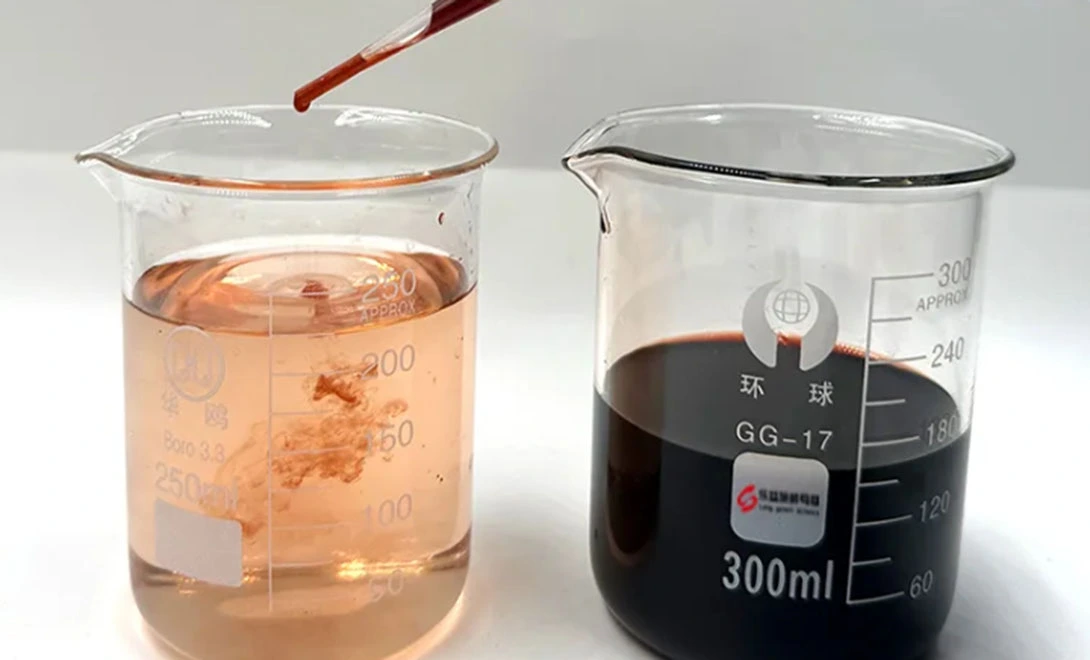
Before large-scale application, it's pivotal to perform a bump test to check for any physical contradictions. This straightforward test includes blending little amounts of the peptide biostimulant and fertilizer in the same proportions as aiming for field application. Watch the blend for any signs of precipitation, partition, or changes in thickness, which may show potential issues when tank mixing.
How to Prevent Degradation During Mixing?
While peptide biostimulants are generally stable, certain precautions should be taken to prevent degradation when mixing with fertilizers or pesticides:
Temperature Management
Extreme temperatures can affect the stability of peptide biostimulants. It's best to mix and apply these products at moderate temperatures, typically between 10°C and 30°C (50°F to 86°F). Avoid leaving mixed solutions in hot vehicles or direct sunlight for extended periods, as this can lead to degradation of the active ingredients.
Water Quality Importance
The quality of water utilized for blending can essentially affect the stability and efficacy of peptide biostimulants. Difficult water with high levels of calcium and magnesium can be associated with the peptides, lessening their viability. Utilizing delicate or filtered water for blending is regularly recommended. If difficult water must be utilized, consider including a water conditioner in the tank mix.
Recommended Mixing Order
Following the correct mixing sequence can help maintain product stability:
- Fill tank halfway with water
- Add water conditioners or pH adjusters
- Add wettable powders (WP) or water-dispersible granules (WDG)
- Add flowable formulations (SC)
- Add emulsifiable concentrates (EC)
- Add soluble liquids—including peptide biostimulants
- Add adjuvants or surfactants
- Top up with the remaining water
Maintain Adequate Agitation
Continuous agitation ensures uniform distribution and prevents settling or separation.This is particularly important when combining products with different densities or formulation types.
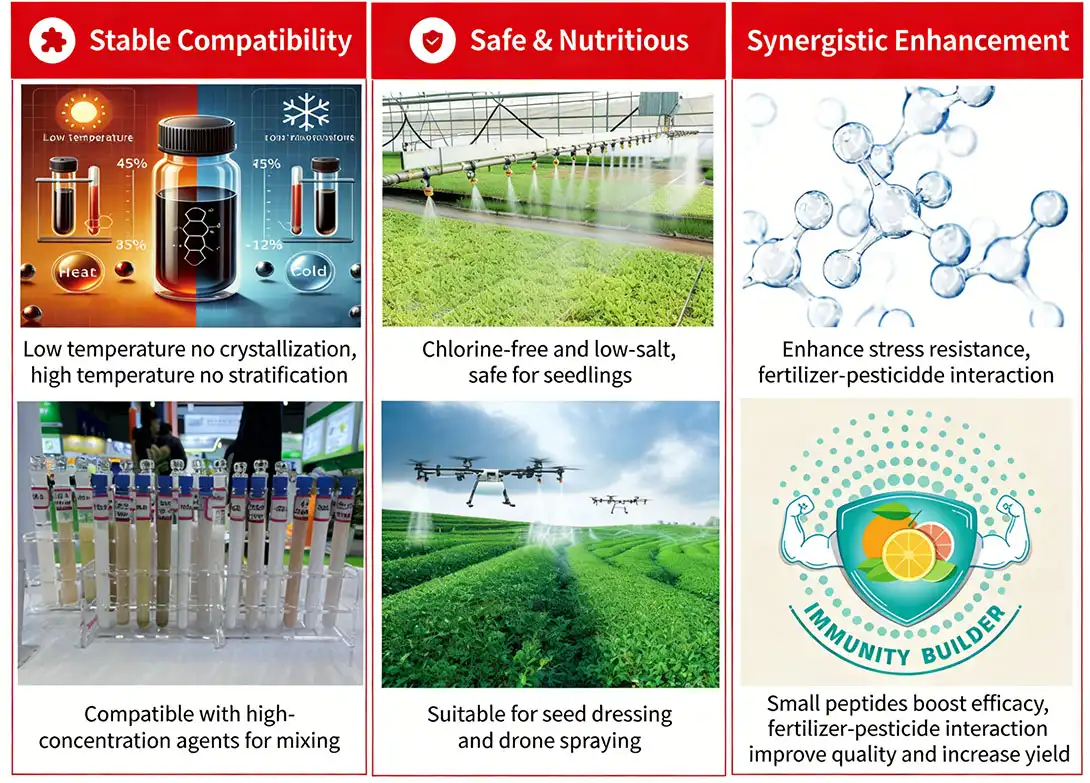

Recommended Mixtures for Maximum Effectiveness
With proper compatibility assessment, peptide biostimulants can be integrated into various agricultural programs. Below are several commonly effective combinations.
Foliar Applications
Foliar sprays are an effective way to apply peptide biostimulants in combination with other inputs. For maximum effect, consider these mixtures:
- Peptide biostimulant + micronutrient fertilizer: This combination can enhance nutrient uptake and address specific deficiencies.
- Peptide biostimulant + low-dose NPK fertilizer: This mix can improve overall nutrient efficiency and promote balanced plant growth.
- Peptide biostimulant + systemic fungicide: This combination can help plants better withstand disease pressure while supporting overall plant health.
Soil Applications
When applying peptide biostimulants to the soil, consider these effective combinations:
- Peptide biostimulant + slow-release fertilizer: This blend can give sustained nourishment while upgrading root development and nutrient absorption.
- Peptide biostimulant + beneficial microorganisms: Combining biostimulants with items containing advantageous microorganisms or mycorrhizal organisms can make a synergistic impact, making strides in soil health and plant resilience.
Seed Treatments
Peptide biostimulants also serve as highly effective seed treatment agents; when formulated into a blend with fungicides for seed dressing, this combination not only creates a protective barrier to shield seeds from pathogenic infections but also stimulates rapid, uniform germination to enhance stand establishment. It is important to note, however, that prior to large-scale application of such mixtures, continuous small-scale trials should be carried out to verify compatibility between the two components and ensure the formulation’s viability under specific local growing conditions.
Timing Considerations
Application timing plays a critical role in the success of peptide biostimulant mixtures; to maximize efficacy, it is recommended to apply these mixtures during key physiological stages or anticipated stress periods, such as early vegetative growth, pre-flowering, flowering and fruit set, as well as before expected drought, heat stress, or temperature fluctuations. In turn, this strategic timing not only helps maximize plants’ positive response to the biostimulants but also ensures the efficient use of both the products themselves and any companion agricultural inputs.
Conclusion
Mixing peptide biostimulants with fertilizers or pesticides is a practical and effective strategy for improving crop performance and input efficiency. However, success depends on understanding compatibility, correct mixing procedures, and thoughtful application timing. By following the guidelines outlined above, growers and agricultural professionals can fully utilize the advantages of peptide biostimulants within integrated crop management programs.
For organizations seeking advanced, science-based peptide biostimulant solutions, LYS Biotech offers a portfolio developed through decades of expertise in yeast biotechnology and small-molecule peptide innovation. These products are designed to integrate seamlessly with existing fertilizer and pesticide programs while supporting resilient, productive crop systems.
Whether you are an agrochemical formulator, a large agricultural distributor, or a commercial grower aiming to enhance crop performance, LYS Biotech provides tailored peptide biostimulant solutions built for modern agriculture.
FAQs
Q1: Are peptide biostimulants safe to use with all types of crops?
A: Peptide biostimulants are for the most part safe for utilize with a wide extend of crops. In any case, it's continuously recommended to consult the item name and conduct small-scale trials some time recently broad application, as a few crops may have particular sensitivities or requirements.
Q2: How soon after mixing should I apply the peptide biostimulant solution?
A: For the best to come about, it's prudent to apply the blended arrangement as before long as possible after planning. If prompt application is not conceivable, utilize the blend inside 24 hours and guarantee legitimate tumult some time recently use.
Q3: Can peptide biostimulants replace traditional fertilizers?
A: Whereas peptide biostimulants can essentially upgrade supplement take-up and, in general, plant wellbeing, they are not planned to supplant conventional fertilizers totally. In step, they work best as complementary items, optimizing the productivity of your fertilizer program and possibly decreasing the total sum of fertilizer needed.
Innovative Peptide Biostimulant Solutions for Enhanced Crop Performance | LYS
Ready to change your rural homes with progressive peptide biostimulant innovation? LYS Biotech is your trusted accomplice in conveying high-performance, economical edit arrangements. Our inventive items are planned to consistently coordinate with your existing fertilizer and pesticide programs, promoting unparalleled benefits in plant development, stress resistance, and abiotic stress improvement.
Don't miss out on the opportunity to optimize your crop management strategy. Contact us today at alice@aminoacidfertilizer.com to discover how our peptide biostimulant solutions can revolutionize your agricultural practices and drive superior results. Let LYS Biotech be your partner in achieving sustainable, high-yield agriculture for the future.
References
1. Smith, J. et al. (2022). "Compatibility and Synergistic Effects of Peptide Biostimulants with Common Fertilizers." Journal of Agricultural Sciences, 45(3), 287-301.
2. Garcia, M. and Thompson, R. (2021). "Optimizing Peptide Biostimulant Applications in Modern Agriculture." Crop Science Quarterly, 18(2), 112-125.
3. Liu, Y. et al. (2023). "Enhancing Nutrient Uptake Efficiency Through Peptide Biostimulant-Fertilizer Combinations." Plant Nutrition Today, 56(4), 401-415.
4. Brown, A. and Davis, C. (2022). "Best Practices for Mixing Biostimulants with Agrochemicals." Sustainable Agriculture Review, 33(1), 78-92.
5. Johnson, K. et al. (2021). "The Role of Peptide Biostimulants in Mitigating Abiotic Stress in Crops." Environmental Stress and Crop Productivity, 29(3), 215-229.
6. Martinez, L. and Wong, S. (2023). "Innovative Approaches to Integrating Peptide Biostimulants in Precision Agriculture." Advances in Agronomy, 71(2), 156-170.