Best Tomato Fertilizers for Growth, Yield, and Stress Resistance
Selecting the best tomato fertilizers requires an understanding that tomato nutrient demands evolve continuously throughout the crop cycle. From early vegetative growth to flowering and fruit maturation, tomatoes respond differently to nutrient ratios, delivery methods, and bioactive inputs. Effective fertilization strategies combine precise nutrient balance, proper timing, and advanced formulations that enhance nutrient uptake and stress tolerance.
Modern tomato nutrition programs increasingly integrate traditional mineral fertilization with peptide-based biostimulants, allowing growers to improve yield stability, fruit quality, and resilience under environmental stress while maintaining cost efficiency.
Understanding Tomato Fertilizer Requirements Across Growth Stages
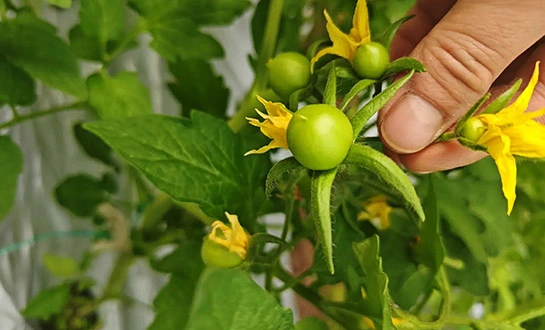
Tomato plants exhibit stage-specific nutritional needs. Fertilizer programs that adapt to these physiological shifts consistently outperform static, one-formula approaches.
Early Vegetative and Seedling Stage Nutrition
During early development, tomato plants prioritize root establishment and leaf expansion. Balanced nutrient availability is essential at this stage, with slightly elevated phosphorus supporting root growth and early vigor.
Formulations such as 10-10-10 or similar balanced NPK ratios provide sufficient nutrition without excessive vegetative stimulation. This phase typically spans the first 4–6 weeks, including nursery growth prior to transplanting.
Flowering and Fruit-Set Nutrient Adjustment
As plants transition into reproductive growth, nutrient demand shifts significantly. Phosphorus becomes critical for flower development, pollen viability, and fruit initiation, while nitrogen levels should be moderated to prevent excessive foliage growth.
Fertilizer ratios such as 5-10-10 or 10-20-10 are commonly used during this stage. Adequate calcium supply is particularly important, as deficiencies during flowering often lead to fruit disorders later in the season.
Fruit Development and Maturation
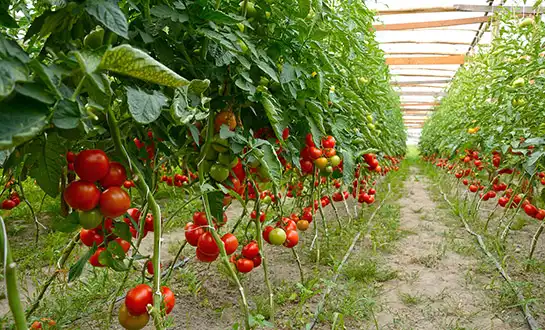
During fruit filling and ripening, potassium demand increases substantially. Potassium regulates water balance, sugar transport, and fruit firmness, directly influencing yield, flavor, and shelf life.
Formulations emphasizing potassium, such as 12-12-17, support uniform fruit development while limiting unnecessary vegetative growth.
Essential Nutrients in Tomato Growth and Yield Formation
The effectiveness of the best tomato fertilizers depends on balanced macro-, secondary-, and micronutrient composition.
Primary Macronutrients: N, P, and K
Nitrogen drives chlorophyll synthesis and leaf development but must be carefully managed to avoid delayed flowering. Phosphorus supports root growth, flowering, and early fruit formation, while potassium enhances disease resistance, fruit quality, and post-harvest performance.
Each nutrient functions synergistically, and imbalances often reduce overall plant efficiency.
Secondary Nutrients and Micronutrients
Calcium plays a vital role in cell wall stability and prevents blossom end rot, a major quality issue in tomato production. Magnesium supports chlorophyll formation and enzymatic activity, while sulfur contributes to protein synthesis and metabolic processes.
Micronutrients such as iron, zinc, boron, and manganese are required in small quantities but are essential for enzymatic reactions and hormonal regulation. Deficiency in even one element can disrupt plant performance.
Comparing Tomato Fertilizer Types and Advanced Formulations
Modern tomato production systems offer a wide range of fertilizer options, each suited to different operational scales and management goals.
Organic and Synthetic Fertilizer Systems
Organic fertilizers improve soil structure, microbial activity, and long-term nutrient availability. Compost, fish-based products, and bone meal contribute to sustained fertility and soil health.
Synthetic fertilizers provide precise nutrient control and rapid plant response, making them essential for commercial-scale production. Controlled-release technologies further improve nutrient efficiency and reduce application frequency.
Integrated programs combining both systems often deliver the most consistent results by supporting soil health while meeting immediate crop demands.
Liquid and Granular Fertilizer Delivery
Liquid fertilizers enable rapid nutrient uptake and precise application through fertigation systems, allowing real-time adjustments based on crop monitoring.
Granular fertilizers offer longer-lasting nutrition and operational simplicity. Controlled-release granules synchronize nutrient availability with plant uptake, reducing leaching losses and environmental impact.
Peptide-Enhanced Fertilizer Innovations
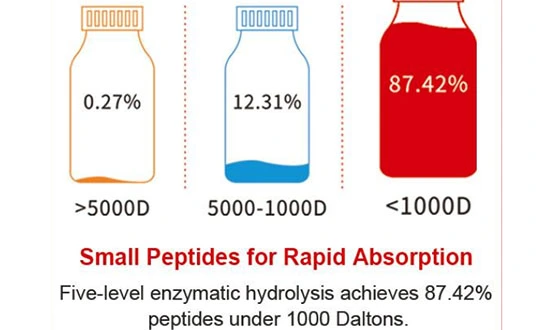
Advanced formulations incorporating low-molecular-weight peptides (<1000 Da) enhance nutrient absorption and improve stress tolerance. These peptides act as bioactive carriers and signaling molecules, helping plants respond more effectively to drought, temperature fluctuations, and disease pressure.
Such technologies represent a significant advancement in the development of best tomato fertilizers, particularly in intensive and climate-variable production systems.
Fertilizer Application Timing and Nutrient Management Practices
Optimized fertilization schedules ensure nutrients are available when plants need them most while minimizing waste.
Pre-Plant Soil Preparation
Soil testing provides essential baseline data on nutrient levels and pH. Tomatoes perform best in soils with a pH range of 6.0–6.8, where nutrient availability and microbial activity are maximized.
Incorporating organic matter such as compost or well-aged manure improves soil structure and nutrient retention. These amendments should be applied 2–3 weeks before planting to allow stabilization.
In-Season Fertilization Strategy
Split applications of nitrogen and potassium during peak growth phases prevent nutrient overload and reduce leaching. Weekly crop monitoring allows growers to adjust programs in response to plant appearance and environmental conditions.
Calcium supplementation, through soil amendments or foliar applications, is particularly important during rapid fruit expansion to prevent blossom end rot, especially under uneven irrigation conditions.
Foliar Nutrition and Integrated Feeding
Foliar feeding complements soil fertilization by delivering nutrients rapidly during critical growth stages. This approach is especially effective for micronutrient correction and stress mitigation.
Integrated nutrient management combines base fertilization with targeted foliar and fertigation inputs, improving nutrient use efficiency and overall crop performance.
Procurement Considerations for Commercial Tomato Fertilizers
For B2B buyers, selecting reliable fertilizer suppliers is as important as choosing the right formulations.
Supplier Quality and Technical Support
Reputable suppliers maintain strict quality control, provide transparent analytical data, and offer agronomic support services. Technical guidance on application rates and timing adds significant value beyond the product itself.
Supply reliability is critical during peak production periods. Established manufacturers with stable inventory and logistics capabilities reduce operational risk.
Bulk Purchasing and Cost Efficiency
Bulk purchasing agreements for best tomato fertilizers can significantly reduce costs and ensure consistent supply throughout the growing season. Contracts should include quality specifications, delivery schedules, and shelf-life considerations.
Collaborative purchasing strategies among growers can further improve economies of scale while minimizing individual storage requirements.
Conclusion
Effective tomato fertilization requires a stage-specific understanding of plant nutrition, careful product selection, and precise application timing. The best tomato fertilizers provide balanced macro- and micronutrients, enhanced by modern delivery systems and peptide-based technologies that improve nutrient uptake and stress resistance.
Integrated nutrition programs—supported by strategic procurement and reliable suppliers—enable growers to achieve higher yields, better fruit quality, and greater production stability in competitive markets.
FAQ
Q1: What NPK ratio works best for maximizing tomato yields?
Optimal NPK ratios depend on growth stage: balanced formulations like 10-10-10 during early growth, higher phosphorus ratios such as 5-10-10 during flowering, and potassium-rich formulations like 12-12-17 during fruit development.
Q2: How can growers detect nutrient deficiencies early?
Common early symptoms include yellowing older leaves for nitrogen deficiency, purpling leaf undersides for phosphorus deficiency, and marginal leaf burn for potassium deficiency. Regular scouting combined with soil or tissue testing enables timely correction.
Q3: Are organic fertilizers suitable for commercial tomato production?
Organic fertilizers are effective for improving soil health and long-term fertility. Commercial operations often achieve the best results by integrating organic base inputs with targeted synthetic fertilization during high-demand growth stages.
Partner with LYS for Superior Tomato Fertilizer Solutions
Agricultural enterprises seeking advanced, best tomato fertilizers manufacturer partnerships will find LYS's peptide-enhanced technologies provide competitive advantages in today's demanding markets. Our comprehensive product portfolio combines innovative small-molecule peptide formulations with proven agronomic support, ensuring optimal crop performance and profitability. Contact alice@aminoacidfertilizer.com to explore customized fertilizer solutions that enhance your tomato production capabilities and discover how our 70+ years of technological expertise can elevate your agricultural operations to new performance levels.
References
1. Smith, J.A., and Rodriguez, M.L. "Nutrient Management Strategies for Commercial Tomato Production." Journal of Agricultural Sciences, vol. 45, no. 3, 2023, pp. 234-251.
2. Thompson, K.R., et al. "Comparative Analysis of Organic and Synthetic Fertilizers in Large-Scale Vegetable Production." International Journal of Sustainable Agriculture, vol. 28, no. 2, 2024, pp. 112-128.
3. Chen, W.H., and Martinez, A.P. "Peptide-Enhanced Fertilizers: Mechanisms and Applications in Horticultural Crops." Plant Nutrition Review, vol. 19, no. 4, 2023, pp. 89-105.
4. Johnson, D.K. "Economic Evaluation of Fertilizer Procurement Strategies for Commercial Growers." Agricultural Economics Quarterly, vol. 52, no. 1, 2024, pp. 45-62.
5. Williams, S.B., and Park, H.J. "Calcium Nutrition and Blossom End Rot Prevention in Tomato Production Systems." Crop Science Today, vol. 33, no. 6, 2023, pp. 178-194.
6. Anderson, R.M., et al. "Integrated Nutrient Management Systems for Enhanced Tomato Yield and Quality." Progressive Horticulture, vol. 41, no. 5, 2024, pp. 267-283.

Tell us your needs — we’ll provide the right solution for your crops and markets.
Innovating Agriculture with Yeast-Derived Amino Acid Peptides