Yellow Leaves? A Nitrogen Fertilizer Guide to Fixing Deficiencies
Yellowing leaves, commonly referred to as chlorosis, are often an early indicator of nitrogen deficiency in crops. Nitrogen is a fundamental nutrient required for plant growth, chlorophyll synthesis, and photosynthesis. When nitrogen availability is limited, plants may exhibit reduced growth, lower productivity, and visible leaf discoloration, particularly on older foliage.Fortunately, nitrogen deficiencies can be effectively managed with appropriate nitrogen fertilizer strategies. This guide explains the main causes of nitrogen deficiency, outlines fast-acting corrective options, and compares liquid and slow-release nitrogen sources to help growers make informed nutrient management decisions.
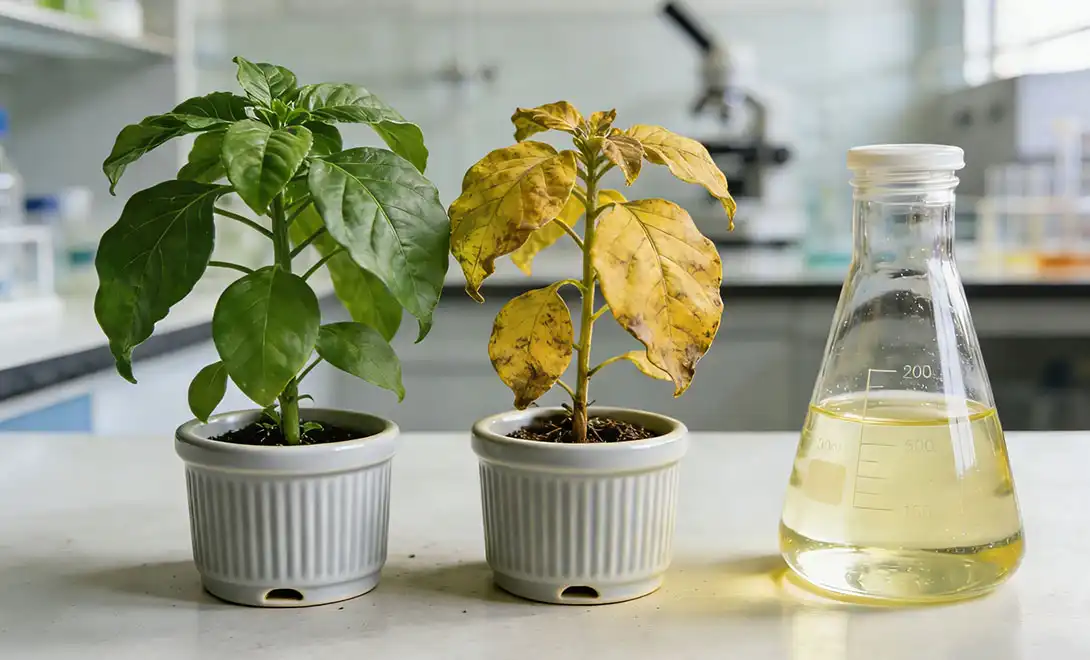
What Causes Nitrogen Deficiency in Crops?
Understanding the underlying causes of nitrogen deficiency is essential for both prevention and correction.
Soil Conditions and Nutrient Availability
Soil texture and structure play a major role in nitrogen dynamics. Sandy soils are more prone to nitrogen leaching, while heavy clay soils may restrict root activity and nutrient uptake. Low organic matter content can further limit the soil’s nitrogen-supplying capacity.
Inefficient Fertilization Practices
Improper fertilizer timing, insufficient application rates, or unbalanced nutrient programs may result in inadequate nitrogen availability. Excessive emphasis on other nutrients can also limit effective nitrogen uptake.
Environmental Factors
Heavy rainfall or excessive irrigation can leach nitrate nitrogen from the root zone, while drought conditions may reduce root growth and limit nitrogen absorption. Temperature fluctuations can also influence nitrogen mineralization and uptake.
Cropping History and Rotation
Continuous cultivation of nitrogen-demanding crops without adequate replenishment can deplete soil nitrogen reserves. Inadequate crop rotation or poor cover crop management may further exacerbate nitrogen shortages.
Soil Microbial Activity
Soil microorganisms play a critical role in nitrogen cycling. Practices such as excessive pesticide use, soil compaction, or poor aeration can reduce beneficial microbial populations, limiting nitrogen transformation and availability.
Fast-Acting Nitrogen Fertilizer Solutions for Chlorosis
When crops show visible nitrogen deficiency symptoms, timely intervention is often required to prevent yield loss.
Foliar Nitrogen Applications
Foliar feeding provides a rapid method for correcting nitrogen deficiency by delivering nutrients directly through leaf tissues. Common options include:
- Urea-based foliar sprays, offering an economical nitrogen source
- Chelated nitrogen formulations, which improve nutrient mobility within the plant
- Amino acid-based products, supplying readily available nitrogen and metabolic support
Foliar applications are particularly effective when soil conditions limit nutrient uptake.
Liquid Nitrogen Fertilizers
Liquid nitrogen fertilizer can be applied through irrigation systems or as soil drenches to supply nitrogen efficiently:
- Ammonium nitrate solutions, providing both immediate and sustained nitrogen forms
- Calcium nitrate, supplying nitrate nitrogen along with calcium
- Fish emulsion, contributing nitrogen along with organic compounds

Fast-Release Granular Options
Although slower than liquid or foliar applications, some granular fertilizers offer relatively quick nitrogen availability—including ammonium sulfate that supplies both nitrogen and sulfur, urea that rapidly converts to plant-available forms in soil, and calcium ammonium nitrate that provides both quick and extended nitrogen release.
Considerations for Rapid Correction
Fast-acting nitrogen solutions should be used carefully:
- Excessive foliar concentrations may cause leaf injury
- Short-term effects may require repeated applications
- Rapid-release nitrogen forms have a higher risk of leaching or runoff
Combining immediate corrective measures with longer-term soil fertility management helps ensure sustained crop health.

Liquid vs. Slow-Release Nitrogen Fertilizer Sources
Selecting the appropriate nitrogen source depends on crop demand, soil conditions, and management objectives.
Advantages of Liquid Nitrogen Fertilizer
Liquid nitrogen fertilizers offer several key benefits, including immediate nutrient availability, precise application via fertigation systems, and flexible dosage adjustment based on crop growth stages and weather conditions; however, they may require more frequent applications and careful management to minimize nutrient losses.
Benefits of Slow-Release Nitrogen Fertilizers
Slow-release and controlled-release fertilizers provide nitrogen gradually over time, delivering key advantages such as extended nutrient availability, reduced nutrient leaching and environmental impact, as well as fewer required applications and lower labor costs; their potential limitations, however, include a slower rate of correcting severe nutrient deficiencies and higher initial purchase costs.
Developing a Balanced Nitrogen Strategy
In many production systems, a combination approach is most effective:
- Use liquid nitrogen fertilizers for rapid correction during critical growth stages
- Incorporate slow-release nitrogen sources to support long-term soil fertility
- Adjust application timing based on crop stage, soil properties, and environmental conditions
Careful evaluation of agronomic and economic factors supports more efficient nitrogen use.
Conclusion
Addressing nitrogen deficiency and yellowing leaves requires both immediate action and long-term soil management. By identifying the causes of nitrogen deficiency, applying fast-acting nitrogen fertilizer when necessary, and integrating slow-release options for sustained nutrition, growers can support healthy plant development and stable yields.
Effective nitrogen management extends beyond fertilizer selection alone. Practices such as regular soil testing, crop monitoring, and sound crop rotation contribute to long-term productivity and environmental sustainability. A balanced, system-based approach to nitrogen nutrition helps ensure resilient crops and more efficient agricultural systems.
FAQ
1. How long after using a nitrogen fertilizer will I see benefits?
The type of fertilizer you apply will affect how quickly you see results. Foliar or liquid sprays can work in a few days, while granular or slow-release therapies may take a few weeks to work. The type of plant, its stage of growth, and the conditions in its habitat all affect how quickly it reacts.
2. Can you add nitrogen to the soil by using organic matter?
Yes, organic materials can be good suppliers of nitrogen. You might use compost, well-rotted manure, blood meal, or legumes as cover crops. These substances not only add nitrogen to the soil, but they also make it better and help helpful microbes grow. But they usually let nutrients out more slowly than synthetic fertilizers do.
3. Can you give your plants too much nitrogen fertilizer?
Yes, for sure. Too much nitrogen fertilizer can make plants grow too much and wash away nutrients, which is bad for the environment. It can also make plants more susceptible to getting sick or having bugs. You should always use the right amount of fertilizer, and you might want to test the soil to find out what nutrients it requires.
Premium Nitrogen Fertilizer Solutions for Optimal Crop Health | LYS
We at LYS Biotech know that nitrogen is highly important for crops to thrive and stay healthy. Our innovative nitrogen fertilizer solutions are made to fix problems quickly and well, and they also make the soil healthier over time. We can help you with both acute chlorosis and improve your overall fertilization plan. Email us right away at alice@aminoacidfertilizer.com to find out how our cutting-edge products can change the way you farm and help you get more crops.
References
1. Smith, J.R. (2022). "Nitrogen Dynamics in Agricultural Soils: A Comprehensive Review." Journal of Soil Science and Plant Nutrition, 45(3), 267–289.
2. Garcia, M.L., & Thompson, R.B. (2021). "Comparative Analysis of Liquid and Slow-Release Nitrogen Fertilizers in Diverse Cropping Systems." Agronomy Journal, 113(4), 3210–3225.
3. Wilson, K.A., et al. (2023). "How to Quickly Fix Nitrogen Deficiencies in Field Crops by Spraying on Leaves." Plant and Soil, 468(1), 123–140.
4. Brown, P.H., & Johnson, C.M. (2020). "New Ways to Use Nitrogen in Farming That Last." Advances in Agronomy, 169, 1–58.
5. Lee, S.Y., & Patel, A.K. (2022). "Microbiome-Mediated Nitrogen Cycling in Agricultural Soils: Implications for Fertilizer Efficiency." Nature Microbiology, 7(5), 623–635.
6. Rodríguez-Navarro, A., & Rubio, F. (2021). "Molecular Mechanisms of Nitrogen Uptake and Transport in Plants." Annual Review of Plant Biology, 72, 365–389.

Tell us your needs — we’ll provide the right solution for your crops and markets.
Innovating Agriculture with Yeast-Derived Amino Acid Peptides