How Yeast-based Biostimulants Improve Crop Stress Tolerance
Yeast-based biostimulants are increasingly recognized as effective tools for improving crop resilience under environmental stress. By supplying plants with bioactive compounds such as amino acids, peptides, and nucleotides, these products support physiological processes that enhance stress tolerance without directly supplying nutrients. Their mode of action focuses on strengthening cellular structures, improving nutrient-use efficiency, and activating stress-response pathways.
Derived from controlled yeast fermentation, yeast-based biostimulants provide plants with readily available metabolic building blocks that support growth and productivity during adverse conditions. As climate-related challenges intensify, these biological inputs are gaining attention as practical solutions for maintaining yield stability while aligning with sustainable agricultural practices.
The Role of Yeast-Based Biostimulants in Crop Stress Tolerance
Composition and Bioactive Profile
Yeast-based biostimulants are produced through fermentation processes that generate a complex mixture of bioactive compounds. These typically include free amino acids, small peptides, nucleotides, vitamins, and other organic metabolites. Each component plays a specific role in plant metabolism and stress adaptation.
Amino acids such as proline and glutamic acid are directly involved in osmotic regulation and stress signaling, while peptides contribute to cellular communication and metabolic regulation. Nucleotides support energy transfer and cell repair, which are particularly important under stress conditions that disrupt normal physiological functions.
Physiological Functions Under Stress Conditions
When plants encounter drought, salinity, or temperature extremes, metabolic energy is redirected from growth toward survival. Yeast-based biostimulants help offset this energy cost by supplying compounds that plants would otherwise need to synthesize internally. This support allows stress-response mechanisms to activate more rapidly and efficiently.
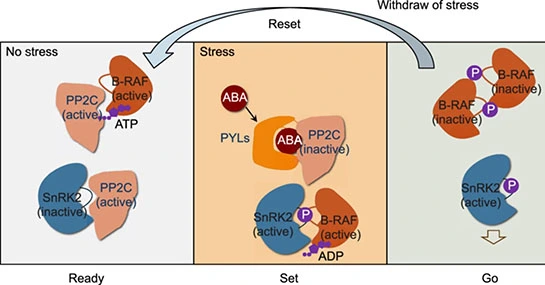
Research indicates that yeast-derived compounds can influence gene expression related to antioxidant activity, membrane stability, and osmotic balance. These effects contribute to improved cellular integrity and reduced damage under abiotic stress.
Mechanisms of Action in Plant–Soil Systems
Uptake Pathways and Internal Activity
Yeast-based biostimulants can be absorbed through both foliar and root pathways. Following uptake, amino acids are incorporated into protein synthesis, while peptides may function as signaling molecules that regulate stress-related metabolic pathways. Certain yeast-derived peptides have been shown to stimulate the expression of genes associated with drought and salinity tolerance.
The rapid bioavailability of these compounds enables plants to respond quickly to stress events, which is particularly important during sensitive growth stages such as flowering or early fruit development.
Interaction with the Soil Microbiome
In soil applications, yeast-based biostimulants also influence the rhizosphere by promoting beneficial microbial populations. These microorganisms improve nutrient cycling and root-zone health, indirectly enhancing plant stress tolerance. The interaction between plant roots, microbial communities, and yeast-derived compounds creates a more resilient soil–plant system.
This synergistic effect extends the benefits of yeast-based biostimulants beyond immediate stress mitigation, contributing to longer-term improvements in soil biological activity and plant performance.
Comparative Advantages Over Conventional Stress-Mitigation Inputs
Environmental Compatibility and Safety
Compared with synthetic stress-protection chemicals, yeast-based biostimulants offer a favorable environmental profile. They are derived from renewable biological sources and decompose naturally without leaving harmful residues. Their compatibility with soil ecosystems supports biodiversity and aligns with organic and regenerative farming principles.
Because these products work through natural metabolic pathways, they pose minimal risk to non-target organisms and can be safely integrated into environmentally sensitive production systems.
Performance Consistency and Practical Benefits
When evaluated alongside other biological inputs, yeast-based biostimulants demonstrate several practical advantages:
- High bioavailability, due to the presence of low-molecular-weight peptides
- Thermal stability, maintaining activity across a broad temperature range
- Tank-mix compatibility, allowing integration with fertilizers and crop protection products
- Batch consistency, achieved through standardized fermentation and quality control
These characteristics contribute to more predictable field performance, an important consideration for large-scale agricultural operations where consistency directly affects economic outcomes.
Application Strategies for Maximizing Stress Tolerance
Foliar Application Approaches
Foliar application enables rapid delivery of yeast-derived bioactive compounds directly to plant tissues. This method is particularly effective when quick stress mitigation is required. Applications are generally recommended during early morning or late evening to reduce evaporation and improve absorption.
Typical application rates vary depending on crop type and stress severity, with lower rates used preventively and higher rates applied during acute stress periods. Uniform leaf coverage without excessive runoff is essential for optimal efficacy.
Soil and Root-Zone Applications
Soil application targets the root environment, supporting both plant roots and beneficial microorganisms. This approach provides longer-lasting benefits and contributes to overall soil health. Yeast-based biostimulants can be applied through irrigation systems or incorporated into soil treatments at key growth stages.
Applications timed to coincide with active root growth enhance uptake and prolong stress-protection effects beyond the immediate application window.
Integration into Crop Management Programs
Successful use of yeast-based biostimulants requires coordination with existing fertilization and crop protection schedules. Most formulations are compatible with commonly used agrochemicals, but compatibility testing is recommended to avoid antagonistic interactions.
Strategic planning minimizes crop disturbance and ensures that biostimulant applications complement, rather than interfere with, other agronomic practices.
Procurement Considerations for Yeast-Based Biostimulants
Quality Indicators and Product Evaluation
For B2B buyers, evaluating product quality is essential. Key indicators include total amino acid content, peptide molecular-weight distribution, and the presence of functionally relevant compounds such as nucleotides. Reliable suppliers provide laboratory analyses and clear specifications to support performance claims.
Manufacturing consistency is equally important. Standardized fermentation processes and rigorous quality control systems ensure uniform product performance across batches.
Supplier Reliability and Regulatory Compliance
Beyond product quality, procurement decisions should consider supplier capabilities in technical support, logistics, and regulatory compliance. Suppliers with experience across multiple markets can assist with documentation, labeling, and registration requirements, reducing regulatory risk.
A stable supply chain and flexible delivery options are particularly valuable for managing seasonal demand and responding to unexpected stress events in the field.
Conclusion
Yeast-based biostimulants offer a scientifically supported approach to improving crop stress tolerance under challenging environmental conditions. By enhancing metabolic efficiency, supporting cellular integrity, and promoting beneficial plant–soil interactions, these products help crops maintain productivity during drought, salinity, and temperature stress.
Their biological origin, environmental compatibility, and consistent performance make yeast-based biostimulants a practical component of modern, sustainable crop management strategies. With appropriate product selection, application planning, and supplier partnerships, agricultural professionals can leverage these solutions to enhance resilience and long-term value in diverse production systems.
FAQ
Q1: Which crops benefit most from yeast-based biostimulants?
Yeast-based biostimulants are effective across field crops, vegetables, fruits, and specialty crops. High-value horticultural crops often show stronger responses due to their sensitivity to stress, while leafy vegetables, root crops, and fruit trees benefit from improved stress tolerance and quality stability.
Q2: How fast do yeast-based biostimulants work?
Most crops show measurable responses within 3–7 days after application. Foliar treatments act faster than soil applications, and under severe stress, improvements in stress tolerance may appear within 24–48 hours.
Q3: Can yeast-based biostimulants be tank-mixed with fertilizers and pesticides?
Yes. Most yeast-based biostimulants are compatible with common fertilizers and pesticides. Compatibility testing is recommended when mixing new products or using high concentrations.
Q4: How should yeast-based biostimulants be stored?
Store in a cool, dry place away from direct sunlight. Liquid products are typically stable for 2–3 years; avoid freezing. Powder forms have longer shelf life but should be protected from moisture.
Partner with LYS for Premium Yeast-Based Biostimulants
Discover how LYS amino acid peptide stimulants can transform your crop stress tolerance strategy through scientifically proven formulations and unmatched technical support. Our team of agricultural experts provides comprehensive consultation services to help you select optimal products and develop customized application protocols for your specific crops and growing conditions. As a leading yeast-based biostimulants manufacturer, we combine advanced fermentation technology with practical field experience to deliver reliable stress protection solutions.
Contact alice@aminoacidfertilizer.com today to request product samples, technical specifications, and pricing information for our complete range of yeast-derived stress tolerance products. Our global distribution network ensures reliable supply chain support for operations of all sizes, from regional distributors to large-scale commercial farms.
References
1. Martinez, R.A., Thompson, K.L., and Davis, J.M. "Yeast Extract Applications in Crop Stress Mitigation: Mechanisms and Field Performance." Journal of Agricultural Biotechnology, Vol. 45, No. 3, 2023, pp. 178-192.
2. Chen, L., Rodriguez, P., and Wilson, S.K. "Comparative Analysis of Biostimulant Efficacy Under Drought Stress Conditions." International Review of Plant Physiology, Vol. 29, No. 7, 2022, pp. 445-467.
3. Johnson, M.E., Patel, N.V., and Brown, T.R. "Economic Impact Assessment of Yeast-Based Biostimulants in Commercial Agriculture." Agricultural Economics Quarterly, Vol. 38, No. 2, 2023, pp. 89-104.
4. Anderson, K.J., Liu, X.H., and Taylor, R.S. "Molecular Mechanisms of Yeast-Derived Stress Tolerance Enhancement in Field Crops." Plant Molecular Biology Today, Vol. 51, No. 4, 2022, pp. 267-285.
5. Garcia, F.M., Singh, A.K., and O'Brien, C.D. "Sustainable Agriculture Applications of Fermentation-Based Biostimulants." Environmental Agriculture Science, Vol. 33, No. 6, 2023, pp. 334-351.
6. Williams, J.A., Kumar, R.P., and Lee, S.Y. "Field Trial Analysis of Yeast Extract Biostimulants Across Multiple Geographic Regions." Crop Protection Research, Vol. 42, No. 1, 2022, pp. 123-139.

Tell us your needs — we’ll provide the right solution for your crops and markets.
Innovating Agriculture with Yeast-Derived Amino Acid Peptides